

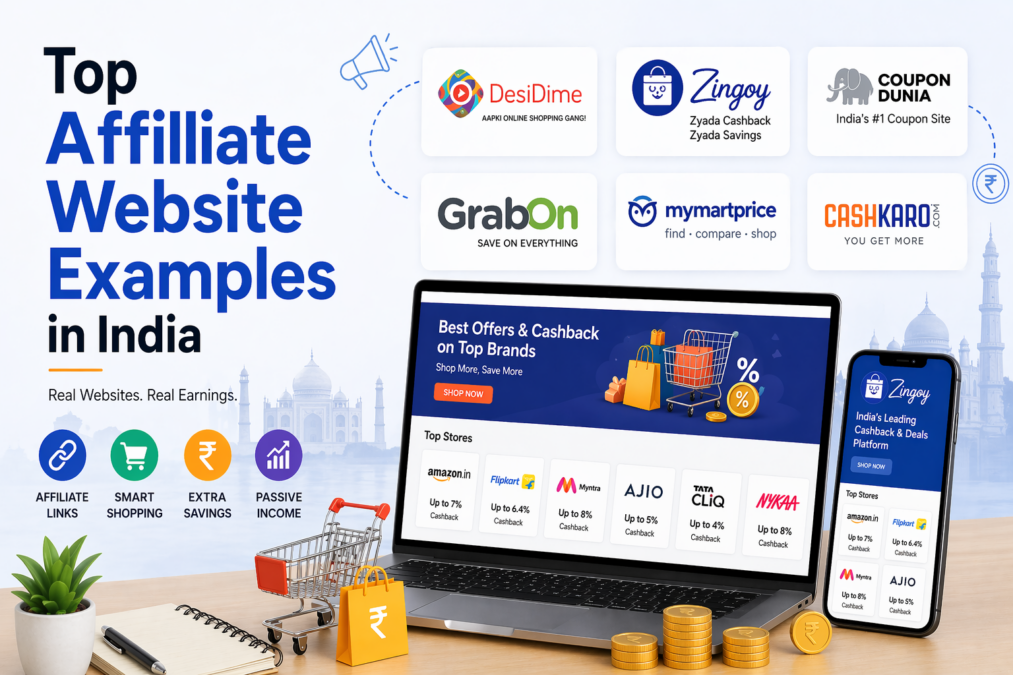
Affiliate marketing in India is no longer just blogs and reviews: it’s now driven by cashback platforms, deal communities, and fintech marketplaces generating millions in revenue every month. In this guide, we break down 16 real affiliate websites in India (with traffic + monetization insights): including platforms like DesiDime and Zingoy that most lists ignore. The complete list includes:
- DesiDime
- Zingoy
- CashKaro
- CouponDunia
- GrabOn
- MySmartPrice
- Gadgets360
- BankBazaar
- Card Insider
- LBB (Little Black Book)
- Investorgain
- HerZindagi
- MensXP
- Archana’s Kitchen
- ShoutMeLoud
- MasterBlogging
This article analyzes each’s model, traffic, audience, pros/cons, and affiliate programs. We also identify best niches, recommend content and SEO strategies, outline advanced monetization (email marketing, coupons, cashback, sponsored content, memberships, ads), cover Indian compliance (affiliate disclosures, GST, privacy), and suggest key KPIs and tracking tools.
| Website | Niche & Audience | Business Model & Monetization | Monthly Traffic | Affiliate Programs | Strengths / Weaknesses |
| DesiDime: Best Online Shopping Community in India specializing in Deals & Coupons “You can create your own Deal & Coupon Affiliate Website (group page) under this site.” (ex: Loaferg 🎁💰 Hot Deal) | Community-driven deals & coupons. Popular with bargain hunters across India. | Aggregates user-shared deals, coupons, price drops. Monetizes via affiliate commissions (CPS) when users click through to retailers, plus sponsored “featured deals” and ads. (No direct cashback paid out.) | 5M visits (Mar 2026) | Retailer affiliate programs (Amazon, Flipkart, etc.) and networks (Google Affiliate, Cuelinks). | Strengths: Large engaged community (forums), early market entrant (2010), strong brand. Unique forum features (gamification) boost loyalty. Weaknesses: Highly competitive niche; dependent on retail commissions; limited by overall e-commerce trends. |
| Zingoy: Best Cashback Site & App in India with Gift Cards expertise | Cashback & gift cards platform. Targets online shoppers in India. | Acts as a cashback portal: users shop via Zingoy’s affiliate links and earn a portion of the commission (ZingCash). Also sells digital gift cards (with instant cashback), and operates a referral program (users earn for referrals). Revenue comes from retained affiliate commissions and possibly selling gift cards with margin. | ~1.1M visits (Mar 2026) | Own affiliate program (Pays out ~3.6% CPS per sale), plus standard retailer links (Amazon, Flipkart, etc.). | Strengths: Unique combined model (cashback + gift cards + referrals) encourages repeat visits. Emphasizes gamified share/earn. Strong backing (ParityCube affiliate). Weaknesses: Cashback margins can be thin; relies on continued shopper trust; competition from big players (CashKaro, Paytm First). |
| CashKaro | Coupon & cashback portal. Broad ecommerce partners. | Users click CashKaro links to retailers and get real cash back (split of affiliate commission). Also runs coupons, newsletter deals, and an app. Monetization: keeps a share of commissions, plus display ads. | 4.3M visits (Mar 2026) | Affiliations with all major retailers (Amazon, Flipkart, travel, banking), plus own loyalty partnerships. | Strengths: Established (founded 2010), high brand recall, frequent TV ads. Very large Indian user base (98% of traffic is India). Diversified offers (shopping, travel). Weaknesses: Extremely competitive market; high marketing spend. High bounce (61%) suggests transactional use (less content engagement). |
| CouponDunia | Coupons & deals aggregator. General ecommerce. | Similar to CashKaro: provides coupons and links to retailers, earning affiliate revenue. Focus on coupon codes (as opposed to cashback). Offers newsletters and social deals. | ~0.7M visits (Feb 2025) (likely under 1M as of 2026) | Retail coupon codes (Amazon, Flipkart, Myntra, etc.), plus affiliate network partnerships. | Strengths: Large parent brand (Newscorp). Simple coupon focus can drive quick conversions. Strong SEO for coupon keywords. Weaknesses: Lower traffic than CashKaro; heavy competition (GrabOn, RetailMeNot India); monetization limited to store-paid commissions. |
| GrabOn | Coupons & cashback. Pan-India reach. | Aggregates coupons and cashback offers. Provides both coupon codes and direct cashback on sales. Revenue from merchant commissions plus possibly minimal ad revenue. | 3.1M visits (Mar 2026, Semrush) | Works with major affiliates (CJ, Admitad networks) and direct retailer partnerships. | Strengths: Consistently high traffic (top competitor to CashKaro), strong UI/UX. High brand awareness from offline marketing. Weaknesses: Operational costs for cashback payments; margins pressured by user expectations. |
| MySmartPrice | Price comparison for electronics & gadgets. Tech-savvy buyers in India. | Aggregates prices and reviews for products (mobiles, appliances). Monetizes via affiliate CPS (sales referrals) and CPC ads. Also displays sponsored product placements. | 1.56M visits (Feb 2026) | Direct affiliate links to Amazon, Flipkart, retail; networks like vCommission. Possibly Google AdSense/Criteo. | Strengths: High purchase intent audience (shoppers researching expensive gadgets). Comprehensive product data and SEO. Weaknesses: Thin affiliate commissions on electronics (1-5%). Competition from global players (PriceDekho, CompareRaja) and brand apps. |
| Gadgets360 | Tech news & reviews (NDTV). Urban tech enthusiasts. | Content site with detailed product reviews, tech news, and buying guides. Monetization: affiliate links in reviews (Amazon, Flipkart), display ads (via NDTV network) and sponsored posts. Affiliate income comes when readers click product links. | 5.9M visits (Feb 2025) | India-specific affiliate programs (Amazon India, Flipkart), plus NDTV’s ad networks. | Strengths: Strong brand (NDTV). Authority and trust in reviews; high traffic. Engaged audience for high-value items. Weaknesses: High bounce (users may leave after reading reviews). Adblocker risk. Commission alone may not match site’s expectations (ads likely bigger share). |
| BankBazaar | Personal finance marketplace. Bank-loan/credit card seekers. | Compares financial products (loans, credit cards, insurance). Monetization: referral/lead commissions (pay-per-lead/sale) from banks and insurers for each application sold. Also gets ad revenue and lead-gen fees. | 8.62M visits (Mar 2026) | Major BFSI partner programs (bank credit cards, loans, EMI finance, insurance). | Strengths: Monopoly-like market share in fintech comparison. Very high trust factor. High-value leads (big commissions per sale). Weaknesses: Subject to finance regulations and credit approvals. Must keep editorial unbiased. High operational compliance costs. |
| Card Insider | Credit card guides & comparison. Credit-focused consumers. | Provides credit card comparisons, guides, and interactive calculators. Monetization: affiliate CPS when users apply for cards through the site, plus possibly Google AdSense. | 25K visits (Feb 2026) | Bank credit card affiliate programs (SBI, HDFC, etc.). Cuelinks integration. | Strengths: Niche expertise (credit cards). Interactive tools (comparators, app tracking) boost engagement. Weaknesses: Limited to India’s card market; traffic highly SEO-dependent. Smaller scale means fewer partnerships. |
| Investorgain | Stock trading and investment. Investors in India. | Finance portal covering stock trading, IPOs, mutual funds. Monetization: affiliate referrals for brokerages/financial products (Upstox, Groww, Sharekhan, etc.). Also ad revenue. Part of BiggerReturns group (Chittorgarh, etc.). | 6.34M visits | Affiliates with brokerage and fintech apps (Upstox, Groww, etc.). Display ads from Google. | Strengths: Authority in finance niche. Lots of content (news, calculators). Parent network covers entire BFSI. Weaknesses: Highly competitive SEO with other finance portals. Sensitive to market cycles (volatility can boost or reduce interest). |
| LBB (Little Black Book) | Local experiences & ecommerce. Young urban audience. | Initially a city guide (restaurants, shopping), now includes travel and products. Monetization: affiliate links for bookable services (MakeMyTrip, Oyo, Zomato) and e-commerce products. Also sponsored content and ads. | ~1-2M visits (est.) | Travel affiliates (MakeMyTrip flights/hotels), food ordering partners, local deals. | Strengths: Strong brand (acquired by Nykaa), polished content. Diverse revenue (affiliate + ad + events). Weaknesses: Broad focus dilutes affiliate impact. Dependent on social buzz; COVID-affected travel/restaurant content. |
| HerZindagi | Women’s lifestyle (media site by Jagran). Indian female audience. | Content-heavy (fashion, wellness). Affiliate model: occasionally links products (Amazon fashion, beauty affiliate programs) in articles. Revenue primarily ads & sponsored sections; affiliate earnings are secondary. | ~8M+ visits (estimated; Jagran network) | Fashion and health retailers (Myntra, Ajio, Nykaa), booking (Expedia). | Strengths: Strong media brand, large audience. Good SEO on women’s interest topics. Weaknesses: Low affiliate emphasis (more of a content portal). High competition from pure publishers. |
| MensXP | Men’s lifestyle & grooming (Jagran). Male urban audience. | Similar to HerZindagi but for men: product reviews (grooming, fitness), some affiliate links (beard oil, apparel). Revenue mainly from ads and branded content. | Comparable to HerZindagi (media network scale) | Male grooming & fashion brands. | Strengths: Leading men’s media brand in India. Diversified content (viral, fitness, fashion). Weaknesses: Affiliate content minimal; relies on ads. Overlap with larger media ads limits niche focus. |
| Archana’s Kitchen | Food & recipes blog. Home cooks (mostly women). | Recipe content with culinary product reviews. Monetizes via affiliate links (kitchen appliances on Amazon, Flipkart) and display ads. Offers memberships/ebooks. | 0.4M visits (est.) | Kitchenware, FMCG affiliate programs; Google AdSense. | Strengths: High trust brand (7+ years old). Loyal audience; top-ranked food blog. Weaknesses: Niche vertical; seasonal traffic. Lower scalability beyond cooking. |
| ShoutMeLoud | Blogging/SEO tutorials. Aspiring bloggers & marketers. | Content about blogging, hosting, tools. Monetization: affiliate programs (web hosting, course platforms) and product deals, plus self-publishing (books, membership) and ads. | 99K visits (Cuelinks est.) (likely similar 100K) | Hosting (Hostgator, Bluehost), SEO tools (Semrush), learning platforms (Udemy). | Strengths: Very established (since 2008). High authority; broad affiliate mix. Diversified revenue (affiliates + info products). Weaknesses: Narrow topic (limited audience of bloggers). Competing with numerous blogging guru sites. |
| MasterBlogging | Blogging/SEO (Ankit Singla). Digital entrepreneurs. | Blogging tips and in-depth guides. Monetizes via affiliate links (hosting, training) and selling premium courses. Also email marketing. | 0.1M visits (est.) | Similar to ShoutMeLoud (hosting, courses). | Strengths: Dedicated content, strong personal brand. High affiliate conversion (targeted niche). Weaknesses: Audience scale modest. Content creation intensive. |
📥 Download this complete list of affiliate website examples with traffic, niche & monetization (CSV | PDF)
Sources: Traffic data from Semrush/SimilarWeb. Traffic for older entries like HerZindagi/MensXP estimated from media reports. Product categories and audience are characterized by content focus and third-party analytics.
Start Your Free Affiliate Website Now with Cuelinks (1000+ Brands | ₹2000 Welcome Bonus)!
Emerging Niches & Example Verticals
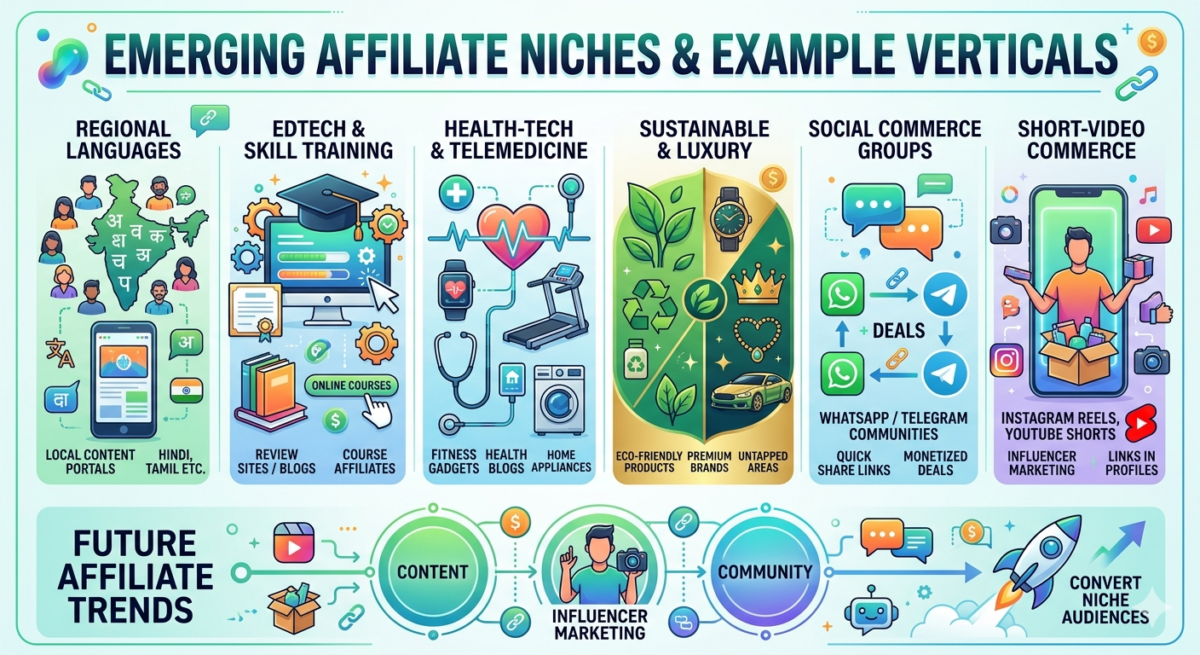
Beyond the above examples, new affiliate niches are gaining ground. Regional-language portals (Hindi, Tamil etc.) tie up with affiliate networks for local content. Edtech & skill training is rising: sites/blogs reviewing online courses (e.g. upGrad, Byju’s affiliates).
Health-tech & telemedicine blogs (home appliances, fitness gadgets) can leverage affiliate sales. Sustainable/luxury markets (eco-products, premium brands) are untapped areas for affiliate blogs.
Another trend is social commerce groups: communities on WhatsApp/Telegram that share deals and “affiliate wonders” monetized via quick share links.
Finally, short-video commerce (Instagram Reels, YouTube Shorts) influencers are driving affiliate sales via links in profiles. Future affiliate sites may combine content with influencer marketing (e.g. product unboxing reels) and community features (forums, chatbots) to convert niche audiences.

Flowchart: user discovery → site content → affiliate link click → purchase → commission
Content & SEO Strategies for Indian Affiliates
Successful Indian affiliate sites should adopt modern SEO and content tactics. Focus on long-tail keywords and question-based queries (e.g. “best budget smartphone India 2026”) to capture organic intent. Produce in-depth comparison guides (table comparison charts, infographics) and localized content (Festivals sale guides, regional language posts).
Use E-E-A-T principles: publish expert reviews or user interviews to build trust. Optimize for mobile and voice search (India is mobile-first). Leverage schema markup (FAQ, product review) for rich snippets. Implement a content calendar synced with shopping seasons (Big Billion Days, Great Indian Festival, Diwali sales).
Promote through YouTube and Instagram, embedding affiliate links in video descriptions for cross-channel presence. A data-driven approach (e.g. A/B test headlines, track click-throughs via UTM tags) will refine copy.
Link-building should target relevant Indian tech/finance blogs and news sites to boost authority. Finally, integrate Cuelinks-like deep-linking tools so that any mention of affiliate products auto-converts into revenue-generating links.
Monetization Tactics Beyond Affiliate Links
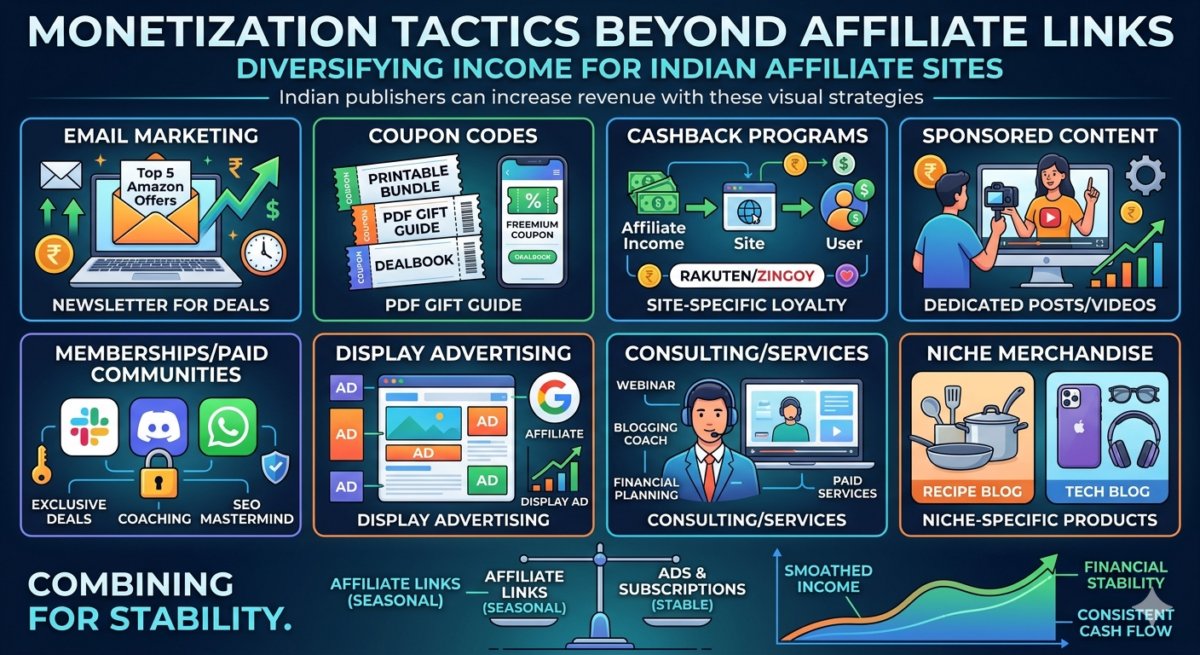
Indian affiliate sites can diversify income:
- Email Marketing: Build a newsletter for deals. E.g. a weekly “Top 5 Amazon Offers” email can carry sponsored placements or premium deals. Email click-through rates are high for deals.
- Coupon Codes: Besides embedding, create printable coupon bundles or PDF gift guides sold as “dealbooks”. Alternatively, run a freemium coupon app (charge for ad-free or exclusive coupons).
- Cashback Programs: Offer site-specific loyalty (like Rakuten/Zingoy) where the publisher shares part of affiliate income with subscribers. This is complex legally but can lock in users.
- Sponsored Content: Charge brands for dedicated posts or video reviews. As traffic grows, an affiliate blog can command sponsored rates comparable to media sites.
- Memberships/Paid Communities: Create a private Slack/Discord/WhatsApp group with exclusive deals or coaching (especially in finance/education niches). Example: SEO mastermind group membership for bloggers.
- Display Advertising: Run Google AdSense or programmatic ads. Sites like ShoutMeLoud balance affiliate with ads. In India, Ad revenues can rival affiliate (especially in news/lifestyle).
- Consulting/Services: Leverage affiliate authority to offer paid consulting (financial planning, blogging coaching) or paid webinars.
- Merchandise: (Niche-specific) e.g. a recipe blog could sell branded kitchenware. Or a tech blogger selling gadget accessories.
Combining these helps smooth income: affiliate links may have seasonal swings, whereas ad and subscription revenue can stabilize cash flow.
Legal & Compliance in India
Affiliate publishers must follow Indian laws and codes:
- Disclosure: Per ASCI guidelines and truth-in-advertising norms, clearly disclose affiliate links. Standard phrasing: “This post contains affiliate links: we earn a commission at no extra cost to you.” This should be visible at the top of articles. Non-disclosure risks consumer complaints.
- GST & Tax: Indian affiliates are subject to GST if turnover exceeds ₹20 lakh (as of 2026) or opt for voluntarily registering. Commissions earned are taxable income; many affiliate networks issue 1099-equivalent forms. Even individuals should declare affiliate income under “Other Income” on ITR.
- Consumer Protection: Under the Consumer Protection Act and rules, affiliates acting as advertisers must ensure deals and statements aren’t misleading. Coupon codes or claims (e.g. “highest cashback”) should be accurate. Privacy policies must disclose cookie-based tracking (especially if running an app or extension).
- Data Privacy: While India’s DPDP law is maturing, affiliates collecting emails must adhere to reasonable privacy standards (e.g. obtain consent for newsletters). If EU or Californian users visit, comply with GDPR/CCPA. Avoid selling email lists without consent.
- Intellectual Property: Use only images and content you have rights to. Affiliate sites often repost product images: use official product feeds or merchant-provided media.
Adhering to these ensures long-term viability. Notably, e-commerce affiliate networks (Amazon, Flipkart) have their own strict T&Cs: no cookie-stuffing or unauthorized discount aggregation.
Performance Metrics & Tools
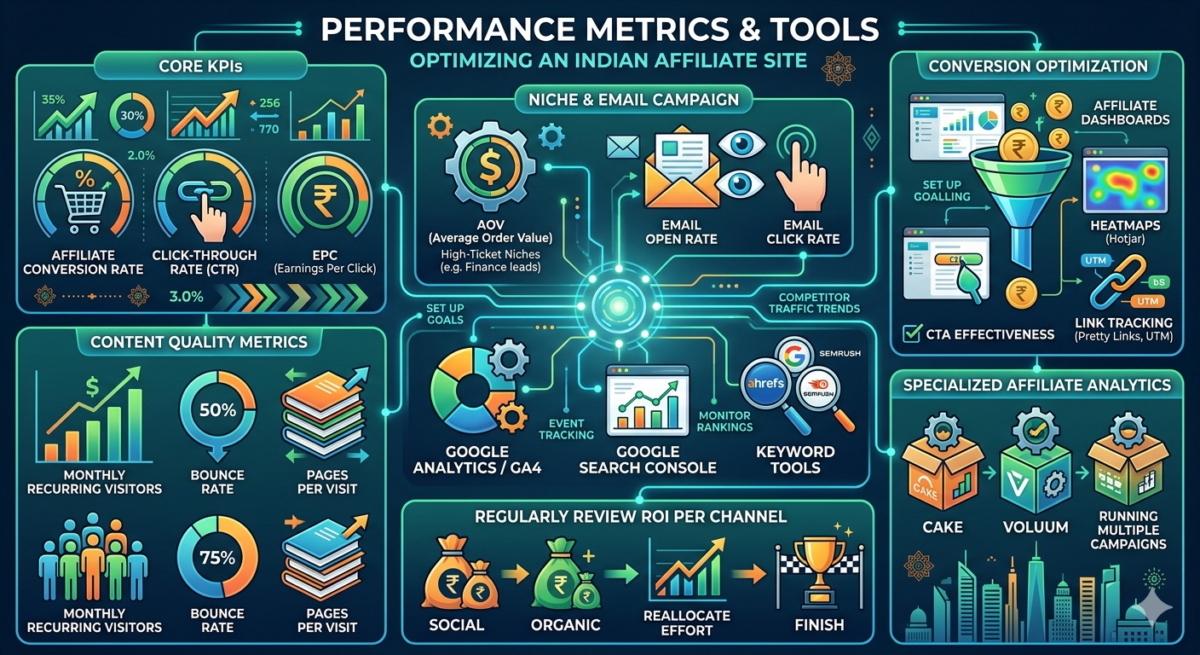
Key KPIs for an Indian affiliate site include: Affiliate Conversion Rate (sales per click), Click-Through Rate on affiliate links, and EPC (Earnings Per Click).
Track Monthly Recurring Visitors, Bounce Rate, and Pages per Visit to gauge content quality. Average Order Value (AOV) is critical for high-ticket niches (e.g. finance leads). For email campaigns, monitor open and click rates.
Use tools like Google Analytics / GA4 (set up e-commerce goals, event tracking for link clicks), Google Search Console (monitor keyword rankings), and keyword tools (Ahrefs, SEMrush).
Affiliate networks’ dashboards provide real-time conversion and commission data. Use heatmaps (Hotjar) to see if call-to-action buttons are effective. A link-tracking tool (Pretty Links, ThirstyAffiliates) or UTM parameters will measure performance of individual links.
SEMrush/SimilarWeb can track competitor traffic trends. Finally, consider affiliate-specific analytics like Cake or Voluum if running multiple campaigns. Regularly review ROI per channel (e.g. social vs organic) to reallocate effort.
Conclusion
Affiliate marketing in India has evolved far beyond simple blog monetization: it’s now driven by diverse models ranging from community-led platforms like DesiDime to cashback-driven ecosystems like Zingoy.
The key takeaway is that success today isn’t just about inserting affiliate links, but about building trust, solving real user problems, and choosing the right monetization model for your audience: whether that’s content, comparison, coupons, or cashback.
As competition increases, those who combine strong SEO, user intent-driven content, and smart monetization strategies will continue to win. If you’re planning to build or scale an affiliate website in 2026, focus on value first because traffic follows trust, and revenue follows traffic!
Bibliography (Key Sources)
- Sawant Vrushali. “Niche Affiliate Website Examples: Profitable Niches & Real Sites in India” (Cuelinks Blog): Background and niche examples.
- Semrush Traffic Analytics: Verified updated monthly visits (link already given above).
- DesiDime Founder Interview (FranchiseIndia, 2015): Company history, community model, traffic contribution, business model insights.
- Cuelinks (vintage): Card Insider & Investorgain profiles.

Sahil Ajmera is content writer with more than 7 years of work experience in field of Affiliate Marketing, Digital Marketing, etc. He loves saving money on everything. His aim is to get readers exactly what they are looking for and that too without wasting much of their time. Whatever he is writing on, you are sure to find a way to earn & save good!