

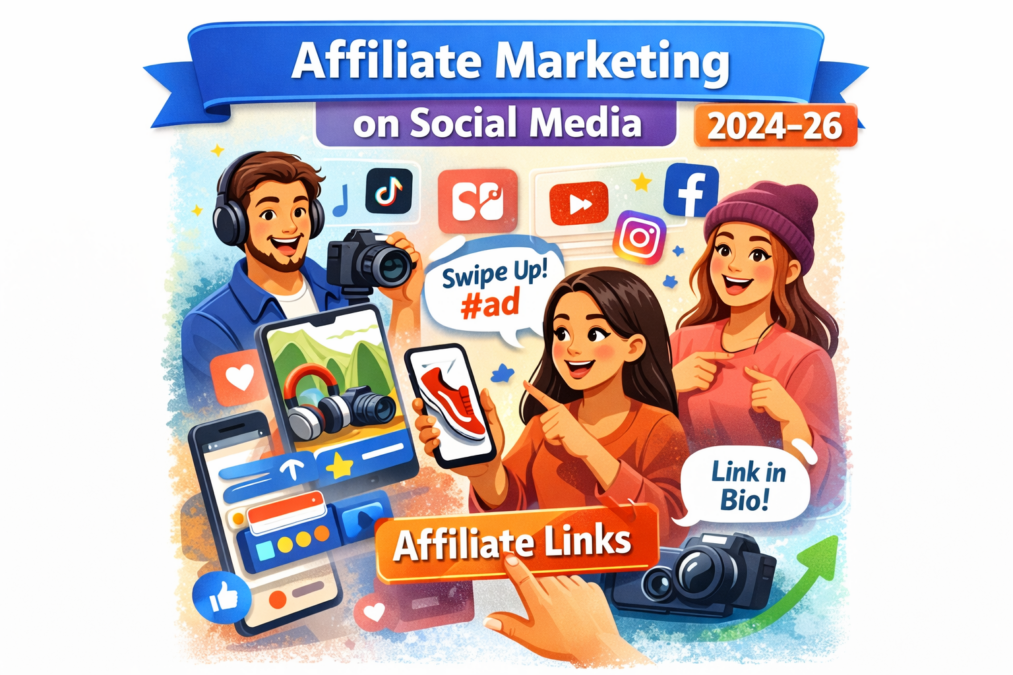
Affiliate marketing on social media means recommending products to your followers and earning a commission when they buy through your links. It works by joining affiliate programs (e.g. Amazon, Myntra, Shopify) and sharing unique tracked links in your posts. Platforms like Instagram, YouTube, Twitter/X, Facebook, and Pinterest each have different strengths. For example, Instagram and Pinterest excel at visual, lifestyle niches (fashion, beauty, travel), while YouTube is ideal for in-depth reviews and tutorials. Twitter/X can drive quick engagement and traffic to your site, and Facebook’s broad reach fits many niches. Choose the platform where your target audience hangs out and that fits your content style.
Choosing the Right Platforms for Your Niche
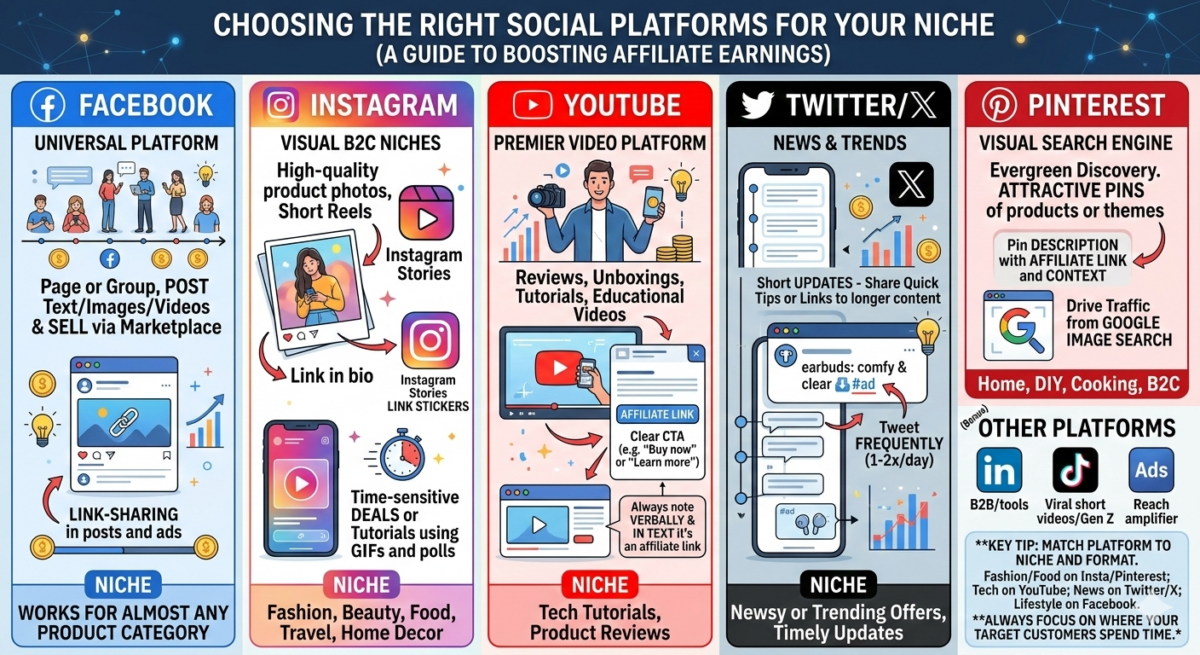
Different social networks attract different audiences and content types. For instance:
- Facebook: A universal platform used across most niches. You can create a Page or Group, post text/images/videos, and even sell via Facebook Marketplace. Facebook supports link-sharing in posts and ads (subject to its ad policies), and works for almost any product category.
- Instagram: Best for B2C niches like fashion, beauty, food, travel and home decor. Instagram focuses on photo/video content. Use high-quality images or short Reels to showcase products. Business accounts can add “Link in bio” or use Stories’ link stickers (formerly “Swipe Up” for 10K+ followers) to send users directly to your affiliate offer. Instagram Stories and Highlights let you share time-sensitive deals or tutorials using GIFs and polls to engage viewers.
- YouTube: The premier video platform is ideal for product reviews, unboxings, tutorials, and educational videos. Create helpful “how-to” guides, comparisons, or demos. Mention the product on camera and tell viewers to check the description. Then place your affiliate link in the video description with a clear CTA (e.g. “Buy now” or “Learn more”). Always note verbally (and in text) that it’s an affiliate link (e.g. “Link in description: I may earn a commission”).
- Twitter/X: Suited to news, trends, and short updates. Use it to share quick tips or links to longer content (like blog posts) where you embed affiliate links. Tweet frequently (1-2 times per day or more) using relevant hashtags and tagging brands or influencers. However, avoid just blasting raw links. Instead, share helpful commentary or questions along with your link. For example, “Check out these wireless earbuds I love: they’re comfy and clear ⬇️#ad”.
- Pinterest: A visual search engine great for evergreen discovery. Create attractive Pins (images or infographics) of products or themes (e.g. “Top 10 Kitchen Gadgets”). In the Pin description, include your affiliate link with context. Pinterest works well for both B2C and even certain B2B niches. It can drive traffic from Google Image Search if your Pins are well-described.
- (Bonus) Other Platforms: LinkedIn can work for B2B products or professional tools; TikTok is exploding for short, viral videos (great if your audience skews Gen Z); Facebook/Instagram Ads can amplify reach if done properly (while following ad rules).
Key tip: Match platform to niche and format. Fashion, food, fitness thrive on Instagram/Pinterest; tech tutorials and reviews shine on YouTube; newsy or trending offers can do well on Twitter/X; lifestyle and broad interest products can use Facebook/Instagram. Always focus on where your target customers spend time.
Engaging Content Formats
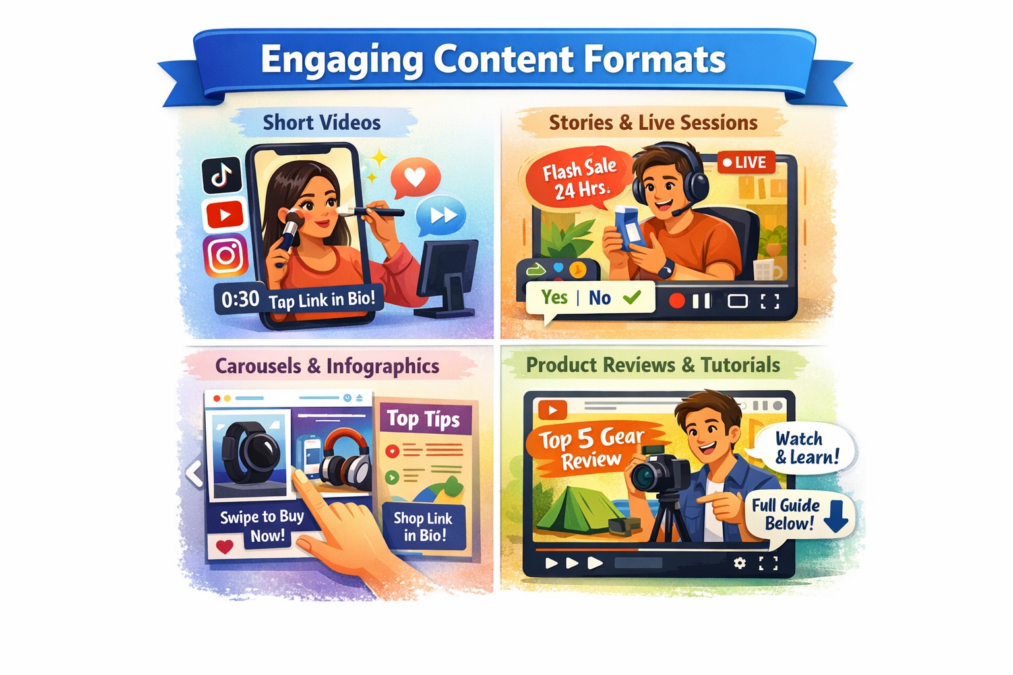
Successful affiliate posts use a mix of content types to grab attention. For example:
- Short Videos (Reels, YouTube Shorts, TikTok): These quick clips (15-60 seconds) can showcase products or tips. For instance, a beauty influencer might do a 30-second make-up demo with a “Tap the link in bio to shop!” caption. Video content is highly engaging and shareable.
- Stories and Live Sessions: On Instagram or Facebook, use Stories to highlight flash sales or daily deals: they appear at the top of feeds and disappear after 24 hours, creating urgency. Use interactive features like polls or quizzes to involve viewers. Live video (Instagram Live, Facebook Live, or YouTube Live) is great for Q&A’s, unboxings or in-depth demos. You can drop links in the chat or description and verbally remind viewers to check them out.
- Carousels and Infographics: Carousel posts (multiple images in one post) allow you to create mini “slideshows.” E.g., a gadget review with one slide per key feature, ending with a “Buy Now” swipe. Infographics or collage images (especially on Pinterest/Instagram) can highlight several products or steps. Each image can include text like “Learn more” or “Shop link in bio” to prompt action.
- Product Reviews and Tutorials: Long-form content like blog posts, YouTube videos, or even multi-part Instagram Stories work well for detailed how-to guides or product round-ups. For example, a YouTuber might film “Top 5 Camping Gear Items” and link each item in the description. A blogger could write “Best Laptops for Students” with in-text affiliate links.
Across formats, the principles are the same: provide value first, then recommend products naturally. For example, an Instagram post could show a before-and-after using a skincare product, with a caption like “Swipe to see my results: link in bio if you want to try it too #ad.” A Twitter thread might share personal experiences with a service, concluding “(full review on my blog; link below)”. Each piece of content should give useful information or entertainment, with the affiliate link as a helpful resource.
Crafting Affiliate-Friendly Posts
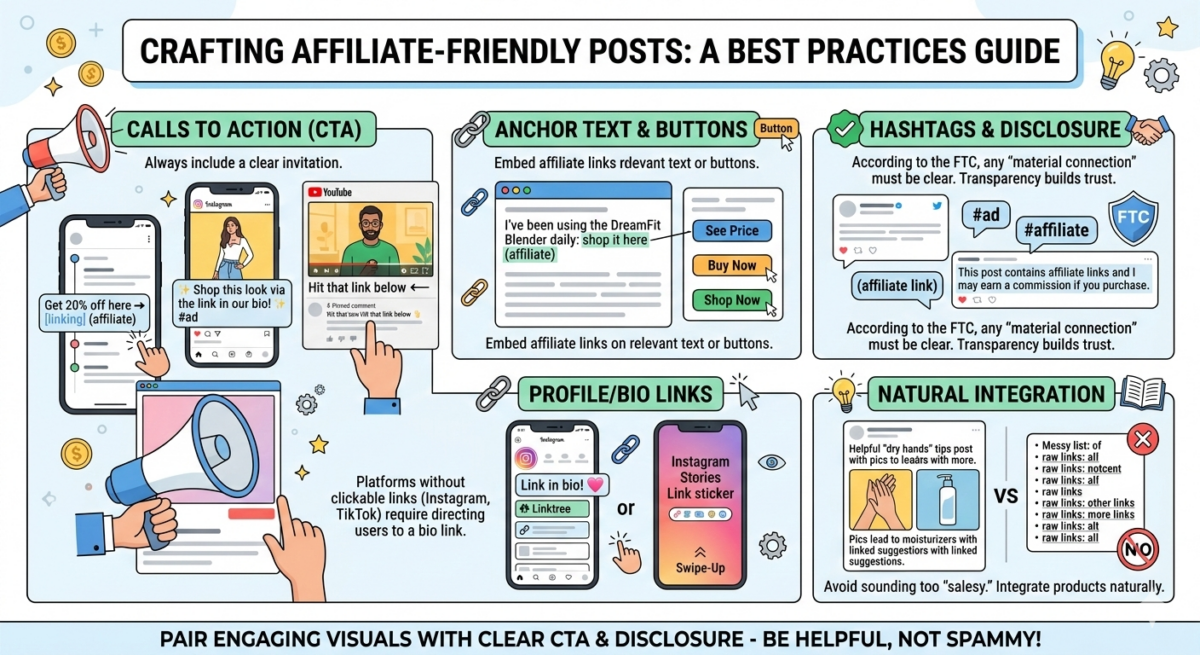
Putting it all together, here are practical tips on link placement and calls to action:
- Calls to Action (CTA): Always include a clear invitation. Phrases like “Shop now,” “Learn more,” or “Check the link” guide the user. For instance, in an Instagram caption say “✨ Shop this look via the link in our bio! ✨ #ad”. On Twitter, use a concise CTA: “Get 20% off here ➡️ [link] (affiliate)”. On YouTube, you might say on camera “Hit that link below to get this gadget,” and repeat it in the pinned comment or description.
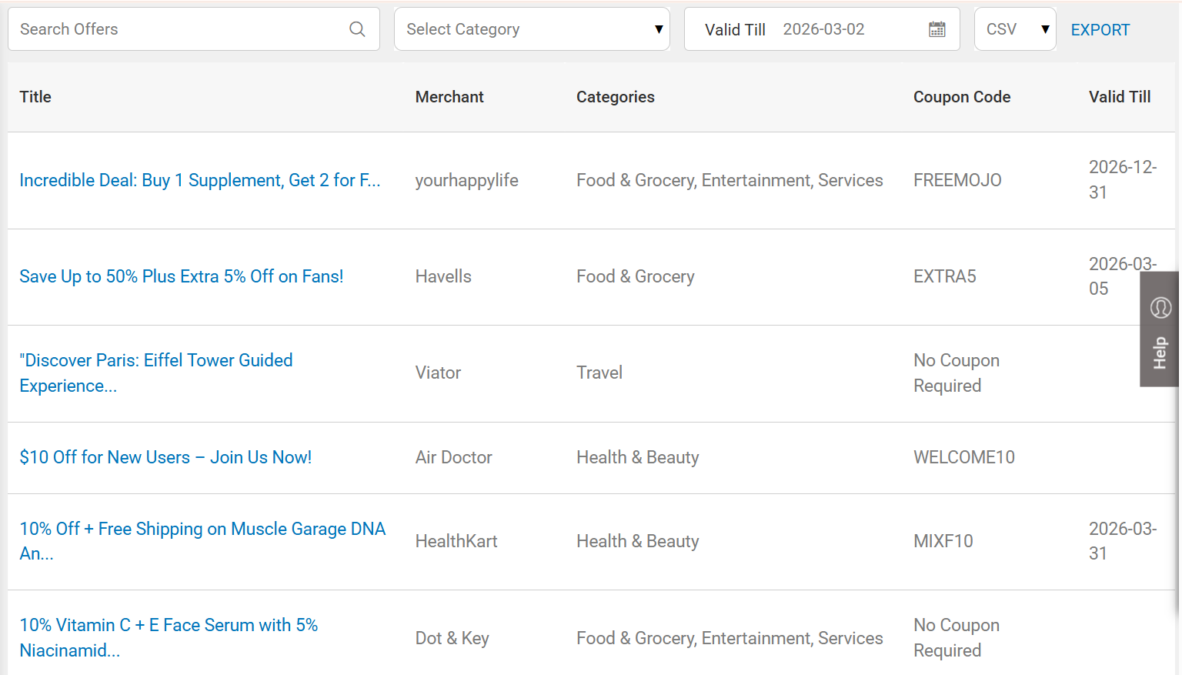
- Anchor Text & Buttons: In longer content (blogs, website, newsletters), embed affiliate links on relevant anchor text or buttons. For example, in a blog post: “I’ve been using the DreamFit Blender daily: shop it here (affiliate)”. Use product names or enticing words (“Buy Now”, “See Price”) as link text.
- Hashtags and Disclosure: On public social posts, always disclose with #ad, #affiliate, or a phrase like “(affiliate link)”. According to the FTC, any “material connection” must be clear. For example: “This post contains affiliate links and I may earn a commission if you purchase.” Transparency builds trust.
- Profile/Bio Links: Some platforms (Instagram, TikTok) don’t allow clickable links in captions. In that case, direct users to a bio or profile link. E.g., “Link in bio! 💖” or use a Linktree in your bio with multiple affiliate links. For Instagram Stories, use the Link sticker (or Swipe-Up on older accounts) for direct linking.
- Natural Integration: Avoid sounding too “salesy.” Integrate the product into genuine context. For instance, start a caption with a tip or anecdote, then lead into the affiliate suggestion. Example: “I’ve struggled with dry hands this winter. Here are my top 3 moisturizers that really work (see pics ↓). I will link each one below if you want to try them.”
By pairing engaging visuals or stories with a clear CTA and disclosure, you create affiliate content that feels helpful rather than spammy.
Ethical Promotion and Disclosure
Trust is crucial. Always prioritize ethical promotion:
- Full Disclosure: Federal guidelines require that you clearly disclose affiliate links . This means saying “affiliate link” or “commission” wherever the link appears. Don’t hide it in fine print or rely solely on platform labels (like Instagram’s “Paid partnership” tag). Cuelinks itself emphasizes transparency in its materials. Remember, “transparency builds trust”.
- Honest Recommendations: Only promote products you genuinely believe in. If you wouldn’t buy it yourself, say so. Balanced reviews (not just glowing praise) gain credibility. Share both pros and cons when appropriate. Audiences appreciate authenticity: it makes them more likely to click your link.
- Value-First Content: Ensure your content provides real value beyond the affiliate link. The Cuelinks blog advises creating “helpful content” around links (like tutorials or comparisons) rather than just dropping links with no context. This approach avoids coming off as pushy.
- Respect Platform Rules: Check each social platform’s policies. For example, Facebook’s ad rules restrict certain promotions and may flag posts that look purely promotional. Many affiliate programs (like Amazon) forbid obscuring affiliate links with cloakers or URL shorteners (i.e. never hide your affiliate ID). Always follow the fine print in Cuelinks’s terms and any merchant’s terms.
- Avoid Deceptive Practices: Do not cookie-stuff (forcing tracking cookies without real clicks), use hidden redirects, or give “bonus” incentives for using your link. Programs strictly ban these. As one guide notes, cookies and incentives schemes are “strictly forbidden”. Likewise, never present ads or endorsements as independent articles. Such manipulations can get you banned or fined.
The infographic above summarizes these best practices: disclose clearly, offer real value, and be authentic. In short, earn trust before earning commissions. This ethical approach not only keeps you compliant but also builds a loyal audience that will keep clicking your links.
Using Cuelinks to Create and Track Links
The Cuelinks platform simplifies affiliate marketing, especially for Indian publishers:
- One-Stop Dashboard: After signing up on Cuelinks, you get access to hundreds of merchant programs (Amazon India, Flipkart, Myntra, and many global brands). Cuelinks manages the tracking, reporting, and payments for all these programs.
- Link Kit (Dashboard Tool): In your Cuelinks account, go to the Link Kit (under Resource Center). Here you can paste any product or store page URL and instantly generate an affiliate link for it. This link will include your publisher ID. You can also customize it: for example, add Sub-IDs (tracking tags) to identify which post or campaign it came from.
- Chrome Extension: Install the Cuelinks Chrome Extension for quick one-click linking. When you browse a merchant’s website (like Amazon), click the Cuelinks icon in your toolbar. It will show the affiliate link for the current page and let you copy it. No need to leave the merchant site. This is handy for instantly grabbing links as you research or shop.
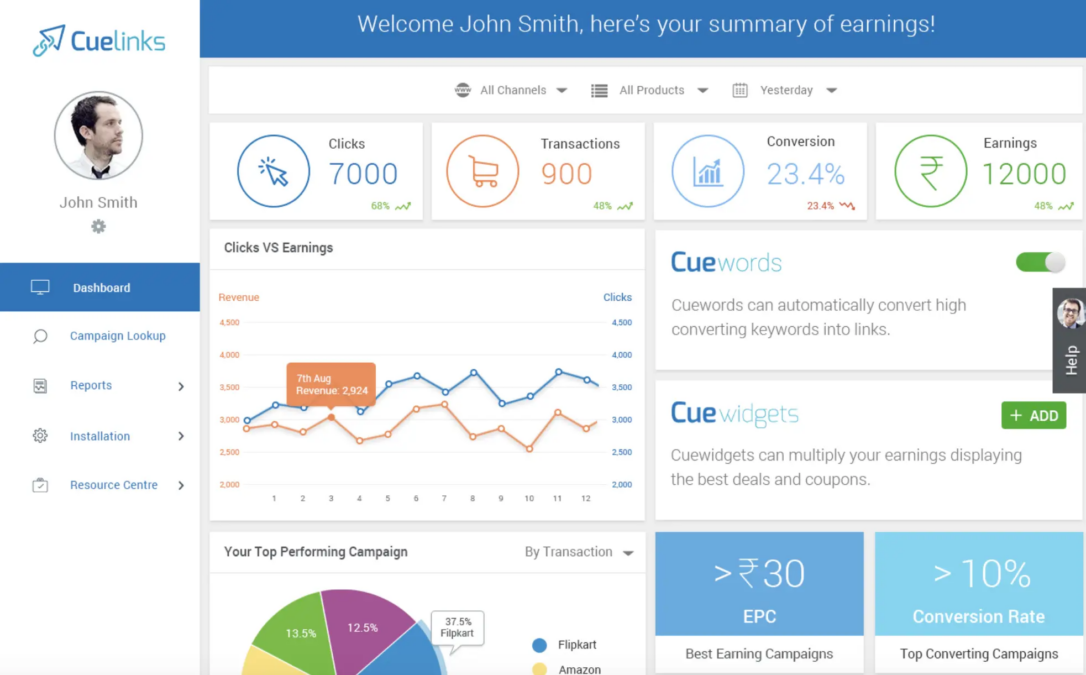
- Dashboard Analytics: Use the built-in analytics to monitor performance. Cuelinks tracks all clicks, conversions, and commissions from your links. In your dashboard you’ll see real-time stats: clicks, sales, and pending payouts: for every link or campaign. For example, you can sort by highest-converting products and double down on what works. Cuelinks even provides conversion reports so you can “track & optimize” your strategy over time.
By leveraging these tools, you can efficiently generate and manage affiliate links. For instance, many Indian affiliates use Link Kit for Amazon or Flipkart, and then schedule posts on social media with those links. The extension is great for impromptu linking when you see a product.
Tracking Performance and Optimization
Regularly review your link data to improve results:
- Monitor Clicks & Earnings: Check how many clicks each link gets and how many turn into sales. The Cuelinks dashboard shows which posts or platforms generate traffic. Look for trends: e.g., maybe Instagram Reels bring a lot of clicks on beauty products, or a particular blog article converts well.
- Refine Your Strategy: Use the data to focus on high-ROI tactics. If certain products or content types outperform others, create more of those. Cuelinks advises to “check which links get clicks and sales, then refine your strategy (e.g. use more of the high-converting products)”. Conversely, drop or rework underperforming links.
- A/B Testing: Try different formats (story vs. post, image vs. video) or CTAs to see what engages your audience. Since the dashboard lets you add sub-IDs, you can tag your links by campaign (e.g. “InstagramStory1”) and compare performance. Over time, this data-driven approach boosts commissions.
- Keep Content Fresh: Update or repost your best content periodically. For example, re-share a top-performing product review or pin on a sale day. Tracking helps identify these evergreen winners.
In summary, treat affiliate marketing like any marketing campaign: plan, track, and optimize. The better you use Cuelinks’ analytics, the more you can grow your earnings.
Avoiding Spam and Banned Practices
To protect your account and reputation, never resort to spammy or prohibited methods:
- No Unsolicited Bulk Posting: Avoid sending links in random WhatsApp groups, unsolicited DMs, or email blasts. Not only is this often ineffective, it can violate policies. As one guide warns, “Spamming affiliate links: Spamming is something you shouldn’t do on any platform”. Instead, share links only in contexts where users have opted in or expect promotions (e.g. a subscriber newsletter or your own group).
- No Link Cloaking/Shorteners: Always use the affiliate link as provided by Cuelinks (it already shortens links). Do not hide it behind URL shorteners (like bit.ly) or cloaking tools. For example, Amazon’s affiliate policy explicitly bans “cloaking services” or masking the link, since it must contain your affiliate tag. Using unauthorized shorteners can break the tracking and violate merchant terms.
- Follow Social Media Rules: Each platform has rules on promotional content. For instance, Facebook prohibits placing affiliate links in boosted ads unless the destination is compliant, and generally discourages spammy promotion. Twitter/X and Instagram may flag posts that look like obvious spam. Always read and follow the advertising policies for Facebook/Instagram, and community guidelines on WhatsApp/Telegram.
- No Cookie Stuffing or Incentivizing Clicks: Never insert affiliate cookies without a real visit, or offer incentives solely for clicking. These tactics are strictly forbidden by most programs (and are explicitly banned by Amazon). They can get you banned from affiliate programs.
- No Fake Reviews or Misleading Claims: Do not post false testimonials or fake urgency (e.g. “Hurry, only 1 left: limited stock! (affiliate link)”). The FTC and brands require honesty. According to FTC guidelines, any paid promotion must be clearly truthful.
By steering clear of these banned practices, you protect your affiliate status. Build your audience through genuine engagement and helpful content. That way, your affiliate marketing remains both effective and above-board.
Conclusion
Affiliate marketing on social media can be very rewarding when done responsibly. Choose platforms that match your niche and content style, use the right formats (videos, stories, posts) to engage users, and always provide value. Insert your affiliate links naturally, with strong calls-to-action and clear disclosures (#ad/affiliate). Tools like Cuelinks make it easy to generate links and track results across dozens of brands. Finally, focus on trust: be ethical, avoid spammy shortcuts, and comply with all rules.
By following these best practices, you’ll build a loyal audience and steadily increase your affiliate income: all while keeping your reputation intact. Success comes from quality content, transparency, and smart use of Cuelinks’ analytics to double down on what works. Happy promoting!

Sahil Ajmera is content writer with more than 7 years of work experience in field of Affiliate Marketing, Digital Marketing, etc. He loves saving money on everything. His aim is to get readers exactly what they are looking for and that too without wasting much of their time. Whatever he is writing on, you are sure to find a way to earn & save good!


Comments are closed.