

Imagine opening an email app on your phone: that little envelope icon holds direct access to your audience. Despite all the flashy new platforms (TikTok, Threads, you name it), email remains one of the most personal and effective channels for reaching people.
In fact, email offers a unique mix of reach, personalization, and cost-effectiveness that other channels just can’t match. Recent industry data backs this up: the average email open rate is now around 42%, and segmented, well-targeted campaigns boost conversions dramatically.
In plain terms, subscribers have opted in to hear from you, making them highly receptive. When they see your emails (instead of a fleeting social media post), they’re more likely to click, buy, and stick around.
For bloggers, affiliate marketers, and small business owners, owning an email list means owning your audience – not depending on a social algorithm that can change overnight.

Email lists are still insanely powerful today. Marketers report an average return of $36 for every dollar spent on email – that’s a 3600% ROI. (Some older studies even quote 4400%.) And because subscribers willingly gave you their address, they generally want your emails.
About 60% of consumers say they prefer hearing from companies via email over other channels. This means when you write to your list with useful tips, offers, or stories, people are glad to get that email.
In short, an email list is like a clubhouse: the folks inside have raised their hand and said “yes, include me.” That ready-made permission is gold for traffic, sales, and community-building.
Own Your Audience (Control vs Algorithms)
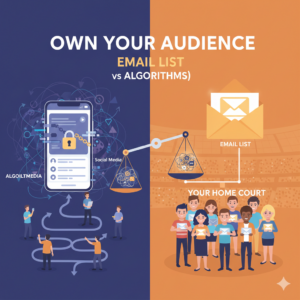
One of the biggest advantages of email is owning your audience. On social media or third-party platforms, you don’t really own your followers: algorithms control who sees what. One algorithm change can wipe out months of engagement overnight.
With email, it’s different – your list belongs to you, and you decide when and how to talk. As industry experts note, “you have control over your email list…It is not so easy to catch up with the algorithm changes on social media”.
For example, many content creators get locked out of a platform or see their reach fall, but their email list remains solid. When TikTok was briefly banned in India or when social networks shuffle their feeds, email lists were immune.
Think of email subscribers as a “home court” crowd. If your social account suddenly vanishes or stops showing your posts, you’d have to rebuild from scratch. But an email list is like having a direct line to people who already showed interest.
One creator, Tyler O’Shea of Joker Mag, realized this: he built his newsletter and boosted it through referrals, growing his brand faster than through Facebook ads.
In other words, an email list gives you stability and leverage. You can always send a newsletter, drive people to your blog or affiliate links, and engage fans without worrying about an app update.
Proven Results: Traffic, Conversions, and Engagement
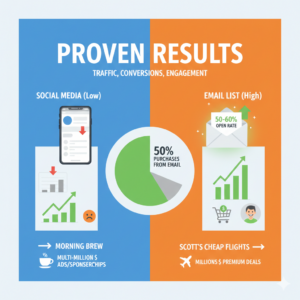
What happens when you send emails to your own list? “Insane results,” as one marketing blog puts it. Email consistently outperforms many other channels. For example, companies find that half of people buy from marketing emails at least once a month. Compare that to social ads or organic posts – email-driven purchases are a huge slice of conversions. You’re building relationships, and those relationships translate to clicks and sales.
To see it in action, look at big success stories: Morning Brew, a popular news newsletter, grew from a college side project into a multi-million-dollar business. They did it by emailing valuable content to a loyal list and then selling ads and sponsorships. Scott’s Cheap Flights (now Going) made tens of millions by sending flight deal emails to subscribers, offering a premium paid version for a small fee. These are essentially bloggers or entrepreneurs owning their niche email lists and monetizing them through affiliate offers, courses, or advertising.
Beyond dollars, email engagement is impressive: a recent report found that segmented, personalized email campaigns get much higher opens and clicks. And for newsletter creators, opens in the 50-60% range (yes, over half of your list!) are not uncommon when you hit the right note. For example, one daily newsletter hit a 60% open rate simply by focusing on content that resonated with its audience. By keeping content relevant and valuable (more on that soon), you keep readers active and engaged – which further boosts your deliverability and growth.
Growing Your List: Tips & Strategies
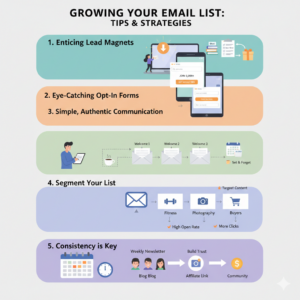
Building a strong email list doesn’t happen by magic; it takes strategy. But there are proven tactics that work today:
- Enticing Lead Magnets. Offer something valuable in exchange for an email. This could be an ebook, cheat sheet, checklist, or free mini-course. The key is solving a problem your audience cares about. For example, if you’re a fitness blogger, a free “5-Day Meal Plan” PDF can attract sign-ups. In essence, lead magnets are the secret weapon of list growth. Give away helpful content, and people happily trade their email to get it.
- Eye-Catching Opt-In Forms. Place simple, attractive sign-up forms on your blog, website, or landing pages. Use pop-ups or slide-ins (judiciously!) and make the copy clear: e.g. “Join 5,000+ entrepreneurs who get our weekly tips.” The form should ask only for an email (or name and email) to keep it frictionless. Make sure forms are mobile-friendly and offer a hint of what subscribers will receive. As one guide advises, forms should be “visually appealing and easy to find” and clearly state what subscribers can expect.
- Simple, Authentic Communication. As a beginner blogger or small biz owner, you don’t need fancy funnels right away. Start by writing regular emails that feel personal – as if you’re writing a letter to a friend. Share behind-the-scenes stories, useful tips, or exclusive offers. When someone subscribes, send a welcome email sequence automatically (a series of 2-3 emails over the first week) to introduce yourself and deliver the promised lead magnet. Email automation tools (see below) make this easy: you just set it up once, and it runs on autopilot. Over time, these welcome sequences warm people up to your content and increase trust and engagement.
- Segment Your List. Early on, you might have just one list, but as it grows, segmenting by interest or behavior pays off. For instance, you could tag subscribers who joined via a fitness e-book separately from those who joined via a photography guide. Then, send targeted content (or offers) to each group. Studies show segmented emails have much better open and click rates. This means people see more of what they care about and unsubscribe less. Even simple segments, like “new subscribers,” “active readers,” or “buyers vs. free-users,” let you personalize messaging and boost conversions.
- Consistency is Key. Finally, be consistent. Whether you email weekly, bi-weekly, or monthly, stick to a schedule so readers know when to expect your next message. Consistency builds trust and habits – people start looking forward to your emails. And each email is another chance to drive traffic: include links to your latest blog post, or share an affiliate product that genuinely helps your readers. Over time, this keeps your brand top-of-mind and turns subscribers into a community.
Platforms & Tools to Manage Your List
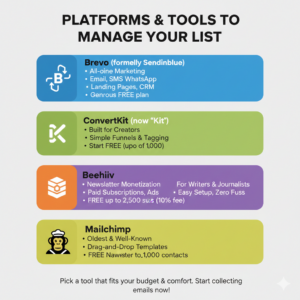
Once you’re ready to dive into email, you’ll need a platform to collect addresses and send emails. There are many tools, each with its own strengths:
- Brevo (formerly Sendinblue): An all-in-one marketing platform. It lets you send emails, SMS, WhatsApp messages, and even build landing pages and manage a CRM. Brevo has a generous free plan (up to 300 emails/day) and is known for easy automation. It’s great if you want one tool for many channels, especially for small business owners.
- ConvertKit (now “Kit”): Built with creators in mind. ConvertKit’s interface is simple and clean, focusing on helping solopreneurs and bloggers grow their personal brand. You get easy email funnels (called “Sequences”), form builders, and tagging. New plans (Kit) still let you start free up to 1,000 contacts. If you want a tool that’s not overwhelming and is designed for creators, this is a popular choice.
- Beehiiv: A newcomer founded by the team behind Morning Brew. Beehiiv markets itself as “best for newsletter monetization”. It’s creator-first, with built-in options for paid subscriptions, ads (via its own network), referral programs, and multiple newsletter management. It has strong analytics and an easy editor. If you think you’ll want to turn your newsletter into a paid product or run ad sponsorships down the road, Beehiiv is tailored for that. It offers a free tier up to 2,500 subscribers.
- Substack: A straightforward platform beloved by writers and journalists. Substack lets you set up a free newsletter quickly, with almost zero setup fuss. It has a built-in audience ecosystem (Readers can discover your Substack on the app). You can monetize via subscriptions since Substack handles paid newsletters for you (they take a 10% cut on paid subs). Many bloggers use it to build a paid membership community. Just note: Substack’s simplicity means fewer automation and design features, and 10% revenue share as you grow.
- Mailchimp: One of the oldest and most well-known email platforms. Mailchimp offers email campaigns, drag-and-drop templates, marketing automation, basic CRM features, and landing pages. It has a free plan for up to 1,000 contacts. It’s a solid all-around choice, especially if you want lots of integrations. (However, some creators feel it’s geared more for generic marketing needs than niche newsletters.)
Beyond these, there are other tools like MailerLite, ActiveCampaign, etc. The key is to pick one that fits your budget and comfort level. Many have free plans to start, so you can test them risk-free. The exact tool isn’t as important as actually using it – start collecting emails now rather than later.
Newsletter Monetization and Trends
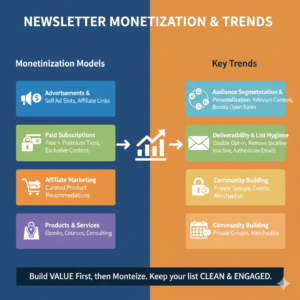
In 2026, one exciting trend is newsletter monetization. As newsletters grow in popularity, savvy creators are turning lists into income. There are a few common models:
- Advertisements & Sponsorships: If your list is big and well-targeted, companies will pay to reach it. This is how Morning Brew boomed – by selling ad slots in their free newsletter. You can insert a short sponsored message or sidebar ad in your emails. Even affiliate links (promoting products for a commission) count here – just be transparent.
- Paid Subscriptions: You can offer a “free tier” newsletter and a premium paid version with extra content or perks. Scott’s Cheap Flights (Going) offers free flight deals but charges for personalized alerts. Lenny’s Newsletter (500k readers) sells paid subscriptions to his premium issues. Beehiiv and Substack both make it easy to convert part of your audience to paid. A High Signal analysis noted: “The humble email list can be monetized through advertising or, if you have a seriously big value proposition, paid subscriptions.”.
- Affiliate Marketing: As an affiliate marketer, email is gold. You can send curated recommendations (with your affiliate links) directly to interested subscribers. Since these subscribers asked to hear from you, click-through and conversion rates on affiliate offers can be very high compared to random web ads.
- Products & Services: Many small businesses use their newsletter to promote their own services (consulting, coaching, design services) or info-products (ebooks, courses). Since the list is warm (you already have a relationship), launching a product to them often yields great sales.
On the community side, newsletters are also exploring private membership groups, live events, and merchandise for subscribers. The beehiiv “20 Ways to Monetize” guide shows creators building paid clubs and courses off their list. The key trend is this: Build value first, then find ways to add revenue. Start with free content, grow trust, then introduce monetization options.
Another big trend is audience segmentation and personalization. Brands know that one-size-fits-all emails aren’t as effective. By segmenting (for example by interest, purchase history, or engagement level), you send more relevant messages. This boost opens and avoids email fatigue. In fact, over half of marketers say segmented emails get higher open rates.
Finally, deliverability and list hygiene have become crucial. Email providers like Gmail and Yahoo are cracking down on bad practices. The consensus best practices for 2026 include using double opt-in to confirm subscribers, keeping lists clean by removing inactive addresses, and authenticating your emails (SPF, DKIM) to prove legitimacy. In simple terms: only email people who genuinely want to hear from you, make it easy for them to unsubscribe, and don’t let your list get stale. Keeping engagement high and complaint rates low tells inboxes that you’re the good kind of sender. As Braze’s deliverability team says, sticking to these habits will “lead to positive deliverability outcomes, no matter the industry.”.
Conclusion: Start Today and Reap the Rewards
Building and nurturing an email list is time well invested. It might seem old-school, but with higher attention spans and privacy concerns online, people are eager for direct email communication. As a beginner blogger, affiliate marketer, or small business owner, an email list is like an interest-bearing bank account – the earlier you start, the more it grows.
Think of each new subscriber as someone inviting you to their inbox. Over time, this turns casual readers into a community who trust your brand. Use the strategies above – lead magnets, friendly opt-ins, helpful emails, and smart tools – to grow that community. And remember to look for ways to provide value (whether free tips or paid offers) so that both you and your subscribers benefit.
In 2026, while social platforms and algorithms shift, your email list remains rock-steady. It’s your channel that you own and control. So start building that list now – it’s one of the best ways to drive traffic, make sales, and connect with your audience. Your future self (and business) will thank you!

Sahil Ajmera is content writer with more than 7 years of work experience in field of Affiliate Marketing, Digital Marketing, etc. He loves saving money on everything. His aim is to get readers exactly what they are looking for and that too without wasting much of their time. Whatever he is writing on, you are sure to find a way to earn & save good!