

Telegram has exploded in popularity, boasting a massive user base (over 800 million monthly active users as of March 2026, with estimates approaching a billion). Unlike other social networks, Telegram is a messaging super-app that lets you engage users one-on-one.
Telegram “is not just another messaging app: it’s a dynamic platform that offers a direct line to your audience, allowing you to engage them on a personal level and drive meaningful conversions”.
This high-engagement environment means a tight-knit audience and huge earning potential. Whether you’re a beginner, an experienced user, or a digital marketer, you can tap into this platform’s growth to turn your channel or group into a revenue stream through affiliate marketing.
By sharing valuable content and product recommendations, many creators find Telegram a “new gold mine” for affiliate sales. In this guide (2026 edition), we’ll cover everything from setting up your channel/group to picking affiliate programs, promoting links ethically, growing your audience, using analytics tools, and even real success stories: plus legal compliance tips to keep you on the right side of the law.
Channels vs Groups: Key Differences for Monetization
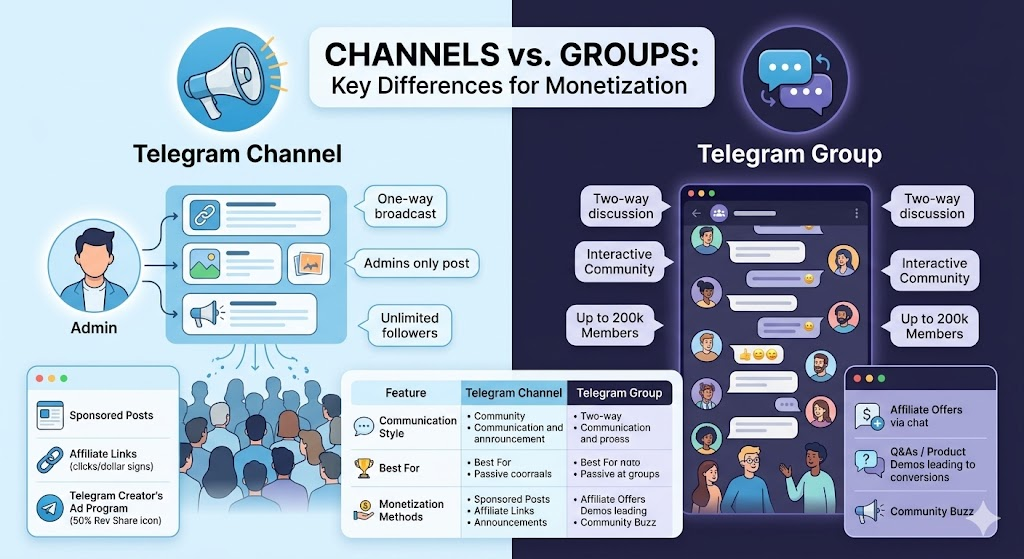
It’s important to choose the right format for your Telegram community. Channels and Groups serve different purposes. Channels are designed for one-way broadcasts to large audiences. They’re great for brand-building and announcements because only admins post, and subscribers simply receive the content.
By contrast, Groups are interactive discussion forums (up to 200,000 members) where anyone can chat. Channels tend to be more discoverable (public channels are indexed in search), while Groups foster community engagement.
As one guide explains, “Telegram Channels work best for one-way broadcasting announcements to large audiences, while Groups enable interactive discussions among up to 200,000 members”.
In other words, use channels when you want to send curated content (and monetize via ads or links), and use groups when you want feedback, community buzz, and live discussions.
Both can be monetized, but strategies differ. Channels can leverage sponsored posts, ad networks, and affiliate links in their posts. They even have an official ad-sharing program: channels with 1,000+ subscribers now earn 50% of ad revenue from sponsored messages (Telegram Creator’s Ad program).
Groups, being more conversational, can still share affiliate offers but require more moderation. Groups allow richer interaction (Q&As, polls, product demos): for example, answering product questions directly can boost conversions.
A key difference is scope: “Groups could be deemed more versatile, as they more openly invite input from various individuals besides the Group admin”. In practice, you may use both: a channel for broadcast content/ads and a group to build loyalty and discussions.
| Feature / Monetization Approach | Telegram Channel | Telegram Group |
| Communication Style | One-way broadcast (admins only post) | Two-way discussion (all members can chat) |
| Member Limit | Unlimited followers | Up to 200,000 members |
| Best For | Branding, news, announcements, exclusive deals | Community building, feedback, niche discussions |
| Discoverability | Public channels are searchable & indexed (better SEO) | Public or private; not indexed by search |
| Monetization Methods | Affiliate links, sponsored posts, Telegram ads (50% revenue share) | Affiliate links, premium access, product/service promotions |
| Content Control | Admins control all posts | Admins moderate; members can contribute content |
| Engagement Tactics | Polls, quizzes (broadcast-style), paid subscriptions | Live chat, Q&A sessions, user polls (community-driven) |
| Audience Quality | Targeted to a niche (potentially higher ad CPM) | Engaged community, word-of-mouth growth |
Above: Comparison of how channels and groups differ in style and monetization. Channels suit broad affiliate campaigns and sponsorships, while groups thrive on community-driven promotion.
Step-by-Step: Setting Up Your Monetized Channel or Group
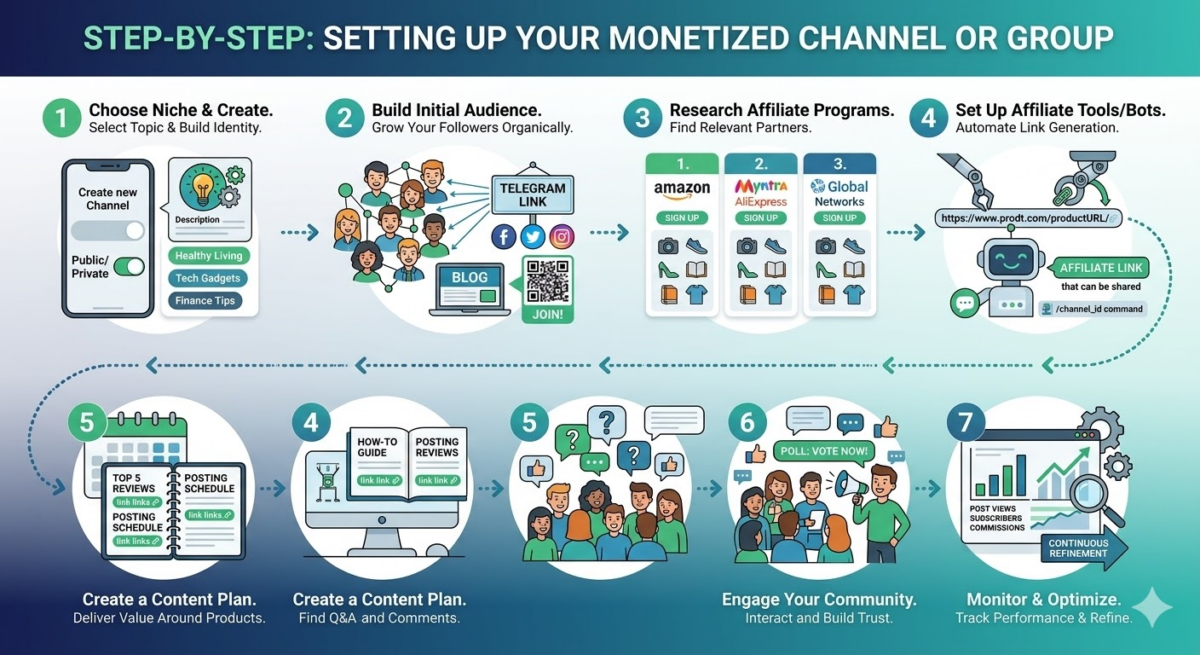
- Choose a Niche & Create the Channel/Group: Pick a clear topic that interests you and aligns with a market (for example, healthy living, tech gadgets, finance tips, etc.). In Telegram, create a Channel (for broadcasts) or Group (for discussions) and set it to Public if you want it searchable. Write a compelling name and description with keywords: this helps new users find you. Add a recognizable profile picture and cover photo to look professional.
- Build Your Initial Audience: Before posting affiliate links, grow your followers organically. Start by inviting friends, colleagues, and existing contacts. Promote your channel link on social media, your website, blogs, and email newsletters: anywhere your audience already is. Use tools like Linktree or Taplink to share multiple social profiles and your Telegram link at once. You can even use QR codes in offline marketing (flyers, business cards) to get local users to join. As you gain followers, also consider collaborating with other Telegram channels in your niche (mutual shout-outs) to tap into their audience.
- Research and Join Affiliate Programs: Sign up for affiliate networks that match your niche. Popular global programs include Amazon Affiliate Program (wide product range), Adidas Affiliate Program, and AliExpress Affiliate Program. Global Networks like Cuelinks aggregate offers from almost all category retailers. Make sure the program’s products resonate with your audience. For example, a fashion channel might join Amazon Fashion, Myntra, or Lenskart affiliates. Each program provides unique affiliate links (with your ID) for products you choose to promote.
- Set Up Affiliate Tools or Bots: Managing links can be tedious. Use automation tools to streamline the process. For instance, the Cuelinks Telegram Bot can convert any product URL into your personalized affiliate link in seconds. (Just drop a URL into the bot and it replies with an affiliate link ready to share.) Many bots also support auto-posting: you schedule messages and they post to your channel automatically. To start with Cuelinks Bot: open it in Telegram, use /channel_id to link your channel, then send product URLs and let the bot generate commission links. Such bots save time and ensure every link you share is tracked for commission.
- Create a Content Plan: Plan valuable content around your affiliate products. Rather than just dropping links, embed them naturally in posts. For example, write a “Top 5” list, how-to guide, product review, or tutorial related to your niche, and include affiliate links to items mentioned. Always offer real value: solve your audience’s problems or answer their questions. This builds trust. Be consistent with a posting schedule so followers know when to expect new content.
- Engage Your Community: Especially in groups, interact frequently. Answer questions, run polls, host Q&A sessions, and encourage feedback. In channels, you can also encourage comments or create linked groups for chat. Building relationships makes followers more receptive to your recommendations. Respond to comments and consider their suggestions when choosing products to promote. If followers trust you as an expert or friend, they’ll be likely to act on your affiliate suggestions.
- Monitor and Optimize: Track how your posts and links perform. Telegram channels offer built-in stats: you can see post views, forwards, and subscriber growth (the official app shows analytics for channels with 50+ members). Use these insights to learn what content resonates. For example, if certain posts get higher engagement or link clicks, do more of that style. If commissions aren’t coming in, try different products or calls-to-action. Continuously refine your strategy based on data.
How Affiliate Marketing Works on Telegram & Choosing Programs?
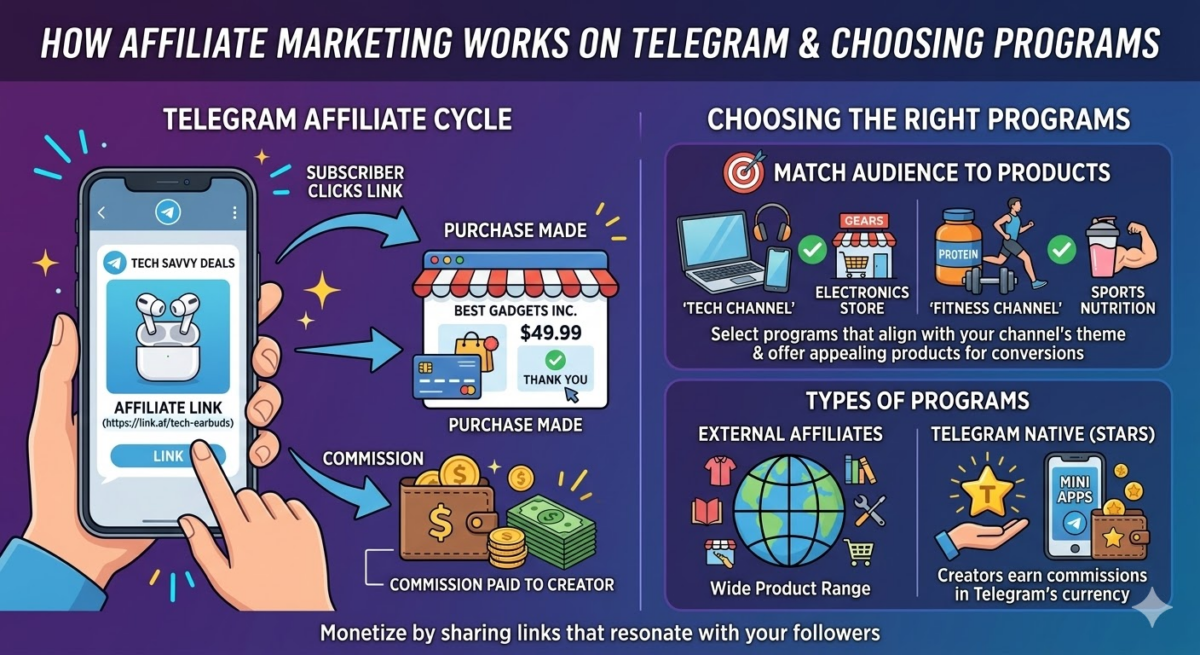
Affiliate marketing on Telegram works just like anywhere else: you earn a commission when followers buy products through your affiliate links. In your channel or group posts, simply include links to products or services (with your affiliate ID). When someone taps the link and makes a purchase, the network tracks it and credits you. Crucially, choose programs that fit your audience. By “selecting programs that align with your channel’s theme and offer a wide range of appealing products, you’ll be better equipped to drive conversions”. For instance, tech channels might join electronics affiliates; a fitness channel might use sports nutrition affiliates.
Telegram also offers a native affiliate program for its own ecosystem: developers of Telegram Mini Apps can create affiliate campaigns paid in Telegram Stars. This lets creators earn commissions in Telegram’s currency. However, most Telegram monetization comes from external programs.
Promoting Affiliate Links Ethically and Effectively
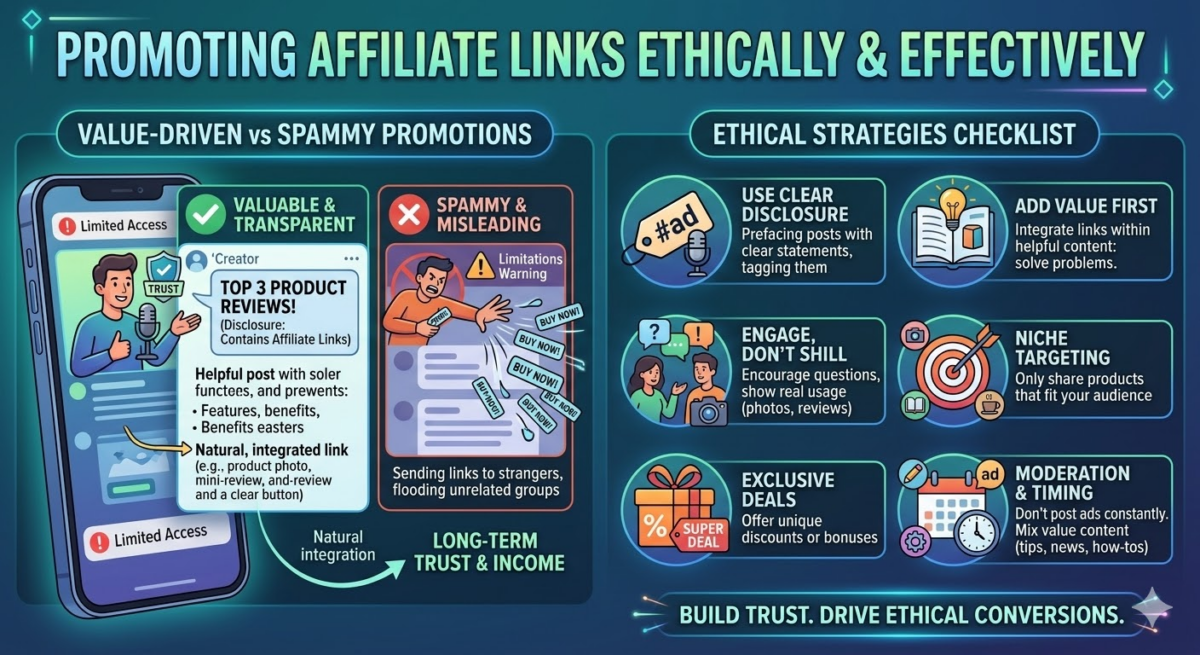
When you share affiliate links, transparency and value are paramount. Always disclose your relationship. For example, preface a post with “(This post contains affiliate links: we earn a small commission if you buy.)” This builds trust and is legally required in many jurisdictions (FTC guidelines in the US, etc.). Don’t mask links or mislead users. Focus on creating valuable content, with links woven naturally: “integrate affiliate promotions seamlessly into your content to make them feel natural and relevant”.
Avoid spammy tactics. Telegram’s rules and user community frown on endless ads or unsolicited links. In fact, Telegram’s own guidelines warn: “Make sure to share your link responsibly: sending your referral link to strangers or posting it in public groups could lead to temporary limitations on your account.”. In short, share links with discretion: don’t DM everyone your link, and don’t flood unrelated groups. Instead, drop a link within helpful content, or pin an affiliate offer with clear context.
Here are ethical promotion strategies:
- Use Clear Disclosure: Begin posts or group messages by tagging them as “#ad” or stating they contain affiliate links.
- Add Value First: Instead of a bare link, give a helpful description. E.g., “I tried this product and it solved X problem: check it out here (affiliate link).”
- Engage, Don’t Shill: Encourage questions and feedback on affiliate products. Show real usage (photos, mini reviews).
- Niche Targeting: Share products only if they fit your audience’s interests. Irrelevant links will be ignored or seen as spam.
- Exclusive Deals: Whenever possible, negotiate special discounts or bonus content with your affiliates. Offering followers a unique deal makes promotions more enticing.
- Moderation & Timing: Don’t post affiliate links in every message. Space them out so your channel/group isn’t just ads. Mix in pure value content (tips, news, how-tos) to keep the audience engaged.
By balancing genuine recommendations with full disclosure, you build trust and drive ethical conversions. Remember: providing consistent value will keep subscribers coming back: and that makes your affiliate offers much more effective.
Growing Subscribers & Engagement Organically
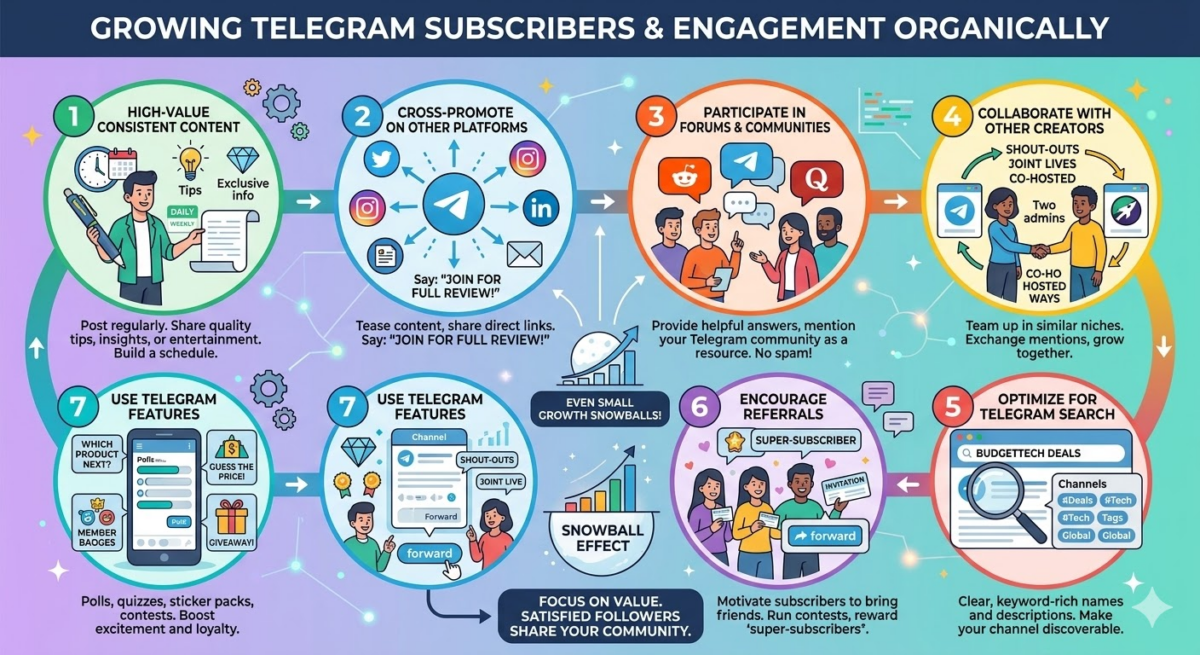
Before profits come followers. Here are proven organic growth tactics:
- High-Value, Consistent Content: “Content is king” on Telegram too. Post regularly (daily or weekly) so users know when to expect new info. Share exclusive insights, quality tips or entertaining posts they can’t get elsewhere. Consistency keeps people engaged and sharing your channel.
- Cross-Promote on Other Platforms: Use your presence on social media, blogs, or email lists to shout out your Telegram channel/group. Tease content on platforms like X (Twitter), Instagram, or LinkedIn, and drop direct links. For example, share a snippet of a product tip on Instagram with “Join my Telegram for the full review.” Direct cross-posting works great.
- Participate in Forums & Communities: Be active on related forums (Reddit, Quora, Facebook Groups). Provide valuable answers, and when relevant, mention your Telegram community as a resource. For instance, on a Quora question, you might say “I cover that topic in depth in my Telegram channel [link]”. Just ensure it’s helpful and not blatant spam.
- Collaborate with Other Telegram Creators: Team up with channels or groups in similar niches. You can swap mentions, do joint live sessions, or run co-hosted giveaways. A shout-out from a non-competing channel exposes you to new audiences. One strategy: find channels of similar size and agree to “shout each other out” to mutually boost members.
- Optimize for Telegram Search: Telegram allows users to search channel titles and descriptions. Use clear, keyword-rich names and descriptions so interested people can find you. For example, a channel called “BudgetTech Deals” is more discoverable than “My Channel123”. Include key terms and location/language if relevant.
- Encourage Referrals: Motivate your subscribers to bring friends. Add simple CTAs like “If you enjoyed this tip, forward it to a friend” or hold contests where members invite others. You can even reward “super-subscribers” who refer new members with special roles, badges, or exclusive content.
- Use Telegram Features: Use polls, quizzes, and sticker packs to keep the chat lively. Run occasional contests or giveaways (perhaps in partnership with your affiliate brands) to drum up excitement. These interactive elements boost visibility and loyalty.
By focusing on value and engagement, your channel or group will grow steadily. Even small amounts of initial growth snowball as satisfied followers share your community with others. (Remember: 1,000 quality, engaged subscribers on Telegram can be as valuable as 10,000 on another platform!)
Tools, Bots & Analytics for Optimization
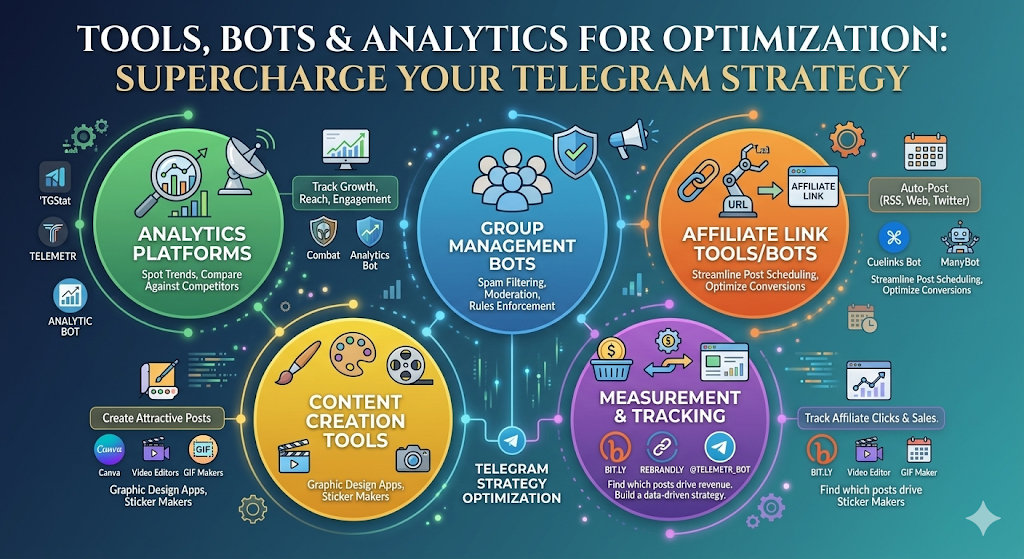
Leveraging the right tools and analytics will supercharge your Telegram strategy:
- Analytics Platforms: While Telegram offers basic stats (views, forwards, subscriber count), external tools give deeper insights. For example, TGStat is popular for channels: it tracks growth, post reach, and engagement. Telemetr (another analytics tool) lets you compare your channel against competitors. Use these to spot trends (e.g., what content gets most clicks). Even simpler, use the free Analytic Bot in Telegram, which sends you basic channel stats on demand.
- Group Management Bots: For groups, tools like Combot provide spam filtering, moderation, and member analytics. They help you enforce rules, welcome new users, and even run engagement polls automatically.
- Affiliate Link Tools/Bots: We mentioned Cuelinks Bot already. Other services like ManyBot or IFTTT/Zapier integrations can auto-post content from RSS feeds, websites or Twitter. Some creators use scheduling bots (e.g., @SMMPlannerBot) to queue posts ahead of time.
- Measurement & Tracking: Make sure to track affiliate clicks and sales from each campaign. Use link shorteners (bit.ly, Rebrandly) or the tracking dashboards in your affiliate programs to see which posts drive revenue. The Telegram Bot @telemetr_bot can send you subscriber growth and post view stats right in-app.
- Content Creation Tools: Don’t forget the tools to create attractive content: graphic design apps (Canva, etc.), video editors, or GIF/sticker makers can make your posts stand out.
Regularly check your metrics. For example, Telegram’s native analytics (available for channels) show where new members come from and which posts are most effective. If you see a dip, experiment with different content or promotion tactics. Data-driven tweaks (like posting at optimal times or A/B testing link placement) ensure you get the highest affiliate conversions over time.
Success Stories (Case Studies)
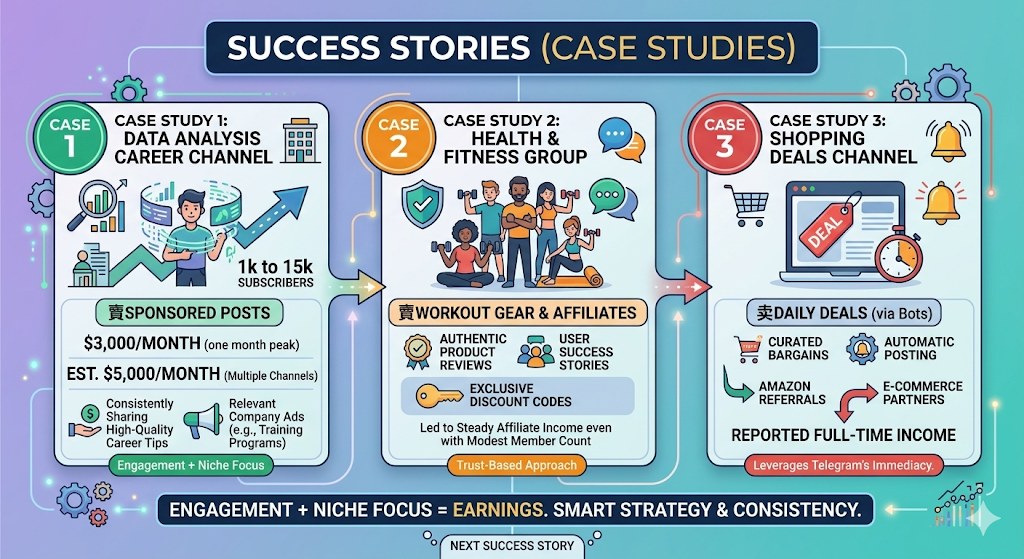
Real-world examples show what’s possible with determination:
- One creator built a niche channel (focused on data analysis careers) and grew from 1,000 to 15,000 subscribers in a few months. They earned about $3,000 in one month just by selling sponsored posts!. This was achieved by consistently sharing high-quality career tips and allowing relevant companies (e.g. training programs) to advertise on the channel. The owner now makes roughly $5,000 per month across multiple Telegram channels.
- In another example, a health-and-fitness group used affiliate marketing to sell workout gear. By posting authentic product reviews and user success stories, the admin secured exclusive discount codes for subscribers. This trust-based approach led to steady affiliate income: even with a modest member count.
- A shopping deals channel partnered with affiliates to automatically post daily deals (using bots). Subscribers valued the curated bargains, and the channel reportedly generated a full-time income via Amazon and e-commerce referrals. (This model leverages Telegram’s immediacy: quick notifications about limited-time deals prompt fast clicks and purchases.)
These case studies underline a key lesson: engagement + niche focus = earnings. Even channels with “only” a few thousand engaged members can be quite profitable if the content and product fit are on point. Your channel or group could be the next success story: it just takes smart strategy and consistency.
Legal & Compliance Notes
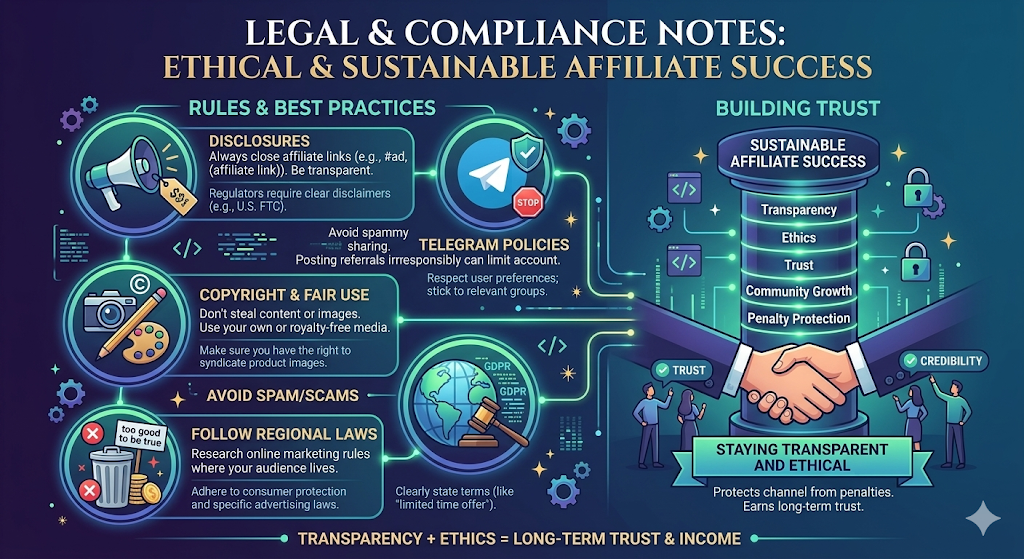
Affiliate marketing requires transparency and adherence to rules:
- Disclosures: Always disclose your affiliate links to avoid deceptive advertising. In many countries, regulators (like the U.S. FTC) require a clear disclaimer when you stand to earn from a link. A simple “#ad” or “(affiliate link)” in your post title or description is sufficient. This honesty builds credibility.
- Telegram Policies: While Telegram doesn’t ban affiliate links, it warns against spammy sharing. As noted earlier, posting referral links irresponsibly can get your account limited. Respect user preferences and avoid mass-forwarding links. Stick to relevant channels or your own community.
- Copyright & Fair Use: Don’t steal content or images for your posts. Use your own or royalty-free media. Some groups syndicate product images: make sure you have the right to do so.
- Follow Regional Laws: Depending on your location, you may need to follow consumer protection laws (e.g. GDPR for data, specific advertising laws in your country). For instance, some countries have strict online marketing regulations. Research the rules where your audience lives.
- Avoid Spam/Scams: Don’t mislead users with “too good to be true” claims, and never encourage illegal activities. Stick to genuine offers and clearly state any conditions (like “limited time offer” or “gift card terms”).
By staying transparent and ethical, you not only protect your channel from penalties but also earn the long-term trust of your community: which is the cornerstone of sustainable affiliate success.
Getting Started Today
The potential is clear: Telegram can be a lucrative platform if approached thoughtfully. By choosing the right format (channel or group), creating quality content, and promoting products that resonate with your niche, you can unlock new revenue streams. Remember the key points:
- Focus on value-driven engagement: keep growing your audience with helpful content.
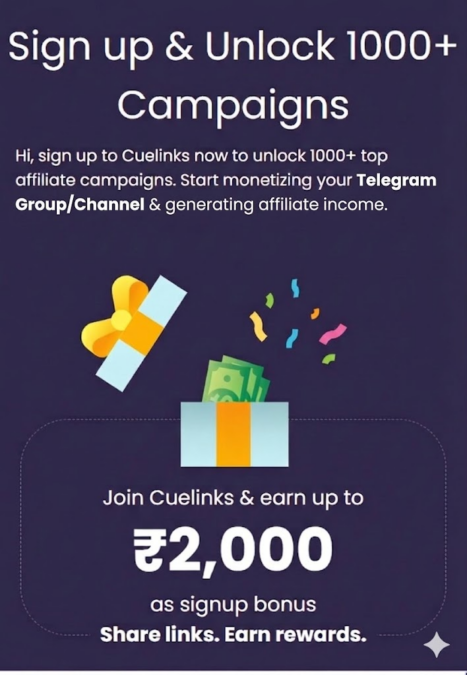
- Use smart tools and bots (like Cuelinks) to streamline affiliate posting.
- Analyze everything and double down on what works.
Thousands of Telegram channel owners are already profiting from affiliate marketing and paid ads, and you can join them. Stay motivated and experiment: every affiliate sale and subscriber gained is a step toward your goals. As one guide puts it, by “leveraging a reliable affiliate marketing platform, building a targeted audience, selecting appropriate affiliate programs, and creating engaging content, you can turn your Telegram channel into a revenue-generating asset”. So take action today: pick a niche, set up your channel or group, and start connecting your community with products they’ll love. The journey to your first affiliate commissions on Telegram can start right now!

Sahil Ajmera is content writer with more than 7 years of work experience in field of Affiliate Marketing, Digital Marketing, etc. He loves saving money on everything. His aim is to get readers exactly what they are looking for and that too without wasting much of their time. Whatever he is writing on, you are sure to find a way to earn & save good!