


Affiliate marketing works best when you focus on a specific niche i.e. a particular topic or audience segment. A niche could be as broad as “fitness” or as narrow as “at-home yoga for seniors”. Picking the right niche is crucial because a targeted niche helps you attract the right audience and affiliate partners. In fact, “the more targeted your niche, the easier it is to attract the right audience, rank higher in search results, and convert visitors into buyers”. In other words, focusing on a niche lets you connect with brands in that space and build trust with people who care about that topic.
Table of Contents
Key Benefits of a Clear Niche

- Connect with relevant brands: An established niche shows expertise, making brands in that field more likely to partner with you.
- Target engaged audiences: You’ll attract followers who are already interested in your topic, making sales easier.
- Build authority: Focusing on one area lets you become an expert in your readers’ eyes, so they trust your recommendations.
Together, these advantages mean you can build a loyal, paying audience faster than by trying to cover everything. For beginners especially, choosing a well-defined niche sets you up for more effective content and affiliate marketing.
Steps to Find a Profitable Niche
Finding a good niche involves balancing your interests, market demand, competition, and affiliate opportunities. Here’s a step-by-step approach:
- Start with your Interests and Expertise: Think about topics you know well or are passionate about. Beginners often do better choosing a narrower specialty. For example, instead of a very broad niche like “fitness”, you might focus on “bodyweight workouts for busy professionals”.

Broad niches include fitness, healthcare, skincare, etc., whereas a micro-niche might be home remedies for hair care. Picking something you enjoy makes content creation easier and keeps you motivated.
- Check Market Demand: Use tools like Google Trends to see if interest in your niche is growing. Google Trends shows an “interest over time” graph for keywords. Rising interest signals growing demand, steady lines indicate a stable niche, and declining trends are a warning sign.
For example, enter a topic (e.g. “plant-based diet”) and set the region to the US or UK. If the trend is climbing or steady, that’s a good sign.
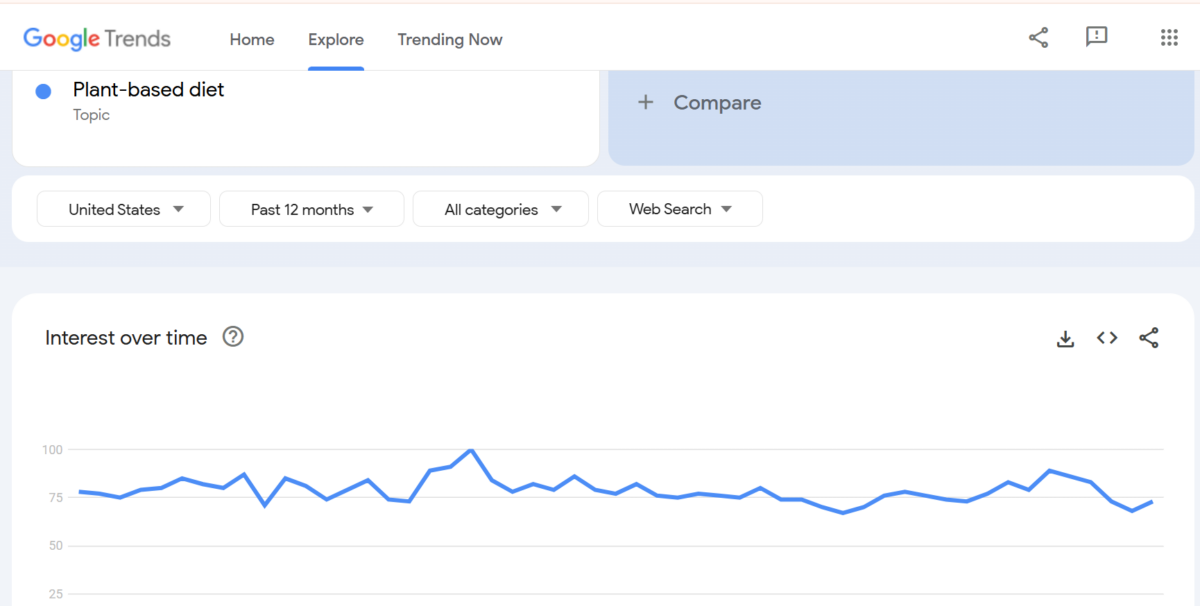
Thus, Google Trends is a great source for knowing which topic is trending now, as it provides interest by region and related queries.
You can also run keyword research (with free tools like Google Keyword Planner or Ubersuggest) to see search volumes. Niches with thousands of monthly searches and low competition usually offer bigger opportunities.

- Evaluate Competition: Look at what other affiliates or bloggers are already doing in your niche. If a niche has some active players, it shows proven demand.
Very high competition means you’ll have to work harder to stand out. Conversely, if no one is promoting in that space, ask why, maybe it’s too obscure. If experienced affiliates are making money in a niche, that’s a green light!
- Research Affiliate Programs: Browse major affiliate networks (Amazon Associates, Cuelinks, ShareASale, CJ Affiliate, AWIN, etc.) and search within them for products in your niche.
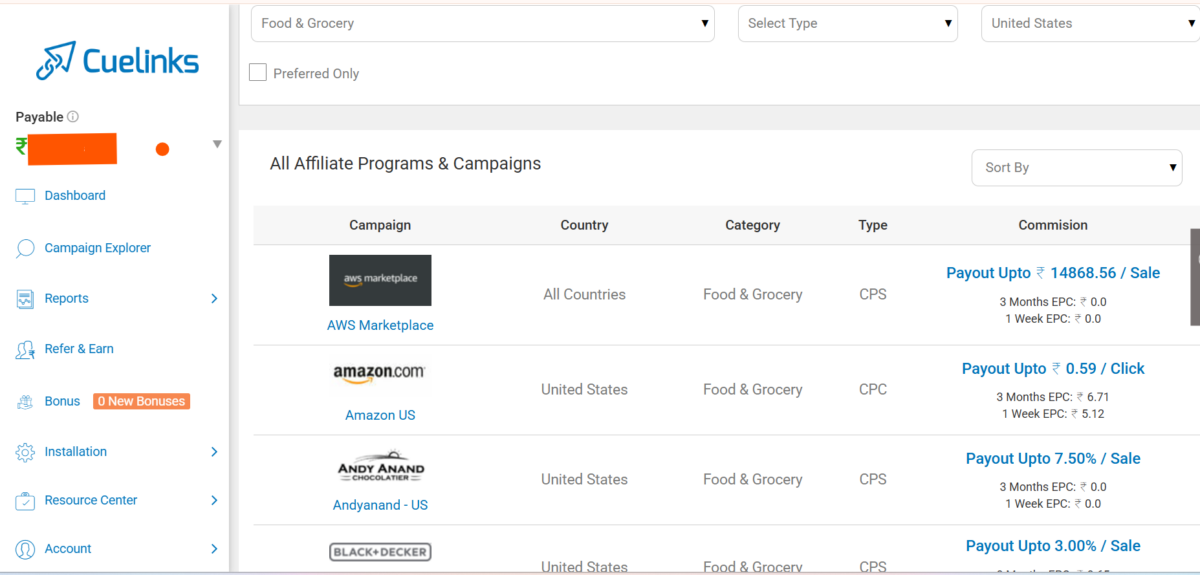
The more programs and products you find, the more opportunities you have to earn. If you see numerous positive reviews and a high sales rate, it indicates a lucrative niche where people frequently buy.
For example, if you choose “keto diet”, search Amazon Associates or Cuelinks for keto cookbooks, meal plans, or kitchen gadgets. A healthy list of programs with good commissions is a strong sign.
Also check commission rates as high-ticket items (finance, tech) often pay generous percentages, while physical products may have thinner commissions due to costs.
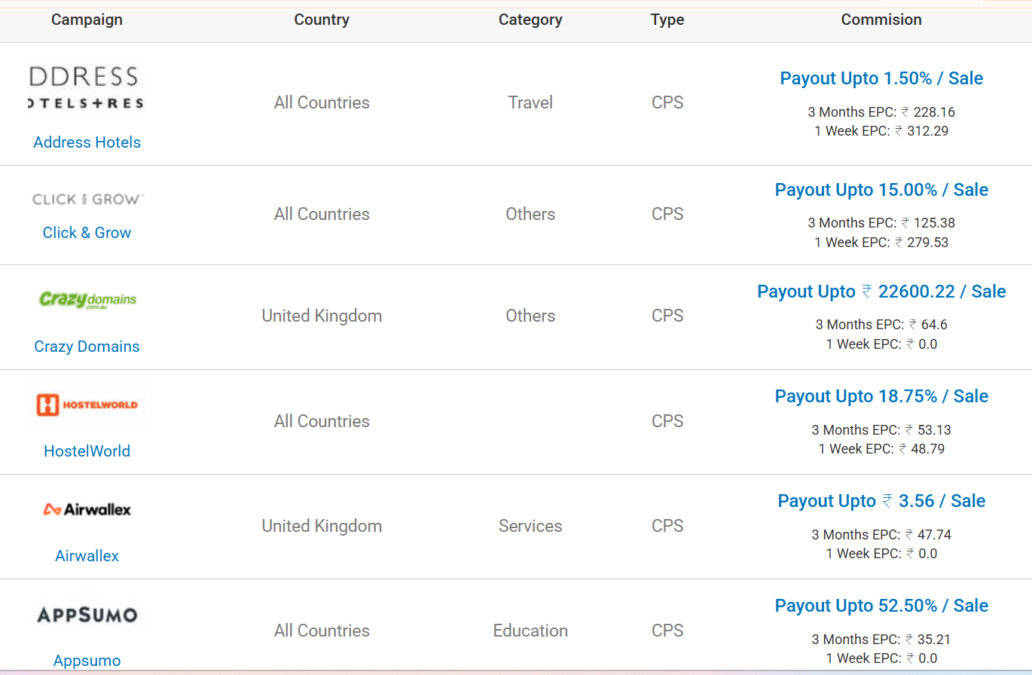
- Consider Product Types (Digital vs Physical): Some niches are better suited to digital products (like software, courses, e-books) and others to physical goods (clothing, electronics, supplements). There are pros and cons to each.
- Digital product niches: Include things like online courses, eBooks, software subscriptions or memberships.

These often convert at higher rates (because they’re cheaper and instant) and can be promoted indefinitely (no inventory worries). However, they may have higher refund rates and usually lower average order value per sale.
- Physical product niches: Involve tangible items (apparel, gadgets, home goods). These have broad appeal as many people buy clothing, electronics, health supplements, etc.

Physical products convert well on paid channels like Facebook or YouTube and offer large markets (e.g. apparel, electronics, weight loss supplements, kitchen appliances, etc. are applicable to just about anyone).
On the downside, physical niches often face higher advertising costs and competition, and vendors split their price into costs and commissions, meaning affiliates usually earn a smaller percentage.
In summary, digital niches often yield quicker sales while physical niches have wider audiences but can be costlier to promote. You can succeed with either by just knowing the differences.
- Passion vs Profit (Balance Both): It’s tempting to follow your hobby, but also look at profitability. Ideally choose where passion and profit intersect.

Niches you care about will keep you motivated. For example, if you love coffee or cars, those are big markets (and becoming a “petrol-head” can be an advantage). However, ensure there are buyers in that niche.
A highly passionate niche with little demand won’t pay well, and a high-paying niche you hate won’t keep you going. In practice, look for niches that excite you and have enough audience and affiliate programs to make money.
- Longevity: Prefer evergreen niches over fads. Topics like health, personal finance, or home improvement tend to last, whereas something like a one-hit viral gadget may fade.
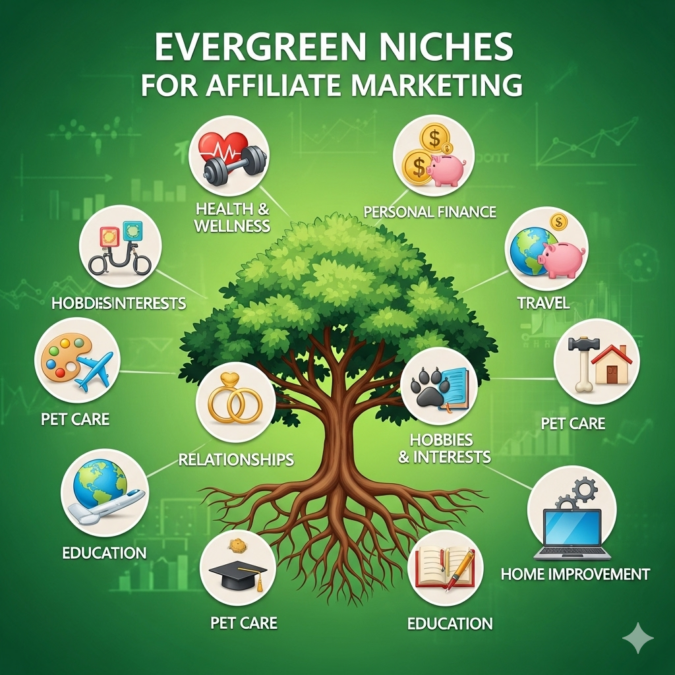
Tools like Google Trends (again) can reveal if a topic is just a fleeting spike or consistent. Thus, an “evergreen niche” can earn profit on an ongoing basis, whereas a short-lived trend is risky.
Top Niches in the US and UK
While most affiliate strategies work globally, some niches perform especially well in each market. Here are current high-performing categories:
Top Niches in the US
Retail and e-commerce still dominate US affiliate marketing. The Performance Marketing Association reports that retail (including clothing, electronics, accessories) drives the most affiliate sales.
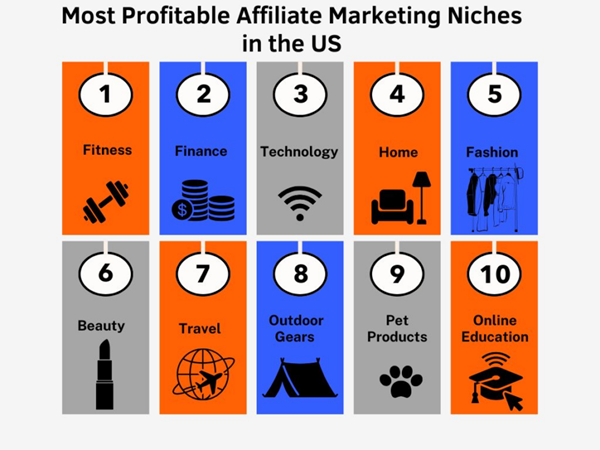
Fast-growing areas include Travel (airlines, hotels, booking sites) and Financial Services. Travel affiliates see huge returns (the study noted a $19 return on ad spend for travel) and Financial Services (credit cards, loans, investment apps) has expanded its share of affiliate spend.
Telecom and Tech (mobile plans, software, gadgets) are also ramping up affiliate investment. In short, think retail (especially tech gadgets and fashion), travel/hospitality, and finance in the US market.
Top Niches in the UK
Finance and insurance niches are particularly hot in the UK with triple-digit growth year-over-year in insurance categories. Life insurance revenue is up +330% and car insurance +216%.
Pet insurance (up +42%) and other niche insurances are also growing. Similarly, UK consumer interest in financial tools is rising as affiliates for credit checks and budgeting apps saw a +148% jump in conversions. This points to strong opportunities in personal finance (credit score services, money apps) and all kinds of insurance (car, life, pet).

Other solid niches in the UK include travel, e-commerce (as elsewhere) and technology gadgets. While UK fashion and home decor are big online markets, the fastest affiliate growth right now is in finance/insurance.
In each country, adapt to local interests. For example, UK consumers use price-comparison sites heavily (MoneySuperMarket has millions of users), so niches around comparisons or deal-finding can work. The US market is simply larger, so you can often find broader audiences, but it’s also more competitive. Beginners in the UK might focus on less crowded corners of finance/insurance, or on consumer tech and travel.
Validating Niche Ideas
Before fully committing to a niche, validate your idea with data and research. Useful tools and strategies include:
- Google Trends: As mentioned, Google Trends helps you confirm demand. If “plant-based protein” is steadily rising in searches in the US or UK, that’s a good sign.

If “hoverboard” peaked in 2015 and vanished, be wary. Set the region (United States or United Kingdom) to see local interest.
Rising interest = potential profit, steady interest = stable demand, declining interest = caution.
- Amazon Best Sellers: Visit Amazon’s Best Sellers pages in relevant categories (books, electronics, home, etc.). These lists show top-selling products in real time. If many top items fall into a theme (e.g. wireless earbuds, fitness trackers, kitchen gadgets), that niche is hot.
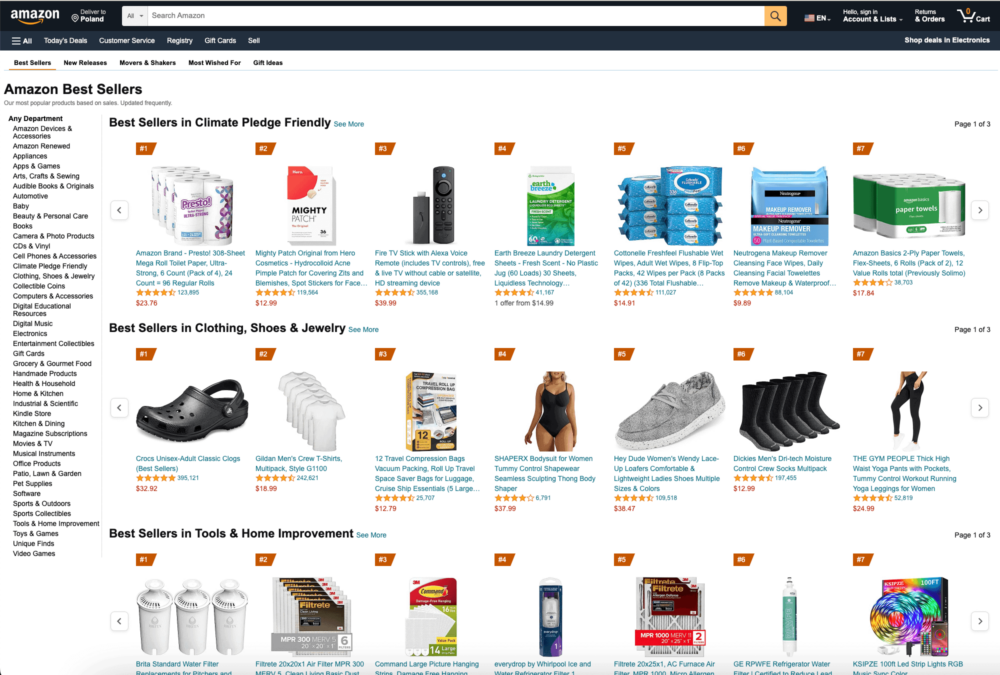
For instance, Amazon’s Best Sellers currently highlight items like wireless earbuds, Fire TV sticks, fitness trackers, and kitchen blenders. Seeing your niche products on best-seller lists means consumers are buying them, so affiliate sales are possible.
- Affiliate Network Directories: Use affiliate networks themselves to gauge opportunity. As noted, search for your niche terms on networks like Cuelinks or AWIN.
For example, if “yoga mats” on an affiliate network shows dozens of mat products each with thousands of reviews, that niche is proven. Also look at commission levels and cookie windows on those programs.

- Keyword Research Tools: Tools like Google Keyword Planner, Ubersuggest, or free plugins (Keyword Surfer) can tell you how often people search for niche keywords.
High search volumes with medium to low competition are ideal. The more people are interested [in niche keywords], the more you get a chance to make a profit. If thousands search “vegan protein powder” each month and few sites target it, that’s a strong signal.

- Competitive Analysis: See who’s already successful. If big blogs or YouTubers dominate your niche, that means proven demand (you’ll have to differentiate, though).
If you can’t find any established players, think why? Sometimes niches are emerging, which could be an opportunity, or too obscure.
Reviewing forum discussions, Reddit threads, or social media hashtags can also reveal what subtopics people care about.
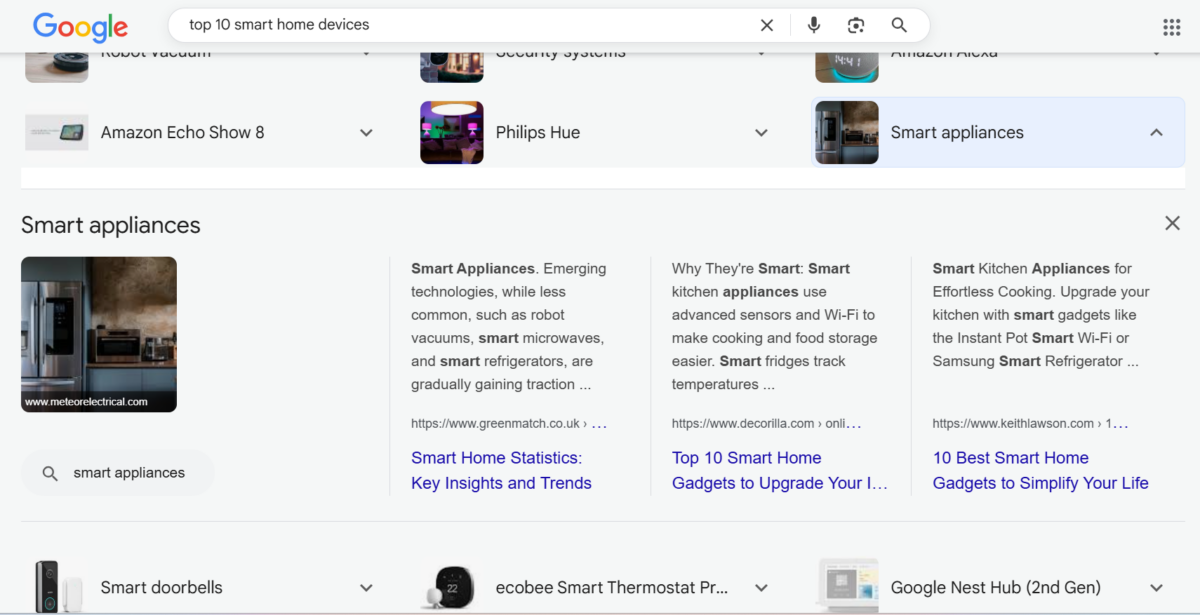
Using these methods together gives confidence. For example, you might notice “smart home assistants” is trending up on Google Trends, many related products are #1 on Amazon, and affiliate programs from Amazon or Best Buy offer commissions. That triangulation strongly validates the niche.
Passion vs Profitability
A common question is whether to choose a niche you love or one that’s most profitable. The short answer is to aim for both, but prioritize your ability to create content.
If you enjoy the topic, you’ll produce better reviews, tutorials, and social posts, which leads to traffic and sales. For example, if you “can’t live without your daily cup of joe”, the coffee niche might be perfect because your enthusiasm makes promotion natural. Likewise, being a “petrol-head” makes promoting car products fun and authentic.
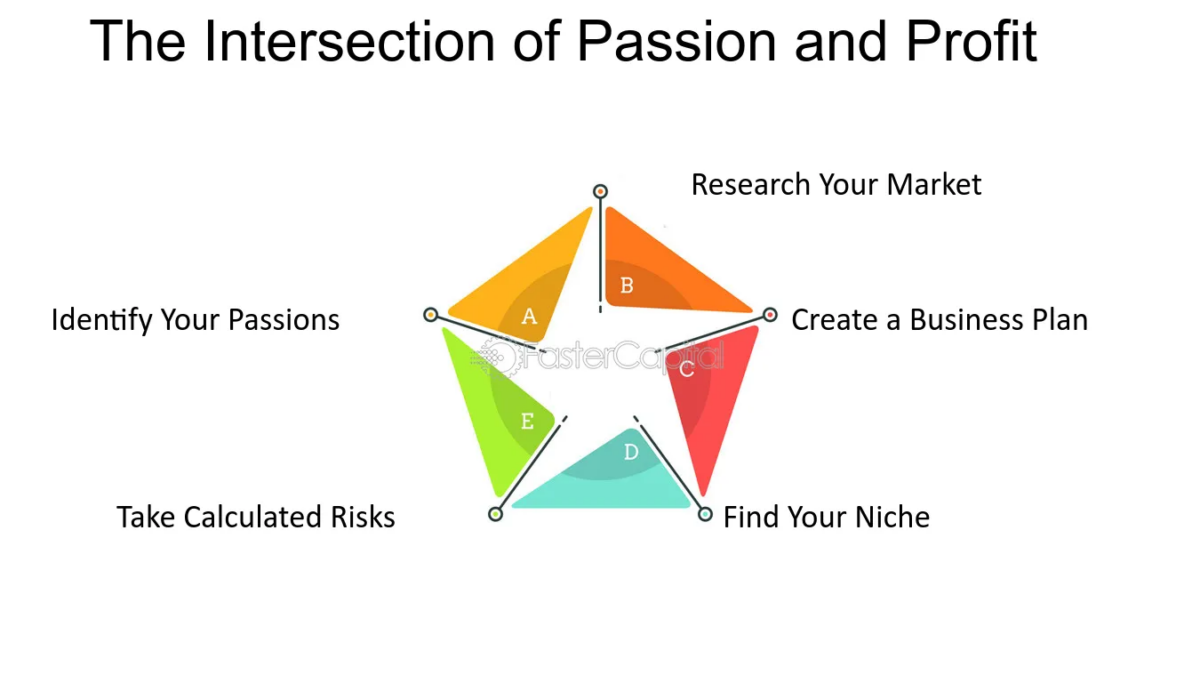
However, a niche must also have customers. High commissions or big markets won’t matter if no one is interested in that topic. So do your research (as above) to ensure money can be made.
In practice, look for niches where passion meets demand. Many successful affiliates start with something they enjoy (e.g. fitness, tech, crafts) but then verify there are affiliate programs and buyers in that space.
If your passion lies in a tiny hobby with no audience, either broaden it or pick a more mainstream angle. Conversely, don’t force yourself into a niche you hate just because it pays well because without genuine interest, your content will suffer. The trick is to find a sweet spot where you care and you can earn!
Narrowing Broad Niches into Sub-Niches
If your initial niche idea seems too broad (like “parenting” or “home decor”), refine it into a sub-niche for better targeting. A narrower niche often means less competition and a more engaged audience.
For example, instead of “gardening,” try “urban container gardening.” Instead of “fitness,” try “yoga for office workers”. Micro-niches (very specific topics) usually have lower search volume but higher conversion rates.
Both broad and narrow approaches can be profitable. Broad niches get more visitors, while niche subjects turn those visitors into buyers more easily.
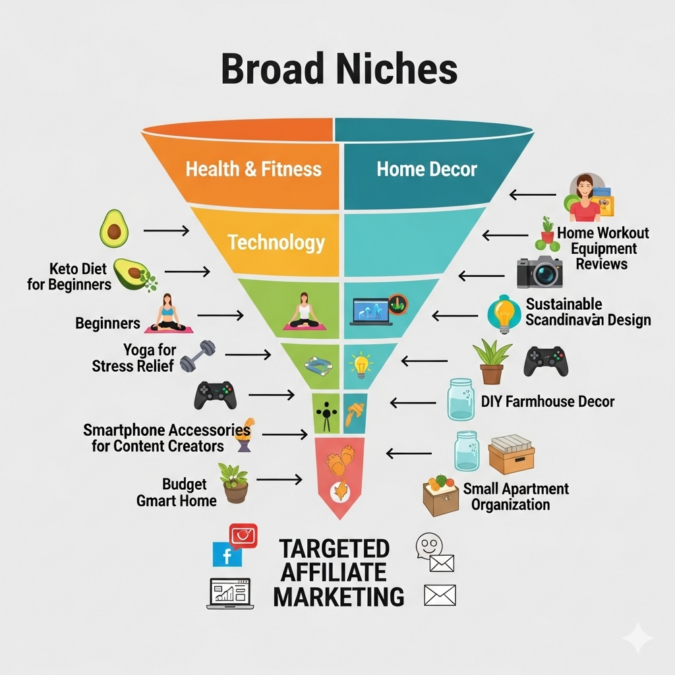
Begin by brainstorming specific problems or audiences within your broad topic. If your broad niche is “pets,” you could narrow to “bearded dragon care” or “homemade dog treats”. If it’s “travel”, try “budget travel in Europe” or “luxury cruises”.
This focus helps you become the go-to expert. As a rule of thumb, target a group or problem narrowly enough that it defines your content and keywords.
For each candidate niche, ask: Is there a specific audience or angle? Are there products explicitly for this subgroup? If yes, you’ve likely found a viable sub-niche.
Remember that you can pick either broad or narrow based on your expertise, but micro-niches can “make you profit” by converting better!
Key Takeaways for Beginners
- Choose a niche you understand and are enthusiastic about, but verify that it has demand and affiliate options.
- Use data tools (Google Trends, Amazon Best Sellers, network directories) to ensure real interest and products exist.
- Look at examples in the market. In the US, think retail, travel, finance and tech while in the UK, finance/insurance and personal finance are especially strong right now.
- Balance passion and profit as being passionate helps you stick with it, but always check there are customers and commissions in your niche.
- Narrow Down: If a topic is huge, find a smaller corner of it. Micro-niches can be easier for beginners to rank and convert.
By following these steps, beginners can confidently pick an affiliate marketing niche that fits their interests and has real profit potential. The key is to research thoroughly, use the tools at your disposal, and aim for a niche where you can serve an audience better than anyone else.

Sahil Ajmera is content writer with more than 7 years of work experience in field of Affiliate Marketing, Digital Marketing, etc. He loves saving money on everything. His aim is to get readers exactly what they are looking for and that too without wasting much of their time. Whatever he is writing on, you are sure to find a way to earn & save good!