

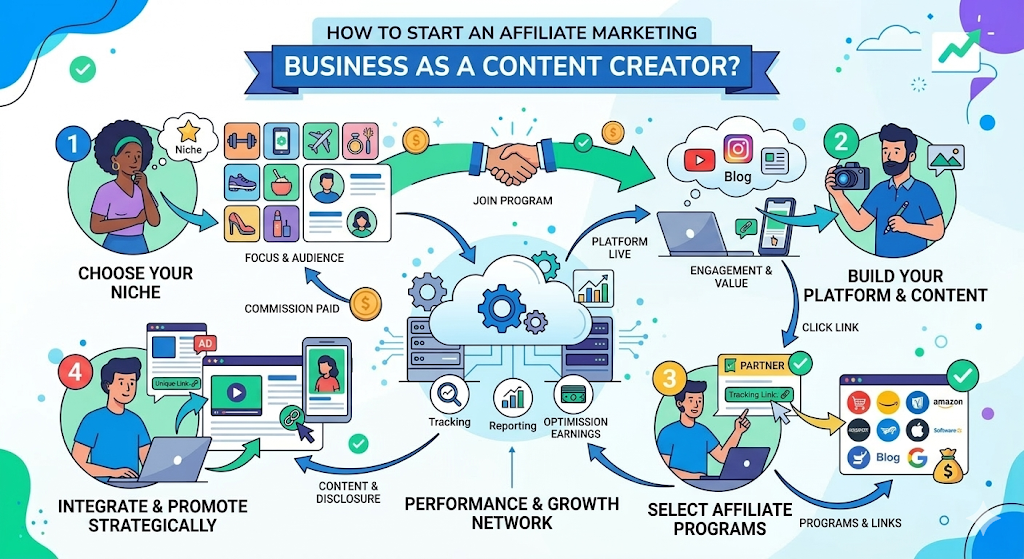
Affiliate marketing has become a cornerstone of monetizing digital content. For publishers and content creators, anyone from bloggers and YouTubers to social media influencers and podcasters, it offers a way to earn income by recommending products or services they genuinely like to their audience.
Unlike display advertising, which pays per view or click, affiliate marketing is performance-based. You earn a commission only when your referral results in a specific action, usually a sale.
If you already have a platform and an engaged audience, or are willing to build one, starting an affiliate marketing business is a viable path to generating revenue. Here is a step-by-step guide on how to get started.
Understanding the Basic Model
Before diving in, it’s essential to understand how the affiliate marketing ecosystem works. It generally involves three or four parties:
- The Merchant (or Advertiser/Retailer): The company that creates and sells the product or service.
- The Affiliate (The Publisher/Content Creator): You. You promote the merchant’s products to your audience.
- The Consumer: The person who sees your promotion and makes a purchase.
- The Affiliate Network: A platform that acts as an intermediary, managing the tracking, reporting, and payments between affiliates and merchants.
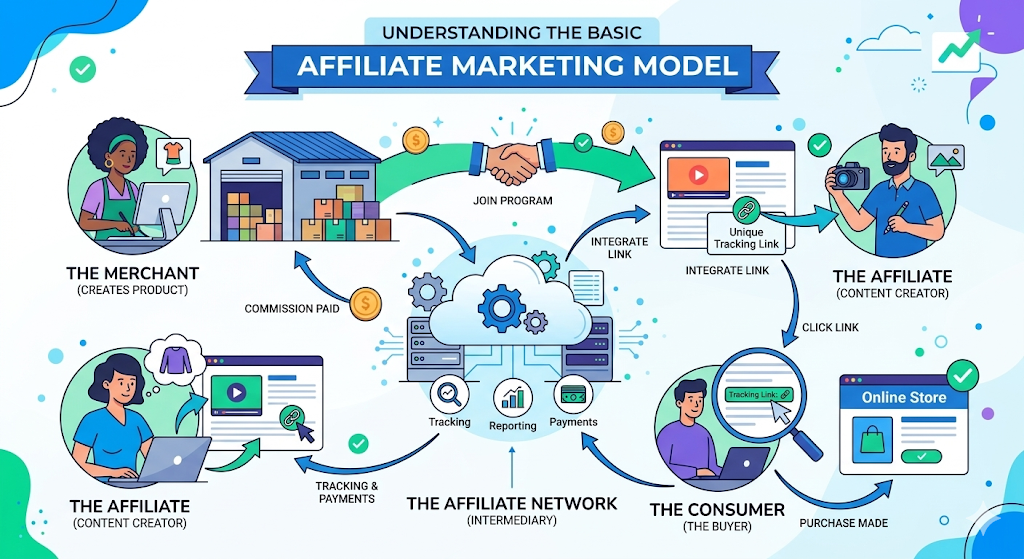
The process typically flows like this: You join an affiliate program, get a unique tracking link, incorporate that link into your content, a consumer clicks the link, and if they make a purchase, the merchant pays you a commission.
Step 1: Choose Your Niche and Define Your Audience
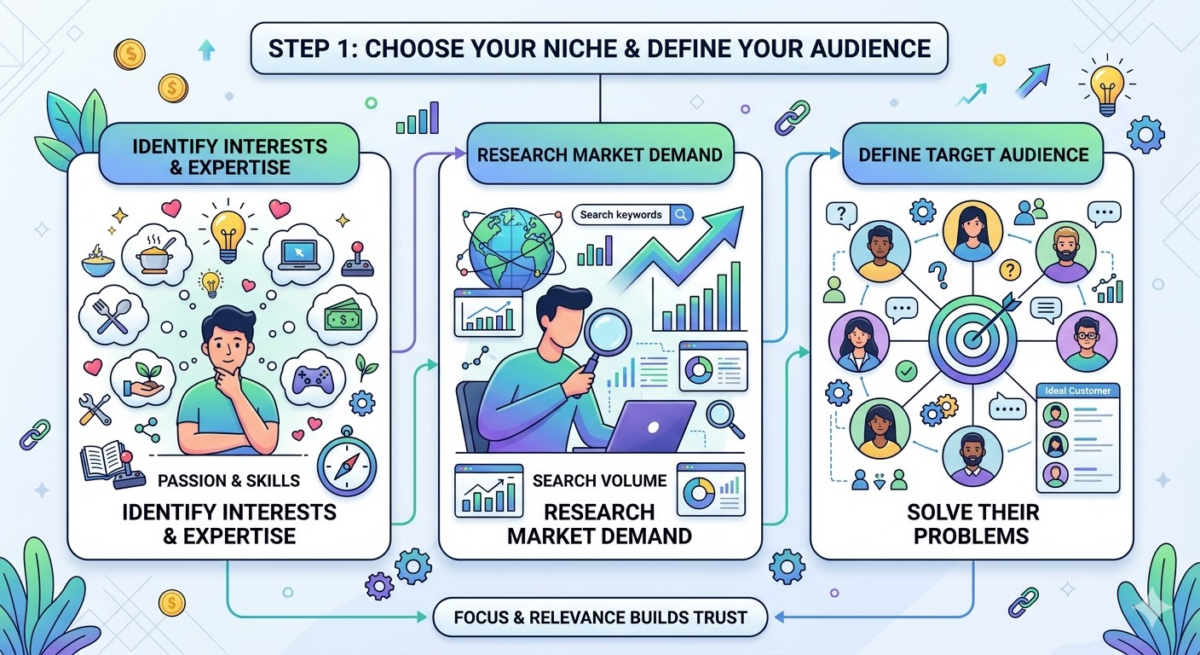
Successful affiliate marketing relies heavily on trust and relevance. Trying to promote everything to everyone rarely works. You need to focus on a specific niche.
- Identify Your Interests/Expertise: What are you passionate about? What topics do you have knowledge in? This makes content creation easier and more authentic.
- Research Market Demand: Use tools like Google Trends or keyword research tools to see if there is active interest and searching within your chosen niche.
- Define Your Target Audience: Who are you speaking to? What are their problems, interests, and buying behaviors? Understanding your audience helps you recommend products that solve their problems.
Step 2: Build Your Platform and Create Valuable Content
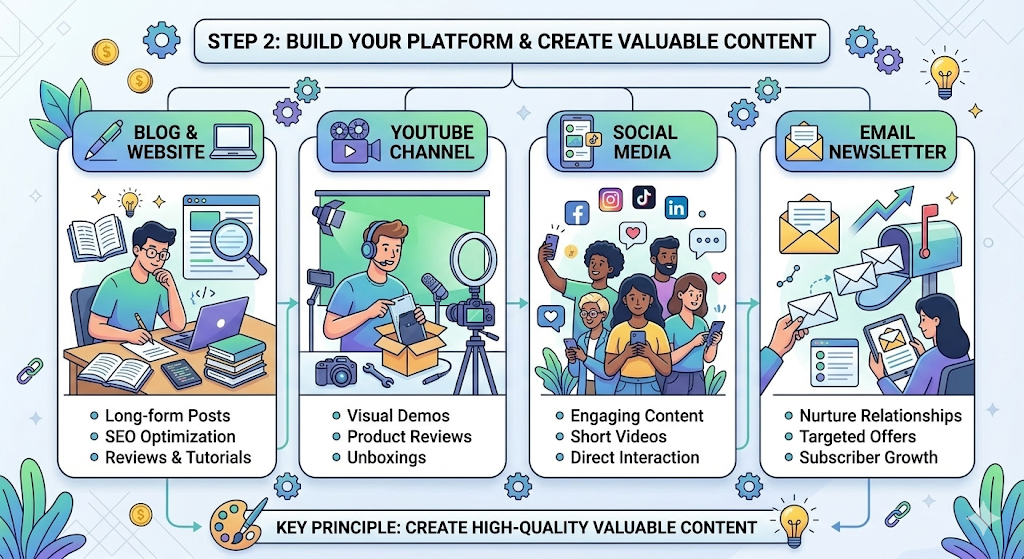
You need a digital space,a platform,where you can publish content and connect with your audience. As a publisher or content creator, this is your primary asset.
Common platforms include:
- A Blog/Website: Excellent for long-form, SEO-friendly content like reviews and tutorials.
- YouTube Channel: Ideal for visual demonstrations, product unboxings, and reviews.
- Social Media (Instagram, TikTok, LinkedIn, etc.): Great for shorter, engaging content and direct audience interaction.
- Email Newsletter: A powerful way to nurture relationships and promote offers directly to an interested group.
The key is to focus first on creating high-quality, valuable content that attracts and retains an audience. Affiliate links should enhance your content, not be the sole purpose of it.
Step 3: Find and Join Affiliate Programs
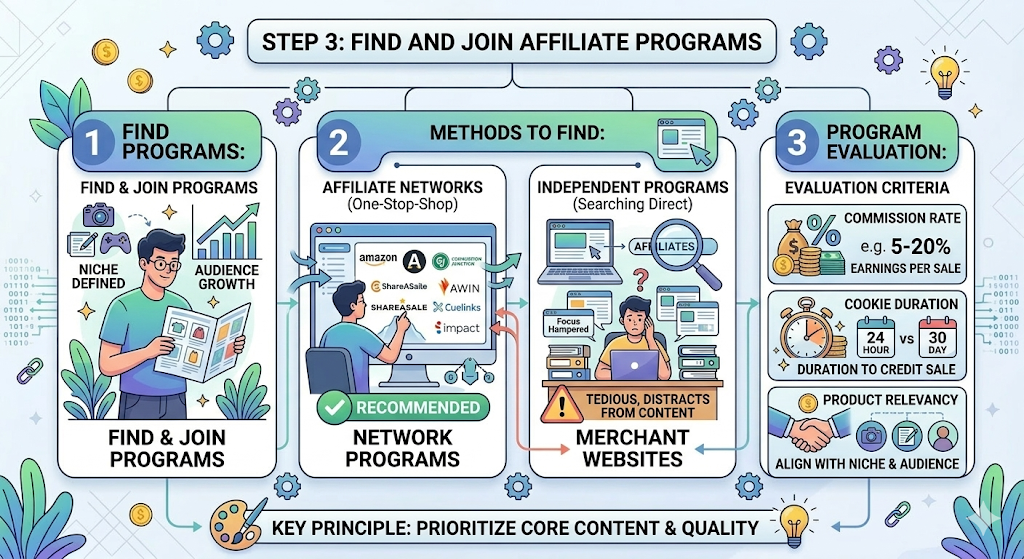
Once you have established your niche and started building an audience, you can look for products to promote. There are two main ways to find affiliate programs:
- Join Affiliate Networks: These platforms host thousands of merchant programs in one place. Popular networks include Amazon Associates, Cuelinks, ShareASale, Commission Junction, Impact, and Awin.
- Search for Independent Programs: Big companies manage their own affiliate programs directly. You can often find a link to “Affiliates” or “Partners” in the footer of a merchant’s website. However, it is not recommended because your focus towards the core i.e. ‘your content’ gets hampered as managing multiple programs is tedious which often lowers performance. Also, most companies have their programs on affiliate networks.
When evaluating programs, consider:
- Commission Rate: How much will you earn per sale?
- Cookie Duration: How long after a user clicks your link will you still get credit for a sale? (e.g., 24 hours vs 30 days).
- Product Relevancy: Do these products genuinely align with your niche and audience?
Step 4: Prioritize Disclosure and Trust
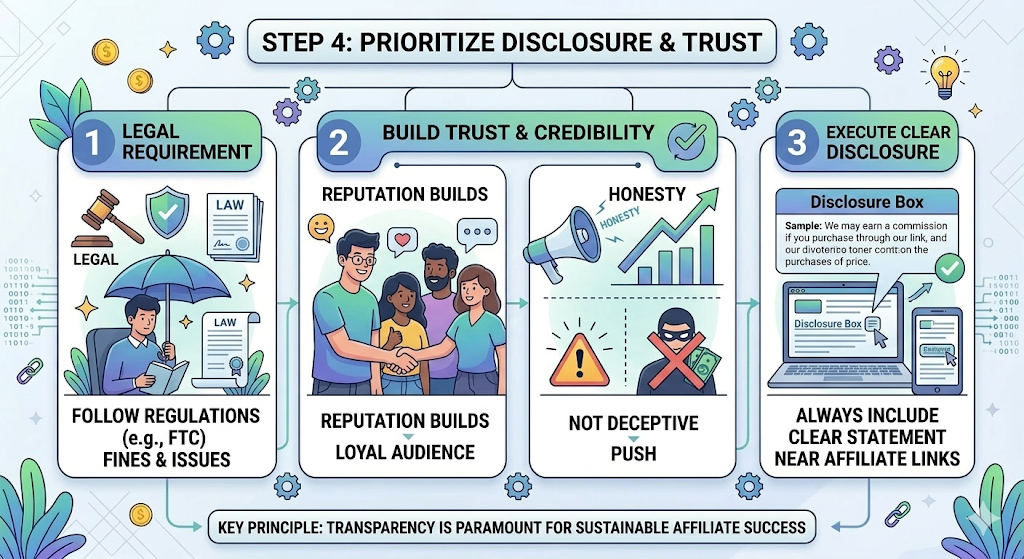
This is perhaps the most crucial step. Transparency is paramount in affiliate marketing.
- Legality: In many regions (like the US via the FTC), you are legally required to disclose when you use affiliate links.
- Trust: Your audience trusts your recommendations. If they feel you are deceptively pushing products just to make money, that trust will vanish.
Always include a clear and conspicuous disclosure statement near your affiliate links, explaining that you may earn a commission if they purchase through your link at no extra cost to them.
Step 5: Integrate Affiliate Links Strategically
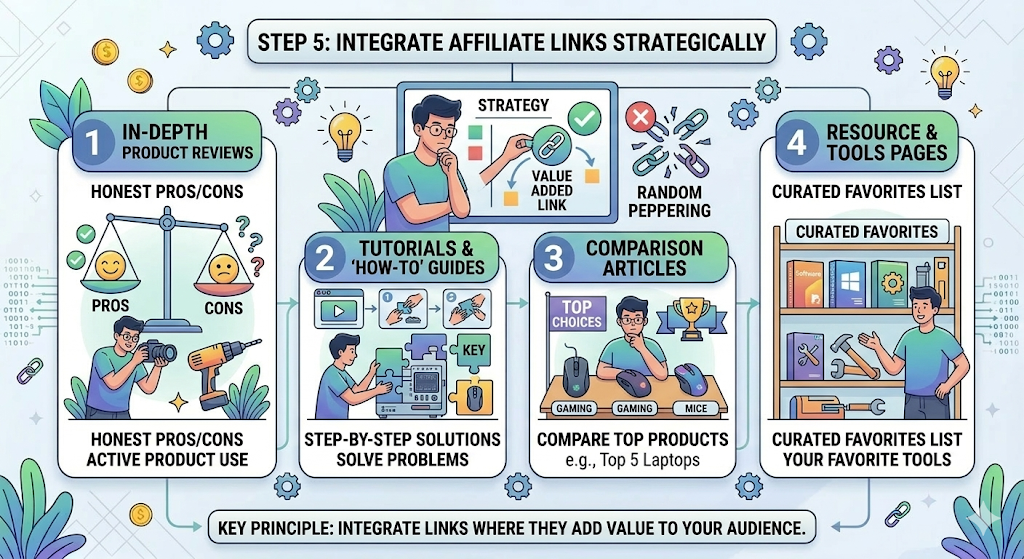
Don’t just pepper links randomly throughout your content. Integrate them naturally where they add value for the reader/viewer. Successful content types include:
- In-Depth Product Reviews: Honestly discuss the pros and cons of products you have used.
- Tutorials and “How-To” Guides: Show how a specific product solves a problem.
- Comparison Articles: Compare similar products within your niche (e.g., “Top 5 Laptops for Students”).
- Resource/Tools Pages: Curate a list of your favorite tools or products relevant to your audience.
Step 6: Track and Optimize Your Performance

Affiliate marketing is not a “set it and forget it” business. You need to track your results to understand what’s working and what isn’t.
Affiliate programs and networks provide dashboards where you can monitor key metrics:
- Clicks: How many people are clicking your links?
- Conversions: How many clicks result in a sale?
- Conversion Rate: The percentage of clicks that convert (Conversions / Clicks).
- Earnings: Your total commissions earned.
Analyze this data to identify your best-performing content, products, and placement strategies. Use these insights to optimize your future content and promotion efforts.

Conclusion
Starting an affiliate marketing business as a publisher or content creator is a natural extension of building an online audience. By choosing the right niche, focusing on creating valuable content, prioritizing transparency, and consistently optimizing your strategy based on data, you can build a sustainable revenue stream while providing genuine recommendations to your audience. Remember that success takes time and consistency; focus on building trust first, and the revenue will follow.

Sahil Ajmera is content writer with more than 7 years of work experience in field of Affiliate Marketing, Digital Marketing, etc. He loves saving money on everything. His aim is to get readers exactly what they are looking for and that too without wasting much of their time. Whatever he is writing on, you are sure to find a way to earn & save good!