

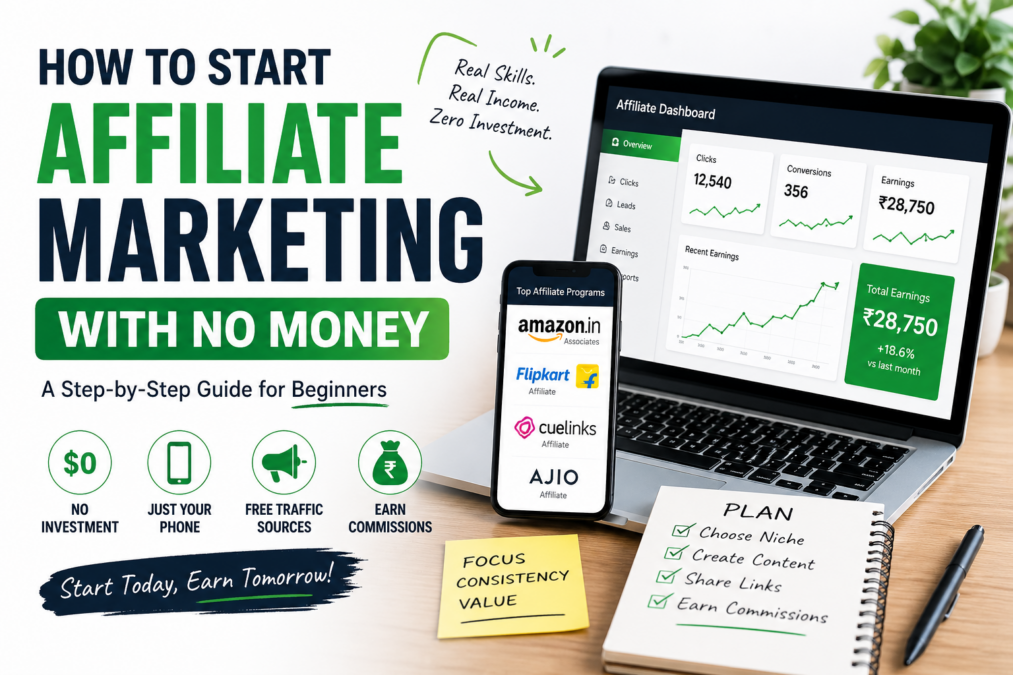
- Affiliate marketing basics: You can earn commissions by promoting products without spending money upfront. Most affiliate programs are free to join, and all you invest is time and effort.
- Key steps: Pick a specific niche you care about, sign up for free affiliate networks (like Amazon Associates or Cuelinks), and start creating valuable content that naturally includes your affiliate links.
- Free platforms & tools: Use free platforms (blogs, YouTube, TikTok, social media) to publish content and drive organic traffic. Leverage free tools like Mailchimp (250 contacts) for email, Canva for graphics, and Google Analytics/Search Console for tracking.
- Traffic & growth: Focus on SEO and engagement. Optimize for relevant keywords, use hashtags, and answer questions in forums or Q&A sites. Google rewards helpful, unique content, so avoid copy-pasting; always add value.
- Legality: Always disclose affiliate links to comply with FTC rules. Trust and transparency are crucial.
- 30-day action plan: Follow a structured 30-day schedule (planning, content creation, promotion, analysis) provided below to launch your affiliate business step-by-step.
By following these tactics and staying consistent, even beginners with zero budget can successfully start affiliate marketing.
Table of Contents
What is Affiliate Marketing?
Affiliate marketing is a performance-based way to earn money online. You partner with a merchant or affiliate network and promote products or services using special affiliate links. When someone makes a purchase (or takes a defined action) through your link, you earn a commission.
Crucially, you don’t need money to join most affiliate programs: sign-ups are usually free. You are essentially paid for referrals, so your main investment is time and effort, not cash.
Major affiliate networks like Amazon Associates or Cuelinks let anyone sign up at no cost. These programs offer links to millions of products (from ebooks to electronics), and you earn a percentage of each sale.
For example, Amazon’s program covers almost every niche (though with relatively low commission rates), while Cuelinks specializes in high-commission products across 1000+ advertisers (including Amazon). You can join multiple programs to diversify your income streams.
In summary, affiliate marketing with no budget is about free entry and organic promotion: you provide valuable content or recommendations, and earn commissions on resulting sales.
Why You Can Start Affiliate Marketing without Money
Starting with no money simply means you focus on free tools and platforms. You don’t need paid ads, hosting or fancy gear in the beginning. For content publishing, there are no-cost options: free blogging sites (WordPress.com, Medium, Blogger), free social channels (YouTube, TikTok, Instagram, Facebook, etc.), and Q&A sites (Quora, Reddit) all allow you to share affiliate links organically.
In fact, many beginners succeed by leveraging social media and free content platforms. For traffic, organic search (SEO) and viral social posts replace paid ads. Free tools like Google Analytics and Search Console let you measure results without cost.
Also, many affiliate platforms provide free resources to help you start. For instance, Cuelinks and similar networks offer guides and even free funnel-building tools that let you collect leads and promote products without spending on software.
The trade-off is time: it will take longer to build an audience with only free methods, but it’s entirely achievable. With creativity and consistency, you can build momentum and re-invest any small earnings to gradually expand your efforts.
Below are the steps to Start Affiliate Marketing with No Money in 2026 so let’s get started!
1. Choosing a Profitable Niche
A successful affiliate site begins with a profitable niche. A niche is a specific topic or market segment you focus on (e.g. “budget home workouts” rather than just “fitness”). Ideally pick something you’re interested in, because sustained content creation requires passion.
Research which niches have demand and money. For example, trending and evergreen niches in 2025 included technology (especially AI tools and software), health & wellness, parenting & family products, and finance/business tools (source: raisingandrelating’s How to Start Affiliate Marketing with No Money in 2025 guide).
Rather than very broad fields (like “health” or “finance” alone), niche down. For instance, instead of “personal finance,” focus on “investing for millennials” or “budgeting for college students.” This sub-niche approach helps you stand out.
Consider the audience: who needs what problem solved? If targeting pet owners, you might review dog grooming tools; for new moms, focus on postpartum fitness. The more specifically you define your audience (age, interests, problems), the easier it is to create content they love and convert visitors into buyers.
After selecting a niche, do market research: see what competitors are doing, read forums or social media to understand audience questions, and identify in-demand products.
Check existing affiliate programs in that niche: compare their commission rates and product popularity before joining. Picking a lucrative niche and matching it with good products sets the foundation for earning without spending any cash.
2. Signing Up for Free Affiliate Programs
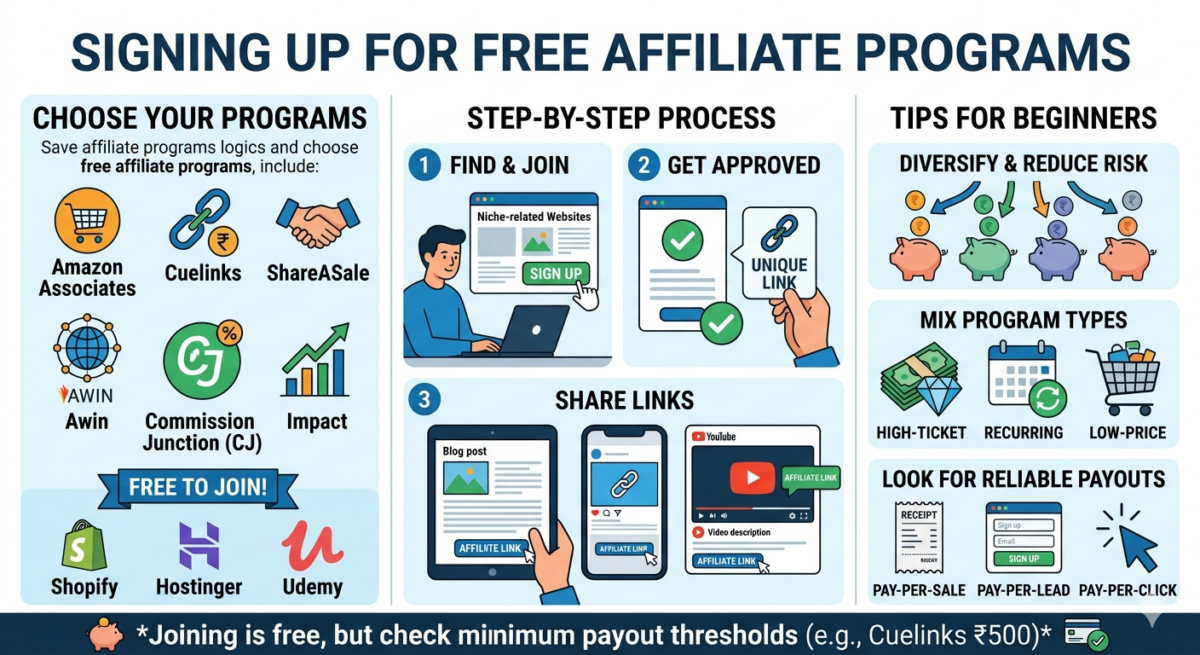
Once you have a niche, join affiliate programs related to it. The good news is affiliate programs are free to join. For example, Amazon Associates and Cuelinks are completely free for publishers. Other major networks include ShareASale, Awin, Commission Junction (CJ), and Impact, which also allow free sign-up and cover many industries. You can also join brand-specific programs (Shopify, Hostinger, Udemy, etc.) depending on your niche.
Look for programs with fair commissions and reliable payouts. Some pay-per-sale (typical commissions), others pay-per-lead (commission for sign-ups), and a few pay-per-click. Beginners often start with a mix: maybe one or two high-ticket items (big commissions, like software subscriptions), one or two recurring programs (monthly subscription products), and some lower-priced products that sell easily. Avoid joining only one program; spreading across multiple merchants reduces risk (if one program shuts down, you won’t lose all income).
Most programs make it easy to find affiliate links or banners. Once approved, grab your unique affiliate link for a product. You can place this link in content on your platforms. Remember that joining is free, but you will typically need to meet minimum payouts later (e.g. Amazon pays monthly after $10 earned, Cuelinks ₹500 ($5), etc.). Since we’re not investing upfront, you may focus on networks with low payout thresholds (like Cuelinks) until you start earning.
3. Creating Content on Free Platforms
With affiliate programs ready, start publishing valuable content on no-cost platforms. Content is the heart of your affiliate strategy: it attracts an audience, builds trust, and naturally places your affiliate links. Here are some free platform ideas and content tactics:
- Blog Posts (Free Blogging): Use a free blog host like WordPress.com, Blogger, or Medium to publish articles. These platforms require no hosting fees. Write helpful, in-depth posts like product reviews, how-to guides, and listicles. For example, “Best Home Workout Apps (Free Guide)” or “How to Use Canva for Designing Social Media Posts” with affiliate links to the apps. Optimize your posts with target keywords (learn basic SEO via Google’s free SEO Starter Guide) so they can rank in Google. Since Google values unique content, always add your own insights: don’t just paste manufacturer descriptions.
“In India, WhatsApp sharing and Instagram reels convert better than blogs in the initial phase because trust builds faster.”
- YouTube Videos: YouTube is a free video platform with over 2 billion users. Create videos (using your phone or free screen-recording tools like Loom) that provide value: “How to Apply a Quick Makeup Look” or “Tutorial: Building a Home Office on a Budget.” YouTube allows placing affiliate links in video descriptions. Use a link shortener (e.g. bit.ly) or link to a free landing page so you can track clicks and capture emails. Include keywords in your video title and description to help YouTube’s search algorithm. Remember to disclose affiliate links in the video or description (e.g. say “links below are affiliate links”), as required by law.
- Short-Form Video (TikTok, Instagram Reels): Create quick, engaging content on TikTok or Instagram Reels. Show a demo of a product, unboxing, or a tip/trick. For example, a 30-second fitness routine using a particular home gym tool. Add your affiliate link in your bio (profile link) and mention in the video “link in bio.” Use trending music and hashtags to reach a wider audience. TikTok and Instagram profiles allow one link, so use a tool like Linktree or your email capture page as the target. Consistency is key: daily or several times a week, as algorithms favor active accounts.
- Pinterest Pins: Pinterest acts like a search engine for images. Make vertical pin graphics (use free Canva templates) with keyword-rich titles and descriptions. For instance, pin “10 Healthy Meal Prep Recipes” linking to your blog. Over time, well-optimized pins can rank and drive traffic for months. Use keywords that Pinterest users search for. Unlike Facebook/Twitter, pins have a very long lifespan, so this is a powerful free traffic source for product-heavy niches (fashion, home, recipes, etc.).
- Social Media Posts & Communities: Share value on Facebook, Twitter, LinkedIn, or niche forums. For example, join a relevant Facebook group and answer questions (without spamming links). On Quora and Reddit, answer questions in your niche with thorough, helpful responses: then subtly include your blog link or product link if it genuinely solves the asker’s problem. Always provide more value than you ask for clicks, or risk being banned. These channels cost nothing and can drive targeted visitors if used right.
- Email Marketing (Free Tiers): Start building an email list using a free email tool. For instance, Mailchimp’s free plan lets you store up to 250 contacts and send 500 emails/month. Offer a simple lead magnet (like a free PDF guide) in exchange for email sign-ups. Use free tools like Mailchimp, MailerLite, or HubSpot’s free CRM to manage subscribers. With an email list, you own a direct channel to your audience: you can regularly send newsletters that include your affiliate links or special deals. This is powerful because it turns one-time visitors into repeat traffic without ad spend.
By using these free platforms and tools, you create multiple traffic sources without investing cash. Each content piece should aim to solve a problem or answer a question for your audience, building credibility. As Google’s AI and search features emphasize, make your content helpful and people-first. Structure posts with clear headings, bullet lists, and answers so both users and AI can easily grasp the main points.
4. Free Traffic Strategies
Traffic is the fuel for affiliate sales. With no budget, you rely on organic (free) traffic and clever hacks:
- SEO (Search Engine Optimization): Use keyword research tools (free ones like Google Keyword Planner or Ubersuggest) to find terms your audience searches for. Optimize your blog posts, video descriptions, and Pinterest pins around these keywords. Write descriptive titles and meta descriptions that entice clicks. Internally link related content on your site or profiles to help Google crawl your pages. Monitor your Google Search Console (free) to see which keywords bring traffic and adjust accordingly. Remember, Google prioritizes unique, valuable content: sites with “thin or scraped content” are penalized. Always add personal insights or additional information that isn’t available on hundreds of other sites.
- Social Media & Hashtags: Consistently post on social channels and engage with trends or community discussions. Use relevant hashtags on Instagram, TikTok, and Twitter to increase visibility. For example, on Instagram include 5-10 targeted hashtags related to your post. Engage with influencers or comments in your niche to get noticed. Also share your content on Facebook and LinkedIn: for instance, join a related Facebook group and post an article link with a genuine introduction.
- Content Repurposing & Cross-Promotion: Republish your content in different formats. A blog post can be turned into a video script, a podcast, or a slide deck on Slideshare. Share snippets on social media linking back to the full piece. This multiplies your reach without extra cost.
- Community Engagement: Participate in forums (like Stack Exchange communities related to your niche, or subreddits) by genuinely helping. Only mention your affiliate link if it directly answers a question and your answer has useful info beyond the link itself. The goal is to drive curious readers to your own content where your links are placed, rather than hard-selling.
- Free Listings & Alternatives: For local or product niches, consider free listings (e.g., if relevant, list products on Pinterest shoppable pins or community marketplaces). Or answer People Also Ask (PAA) queries on Google by making short “how-to” posts that directly solve specific queries (this can generate featured snippets).
By focusing on quality content and smart promotion, you harness AI-driven search features. Google’s AI Overviews pick concise, informative answers; structuring your content with clear headings, bullet points, and FAQ sections makes it more likely to be highlighted. Over time, these evergreen tactics will attract steady visitors to your affiliate offers without paying for ads.
5. Free Email List Building
Growing an email list is one of the best long-term affiliate strategies, and it can be done at no cost initially. With your free blog or social profiles, invite readers to subscribe for exclusive tips or freebies.
Tools like Mailchimp, MailerLite, or HubSpot CRM offer free plans to start. For example, Mailchimp’s free tier includes up to 250 contacts (recipients) and basic email templates.
Create a simple lead magnet (e.g. an ebook or checklist) in your niche that solves a problem, and offer it in exchange for an email. Use free landing page builders (Mailchimp, Wix, or even simple Google Forms) to capture addresses.
Each email you send to your list is a chance to share valuable content or deals with your affiliate links. Since email subscribers have already expressed interest, they are more likely to click.
Make sure to provide consistent value (tips, insights, deals) so they open your emails. Over time, a growing list multiplies your earning potential: best of all, building this list costs nothing but your effort and time.
6. Compliance and Disclosure
Even with zero budget, you must follow legal and platform rules. Key among these is clear disclosure of affiliate links. The US Federal Trade Commission (FTC) requires that affiliate marketers clearly disclose any material connection to products they endorse.
In plain language: whenever you link to a product for commission, you need to tell your audience (e.g., “I may earn a commission if you purchase through these links”). The FTC explicitly advises: “You should disclose the affiliate relationship both in the videos and in the description near the links.”.
In practice, put a brief disclosure at the top of your posts or videos, and/or use obvious text like “Affiliate Link” or “Sponsored” next to the link.
Also respect each affiliate program’s rules (e.g. Amazon prohibits using affiliate links in unsolicited emails or on coupon sites). And never hide links behind “shortened” URLs without disclosure: Transparency builds trust. Complying is crucial: a clear, honest approach safeguards you from legal trouble and builds audience credibility.
7. Tracking and Optimization
Even on a shoestring budget, you can and should track your results. Use free analytics tools:
- Google Analytics (GA4): Add GA to your blog or website (free) to see where visitors come from and which pages lead to affiliate clicks. You can set up Goals or use UTM tags on your links to track conversions.
- Google Search Console: Free to monitor search impressions and clicks for your site content. It reveals which keywords people use to find you, so you can optimize those posts.
- Affiliate Dashboard: Most affiliate programs have a dashboard showing your link clicks and commissions. Check these regularly to see which products convert best. Focus on promoting the top-performers.
- Link Tracking: For social or email, use free link shorteners (Bitly or TinyURL) to differentiate which promotion sources drive clicks. For example, use one short link in Instagram and another in a newsletter, then compare clicks.
Analyze these data to optimize: double down on content types and topics that get traffic, refine titles or descriptions that underperform, and update older content with fresh information or new keywords. Constantly iterating based on real feedback is how you grow sustainably without ad spend.
8. Scaling Up as You Earn
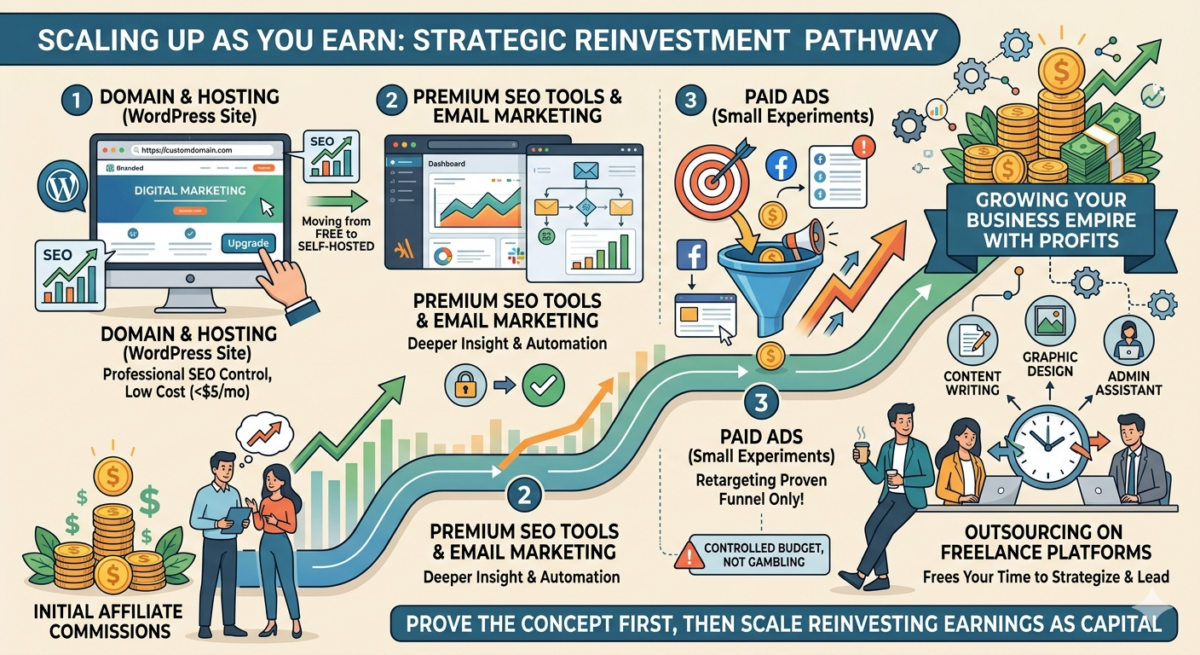
Once you start earning some affiliate commissions, you can reinvest strategically:
- Domain & Hosting: Consider moving from a free blog to a self-hosted WordPress site with your own domain. This looks more professional, gives full SEO control, and is still relatively low-cost (often <$5/month).
- Premium Tools: Upgrade to more powerful tools. For instance, paid SEO tools (like Ahrefs or SEMrush) can replace free research tools for deeper insight. A higher-tier email marketing plan allows more subscribers and automation.
- Paid Ads (small experiments): Only after you have a proven funnel, you could try a small budget for retargeting ads to your existing audience (e.g., Facebook ads to your email list) to scale faster.
- Outsourcing: If budget allows, hire freelancers (on sites like Fiverr or Upwork) to help with content writing or graphic design, freeing your time.
In short, treat your initial affiliate earnings as capital to grow. But do this only after you have a content and traffic system that works. The goal of starting with no money is to prove the concept first; scaling can follow once you’re comfortable reinvesting profits.
30-Day Action Plan
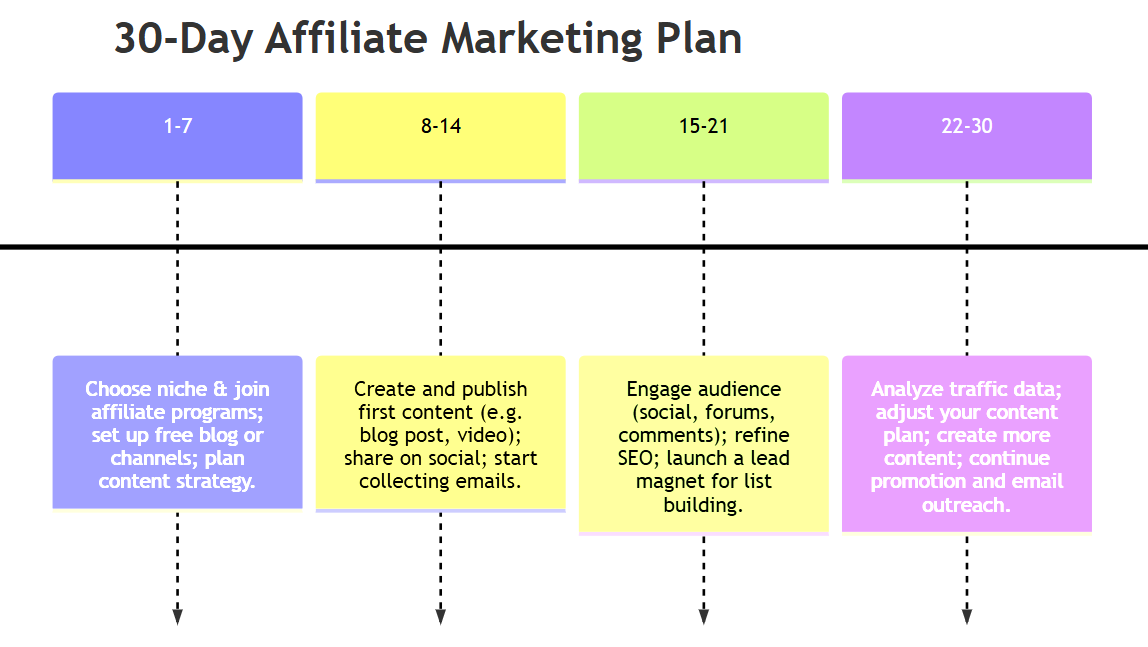
The following timeline breaks down a beginner’s first month in affiliate marketing. It groups major tasks by week: each builds on the previous one:
| Days | Tasks |
| 1-7 | Research and choose your niche; join 3-5 free affiliate programs; set up a blog/YouTube/TikTok account; outline your first content pieces (reviews, guides, etc.). |
| 8-14 | Produce and publish your first content (blog post or video); optimize it for keywords; share it on social media (Pinterest, Instagram, etc.) and forums. Create a simple email signup form with a lead magnet. |
| 15-21 | Engage with viewers/readers: answer comments, participate on Quora/Reddit. Send your first newsletter to subscribers. Promote your content via relevant hashtags and communities. Begin tracking which topics perform best. |
| 22-30 | Review analytics and affiliate stats. Refine underperforming content (add more detail, keywords). Create additional content based on what’s working. Plan next month’s topics. Consider improving your funnel (better signup offer or additional platform). |
This plan ensures daily and weekly focus, mixing content creation with promotion. Adjust as needed based on your results. Consistency is key: aim for at least a few hours per day to create content and engage, and by Day 30 you should have multiple pieces of content driving traffic.
Pros, Cons & Common Pitfalls
Pros of No-Budget Affiliate Marketing:
- Zero upfront cost: You can start immediately using free platforms and tools.
- Flexibility: You work on your own schedule and focus on any niche that interests you.
- Skill-building: You learn digital marketing (SEO, content creation, email marketing) without financial risk.
- Scalability: As you grow, you can reinvest and expand on what works.
Cons:
- Slow initial growth: Organic methods take time; earnings don’t happen overnight.
- High effort for results: You must produce consistently useful content and engage with audiences without guarantee.
- Technical learning curve: You’ll need to learn SEO, content planning, analytics, etc. (though all available free).
- Lower control over traffic: Without paid ads, you’re at the mercy of algorithms and trends.
Common Pitfalls:
- Thin or copied content: Publishing generic product descriptions or scraping content leads to Google penalties. Always add your own insights or tutorials to make content unique.
- Ignoring disclosures: Failing to clearly disclose affiliate links can violate FTC rules and damage trust. Be transparent (“I earn commission,” “affiliate link”) in all content.
- No SEO or keyword research: Publishing content without optimizing for search means your articles/videos may never be found. Use free tools to target specific long-tail keywords.
- Promoting too many products at once: Spreading yourself thin on unrelated products confuses your audience. Focus on a few complementary products initially.
- Neglecting engagement: Simply posting links without interacting (responding to comments, updating content) will stall growth. Engage with your audience daily.
- No tracking: Not monitoring results means you won’t know what works. Set up analytics early to measure clicks and conversions so you can double down on successful tactics.
By being aware of these pitfalls and strategically leveraging free resources, you can overcome the main challenges of a zero-budget start.
Conclusion
This comprehensive approach: combining niche research, free tools, consistent content, and a structured plan ensures you can start affiliate marketing without spending money. Stay patient, keep learning, and build value for your audience; with time and effort, you’ll begin to see affiliate commissions grow.
“You don’t need money to start: just your first piece of content. Publish something today, even if it’s imperfect. That’s how every successful affiliate marketer started.” Sign Up Now!
FAQs
How to start affiliate marketing with no money in India?
Start with free platforms and free affiliate programs. In India, you can join programs like Amazon Associates India and Cuelinks (Amazon, Flipkart, Myntra, 1000+ more) without paying to sign up, then promote products through a free blog, YouTube, Instagram, WhatsApp, or Pinterest. Google recommends focusing on helpful, people-first content, so publish useful reviews, comparisons, and how-to posts instead of thin or copied content.
How to start affiliate marketing with zero followers?
Zero followers is not a barrier. You can still get traffic through SEO, search-based content, and helpful posts that answer specific questions people already search for. Google’s guidance is to create original, useful content for people first, which means you should target long-tail keywords, solve a clear problem, and build trust over time rather than relying on an existing audience.
Can I share affiliate links and earn via mobile for free?
Yes. You can share affiliate links from your phone at no cost via the LetsEarn App, on platforms like Instagram, WhatsApp, YouTube, Facebook, and other free apps or mobile websites. The LetsEarn App also supports affiliate tracking on mobile apps, and provides link-building tools for creators and social media publishers. Just make sure you clearly disclose affiliate links near the recommendation, because the FTC says the disclosure should be clear and close to the link.

Sahil Ajmera is content writer with more than 7 years of work experience in field of Affiliate Marketing, Digital Marketing, etc. He loves saving money on everything. His aim is to get readers exactly what they are looking for and that too without wasting much of their time. Whatever he is writing on, you are sure to find a way to earn & save good!