

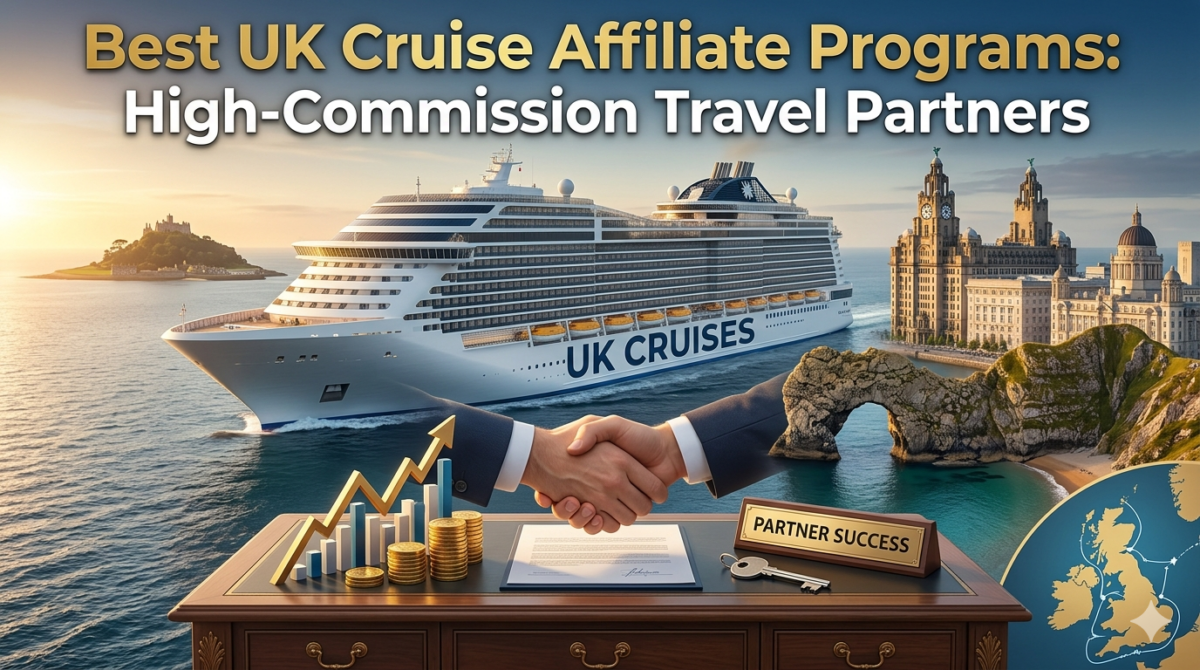
Cruises and luxury travel affiliate programs offer high payouts due to expensive tickets and add-ons. Key players include online cruise agencies (e.g. CruiseDirect, Cruise1st), cruise lines (e.g. Fred. Olsen, Royal Caribbean), and tour operators (e.g. DFDS ferries).
Commissions range from fixed lead payments (e.g. Cruise1st’s £10 per enquiry) to percentage of booking value (e.g. Fred. Olsen 4%, CruiseDirect 3%). Cookie durations vary (30-60 days). High average order values and brand trust are pros; lower commission rates and competition for top conversions are cons.
We target UK travel audiences with insider tips (e.g. “skip-the-line” passes, premium cabin perks) and relatable use-cases (e.g. “family cruise holiday” vs “romantic luxury sailing”).
Introduction
Imagine helping readers plan a luxury cruise or exotic travel while earning affiliate commissions on each booking. In the UK market, travellers seek both value and unique experiences: from all-inclusive Mediterranean cruises to niche expedition trips.
Our cruise and luxury travel guide speaks of real benefits (e.g. cabin upgrades, ship amenities) and anecdotal scenarios. For example, a family booking a cruise might prioritize kids’ clubs and included meals, while a couple on a romantic voyage might appreciate spa credits or in-room dining.
Focus is benefit-driven (“no-fly exotic cruise” or “VIP airport lounges with your cruise” ) and relatable use-cases.
Featured Programs
CruiseDirect: Book a Cruise with Top Deals
- Commission: 3% of fare.
- Cookie: 45 days.
- CruiseDirect is one of the largest online cruise travel agents, aggregating offers from many cruise lines.
- Pros: Generous cruise deals and regular discount codes make it easy to convert readers looking for bargains. Their 45-day cookie ensures you get credit even if readers delay booking.
- Cons: 3% commission is modest, and competition is high (many partners).
- Use Case: A travel blogger writes about European river cruises and links to CruiseDirect’s Danube cruise deals. When a reader books weeks later, the affiliate still earns 3% of that £2,000 fare.
Cruise1st UK: Earn on Cruise Enquiries
- Commission: £10 per booking enquiry.
- Cookie: 30 days.
- Cruise1st offers cruise holiday bookings via their UK site.
- Pros: For affiliate sites, Cruise1st pays a flat £10 for every lead (non-binding enquiry), which can be more predictable than small percentage commissions. The ABTA-backed brand inspires trust, and ships across all major cruise lines are covered.
- Cons: You don’t earn extra if the lead converts into a sale (just a fixed rate per enquiry). Some promotions may restrict PPC or brand bidding.
- Use Case: A family travel blog features “Top Mediterranean Cruises for Families”. It includes a Cruise1st link. When a reader fills out a cruise quote form (even without immediate booking), the blogger earns £10. This is great for high-traffic blogs or social pages that focus on cruise planning tips.
Fred. Olsen Cruise Lines: Niche Luxury Voyages
- Commission: 4% of booking.
- Cookie: 60 days.
- Fred. Olsen (a UK cruise line) targets premium travellers with smaller, intimate ships sailing in Europe, Africa, and around the world.
- Pros: At 4% of sale, commissions are higher than many mainstream agents. The brand’s loyal UK customer base and 60-day cookie help affiliates capture revenue even on longer decision cycles. Fred. Olsen also frequently runs special cabins’ sales, which can attract bookings.
- Cons: It’s a smaller niche (older, luxury travellers), so traffic might be lower. Its affiliate network requires full ABTA/TACO credentials.
- Use Case: A retired travel magazine website praises Fred. Olsen’s Norwegian fjords cruise. When readers book a £3,000 cabin using the affiliate link, the site earns £120 (4%) after the cruise departs.
Royal Caribbean: Global Cruise Leader
- Commission: up to 4% of booking value.
- Cookie: 45 days (industry standard).
- Royal Caribbean is a major cruise line with mega-ships worldwide.
- Pros: Strong brand recognition and high conversions. Royal Caribbean’s 4% commission on luxury suite bookings can be very lucrative on high-ticket voyages. They invest in flashy ships and shore experiences that excite families and couples alike.
- Cons: 4% is a fixed rate; competition from other cruise program affiliates (and agents like CruiseDirect) can be stiff.
- Use Case: An adventure travel blog shares “Top Caribbean Cruises”, featuring Royal Caribbean’s family-friendly itineraries. Even though a 14-night cruise costs £5,000, 4% yields a £200 commission.
DFDS Ferries: Europe & UK Connections
- Commission: 7% on select routes.
- Cookie: 45 days.
- DFDS operates UK-Europe ferries, night crossings, and Scandinavia routes.
- Pros: 7% commission on qualifying bookings is generous, especially for B2B travel or niche travel blogs. The wide network (e.g. Newcastle-Amsterdam, Dover-Calais) attracts leisure and business travellers. The brand is well-established (awarded “Best European Ferry Operator”).
- Cons: Only some routes/payments qualify for commission. The average earnings per click (EPC) is modest at ~£0.33, reflecting that many ferry tickets are budget.
- Use Case: A UK travel newsletter promoting sustainable travel could recommend DFDS overnight ferries (avoiding flights). The affiliate earns 7% on tickets, reinforcing a green travel message.
TUI Cruises: Package Experiences
- Commission: varies (part of TUI network).
- Cookie: 30 days.
- TUI Cruises (formerly Marella) offers family-friendly cruises and holiday packages.
- Pros: TUI’s strong UK presence means large audience interest. Affiliates can promote cruises alongside flights and hotels.
- Cons: Commissions are tied to the TUI travel package structure (often modest percentage).
- Use Case: A UK family blog bundles TUI’s all-inclusive cruise+flight offers in their summer holiday guides.
Princess Cruises
- Commission: 4% (typical for cruise lines).
- Cookie: 30 days.
- Princess is a premium brand, known for Alaska and world cruises.
- Pros: Loyal followers of franchise (e.g. Golden Girls, Jack London fans). High average sale price. Cons: Niche market.
- Use Case: A travel blogger writing about “Romantic World Cruises” links to Princess, earning 4% on an 8-week voyage booking.
Top Programs Comparison
| Program | Commission Structure | Cookie Duration | Key Pros | Key Cons |
| CruiseDirect | 3% of cruise fare | 45 days | High cruise fare base, regular deals | Low commission rate |
| Cruise1st UK | £10 per booking inquiry (CPL) | 30 days | £10 paid per lead (regardless of sale), ABTA-backed | No commission on sale |
| Fred. Olsen | 4% of booking value | 60 days | High-value luxury cruises, 60-day cookie | Niche market (smaller ships) |
| Royal Caribbean | Up to 4% of booking value | 45 days | Strong global brand, wide appeal | Low commission |
| DFDS | ~7% on select routes | 45 days | High ferry commission, 200+ UK routes | Commission only on certain routes |
| Cruise Nation | 4% of cruise sale | 30 days | European cruise deals, promotion resources | Competitive niche |
| TUI Cruises | 3-4% of package (tied to TUI pay) | 30 days | Well-known tour operator, bundling options | Package commission (not pure cruise) |
| Marella Cruises | Commission on package via TUI | 30 days | Established UK cruise brand (Marella) | Pay structure tied to TUI package sales |
(EPC = earnings per click)
Note: Most of the above-mentioned affiliate programs are available on the Cuelinks affiliate marketing platform, with a Dynamic-CPC campaign model so the commission rates you see above are average numbers.
Conclusion
Our real traveler benefits (e.g. hassle-free bookings, onboard luxuries), comparison tables and clear CTAs help UK affiliate content publishers quickly evaluate programs. The intros cite market growth (e.g. “holiday extras market growing ~15% yearly”) and industry facts (cruise commissions are typically 3-4%). Thus, affiliates earn passive income as more Brits cruise.