


Overview
Monetizing rewards platforms including cashback, coupon, and deal sites, has evolved from simple link aggregation into a sophisticated, data-driven performance marketing discipline. Success in this sector now requires publishers to navigate complex attribution models, technological shifts, and algorithmic volatility while maintaining user trust and engagement.
- Strategic Infrastructure: Platforms must scale by utilizing sub-affiliate networks for streamlined merchant management rather than manual integrations.
- Advanced Tracking: To combat ad-blockers and privacy restrictions (like ITP), modern publishers are shifting from client-side tracking pixels to Server-to-Server (S2S) postback architectures for accurate data attribution.
- Revenue Optimization: Monetization strategies have moved toward ‘New vs Returning’ customer analysis, leveraging exclusive vanity codes, hybrid flat-fee (tenancy) agreements, and AI-driven automation for social commerce.
- Retention & Growth: Combatting user churn requires implementing psychological gamification (e.g., streaks, micro-rewards) and omnichannel strategies like Card-Linked Offers (CLO) to capture offline purchasing data.
Table of Contents
1. The Performance Marketing Paradigm
The affiliate marketing industry has evolved into a highly sophisticated, data-driven ecosystem. As of 2026, the global affiliate marketing market is valued at approximately $20.07 billion, with projections estimating a surge to $82.64 billion by 2035. Furthermore, the specific market (by Pricing Model, Application, End Use, Region and Segment Forecasts) for affiliate marketing platforms is estimated at $23.8 billion in 2026, expected to grow to $35.7 billion by 2033.
Within this digital economy, rewards, cashback, and coupon platforms occupy a uniquely powerful position at the very bottom of the consumer purchasing funnel.
- The Conversion Engine: Operating primarily on a Cost-Per-Acquisition (CPA) model, these platforms capitalize on high-intent buyer behavior, driving exceptional conversion rates that frequently exceed 30% from the initial click to the final transaction.
- The ROI: Up to 80% of global brands currently leverage affiliate marketing, attracted by a compelling return on investment that typically yields $12 to $15 for every $1 expended.
Monetizing a rewards or deals website requires far more than merely aggregating promotional links. The modern affiliate landscape demands a nuanced understanding of advanced tracking architectures, complex attribution models, regulatory search engine compliance, and sophisticated user experience design.
2. The Economic Architecture of Cashback and Coupon Networks
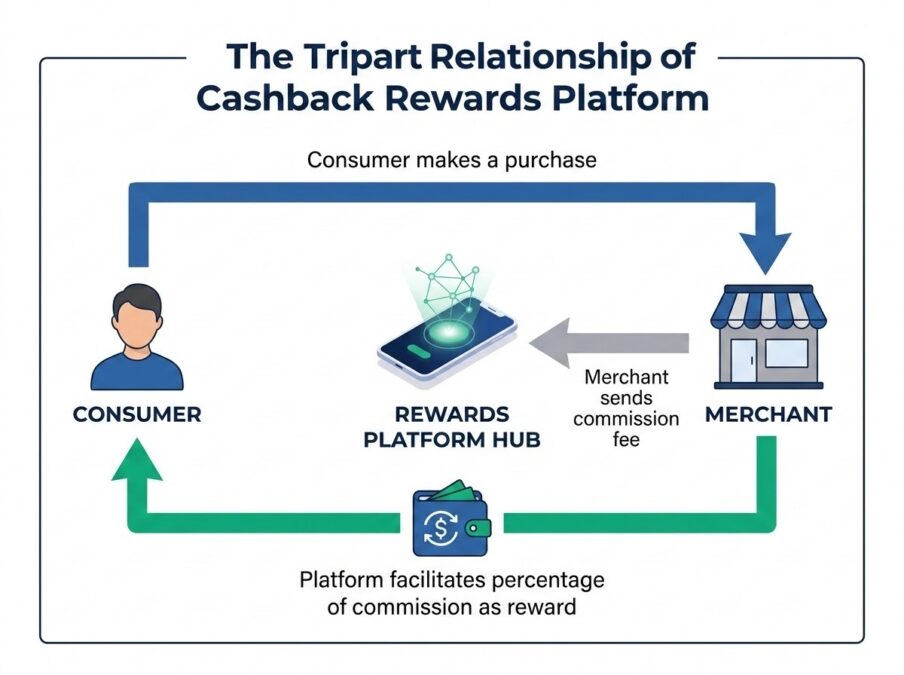
The core mechanism of a rewards platform is a self-reinforcing value chain built entirely upon performance-based compensation. This creates a tripartite relationship that incentivizes all participants:
- The Transaction: A consumer initiates a purchase through a tracked affiliate link.
- The Commission: The participating merchant pays the platform a predetermined commission percentage or flat fee upon successful validation of the sale.
- The Redistribution: The rewards platform allocates a percentage of this earned commission back to the consumer (digital wallet credits, direct bank transfers) while retaining the remainder as pure operational profit.
| Platform Architecture | Primary User Incentive | Consumer Intent Profile | Monetization Structure | Conversion Velocity |
| Cashback Portals | Post-purchase monetary reward | High loyalty, repeat transactional behavior | Commission share + Tenancy (Premium Placements) | Exceptionally high (often >30%) |
| Coupon/Voucher Sites | Immediate point-of-sale discount | Price-sensitive, deal-focused, highly transactional | Full commission retention + Tenancy | Moderate to High |
| Price Comparison | Information symmetry and optimal pricing | Research-driven, mid-to-low funnel intent | Cost-Per-Click (CPC) or Cost-Per-Acquisition (CPA) | Moderate |
Case Study: DesiDime
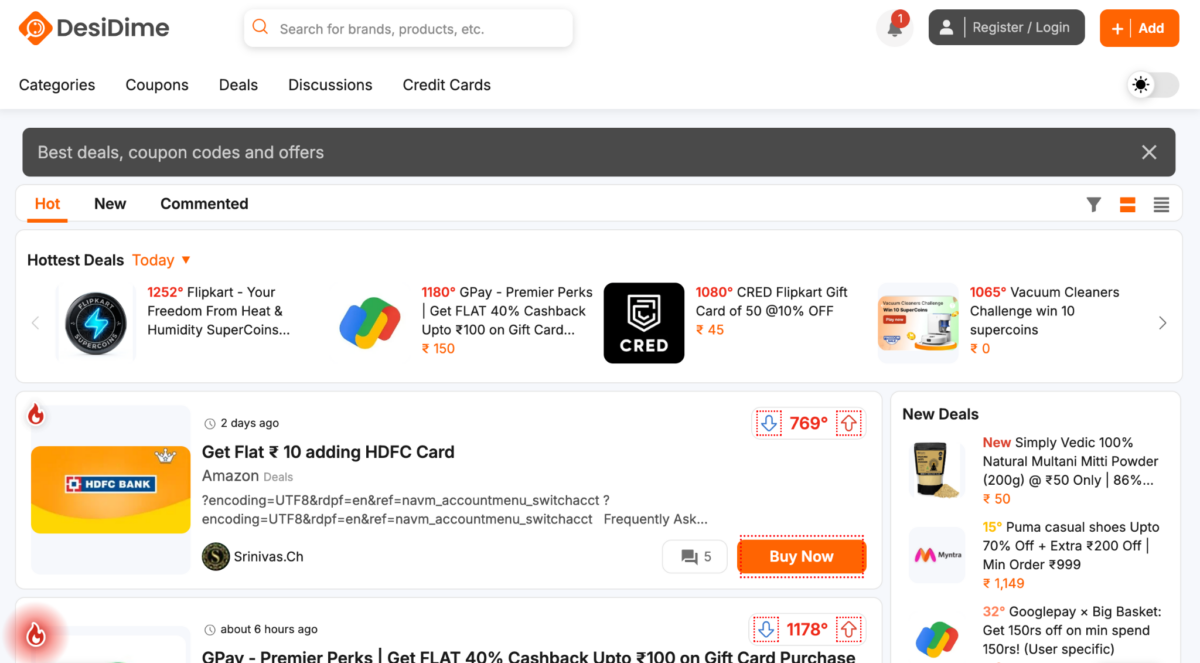
The Indian market provides a robust case study for the scalability of this model through community-driven platforms like DesiDime.
Operating as a massive user-generated deal and coupon community, DesiDime leverages crowdsourced deal hunting where millions of active forum members post, vote, and discuss discounts.
This highly engaged, gamified community architecture ensures extremely high retention and organic traffic. As a testament to the value of this model, DesiDime’s massive success led to its integration into the global Pepper.com network (now part of the Global Savings Group ecosystem), highlighting the immense valuation and scalability of localized, community-driven affiliate platforms.
3. Platform Selection and Sub-Affiliate Infrastructure
A foundational decision for any rewards publisher is selecting the appropriate mix of affiliate networks and direct merchant programs. Direct integrations offer lucrative baselines (e.g., Amazon India offering ~5% on apparel), but managing thousands of individual relationships presents an insurmountable administrative burden. Also, many high-end merchants allow only high performing affiliates to participate.
The Solution: Sub-Affiliate Networks
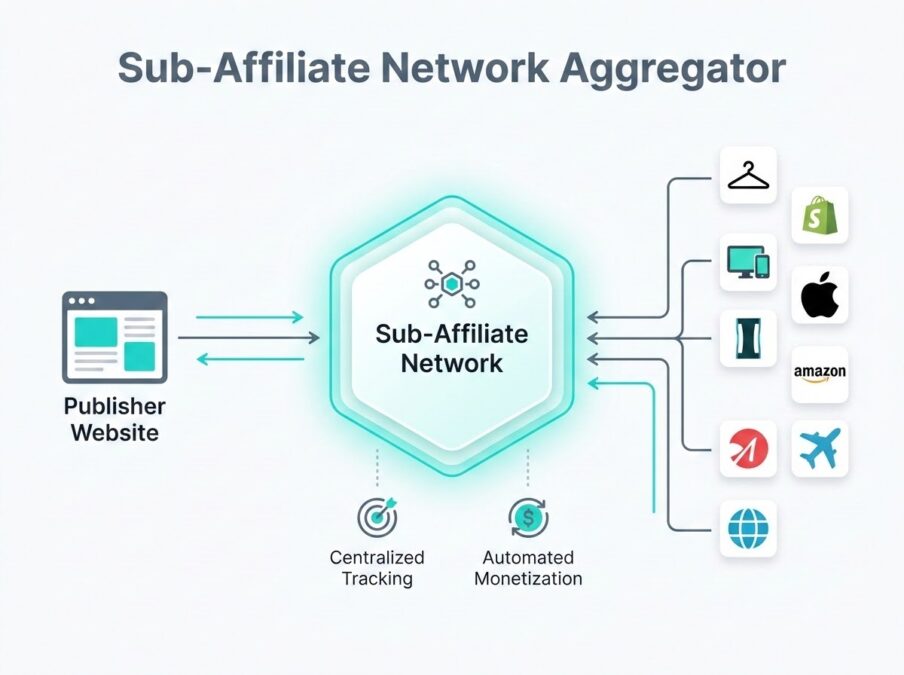
Sub-affiliate networks (e.g., Cuelinks) operate as vital middleware, aggregating thousands of merchant programs under a single umbrella agreement.
- Automated Monetization: Networks provide automated link-wrapping technologies. For example, Cuelinks offers a free WordPress plugin that automatically scans a webpage’s Document Object Model (DOM) and dynamically rewrites outbound product URLs into monetized affiliate tracking links in real-time.
- Real-Time Analytics: Tools like the Cuelinks Chrome Extension allow publishers to instantly reveal and compare the affiliate payout of any merchant website or product page while actively browsing.

4. Customer Lifecycle Economics: The New vs Returning Customer Debate
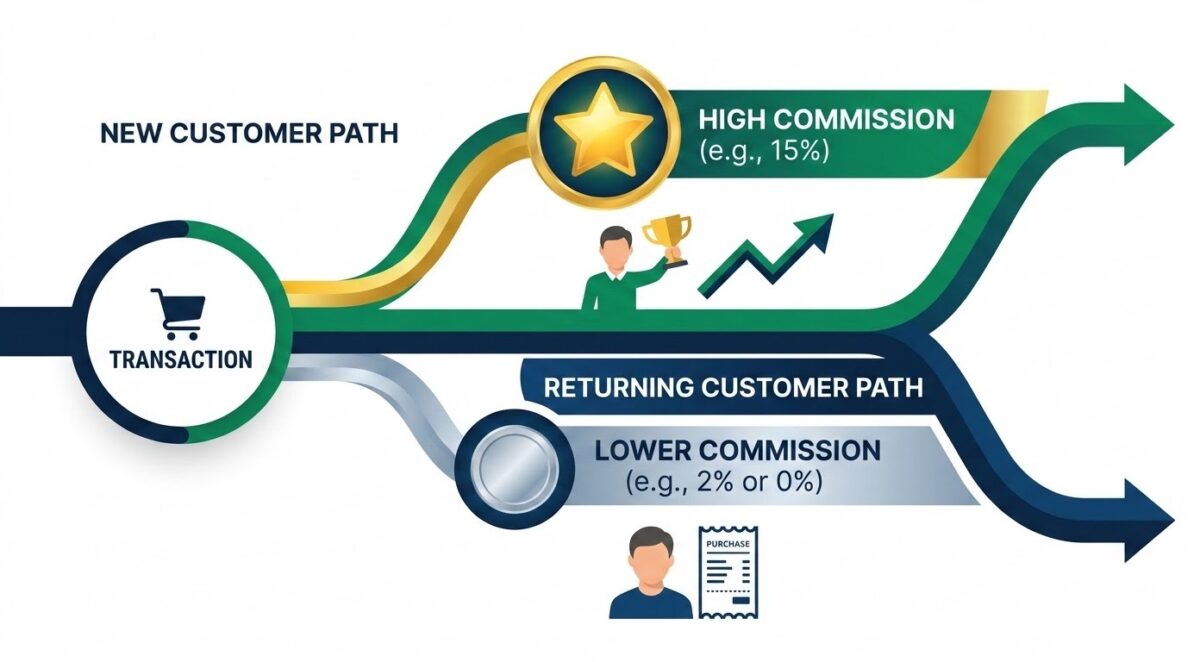
As the affiliate channel matures, advertisers apply rigorous data scrutiny to assess the true incrementality of traffic. A central strategic debate revolves around the differential value of acquiring a net-new customer versus facilitating a transaction for an existing, returning customer.
Because cashback platforms foster habit formation, they process a high volume of returning customer transactions. Consequently, merchants increasingly deploy bifurcated commission structures (e.g., 15% for new customers, 2% or 0% for returning).
To counter commission suppression, elite publishers execute the following strategies:
- Exclusive Vanity Codes: Negotiating branded promo codes that cannot be scraped organically. Because the conversion lift is highly measurable, merchants often pay standard commissions across all customer types.
- Hybrid Flat-Fees (Tenancy): Trading slight reductions in CPA percentages for guaranteed upfront capital for premium digital real estate, regardless of the consumer’s new or returning status.
- Trademark Plus (TM+) Bidding: Securing rights to bid on the merchant’s trademarked terms in paid search channels. Leveraging the publisher’s highly optimized quality scores lowers the Cost-Per-Click (CPC) for the brand ecosystem, and in exchange, the merchant offers elevated commission rates.
| Product Category | Typical Benchmark Commission Rate | Margin Sensitivity |
| Digital Products & Online Courses | 20% to 50% per sale | Low marginal cost of delivery allows for aggressive payouts. |
| Subscription Services (SaaS, Media) | 15% to 30% recurring | High lifetime value justifies elevated acquisition costs. |
| Physical Goods (Fashion, Beauty) | 5% to 15% per sale | Moderate margins require strict monitoring of new vs. returning rates. |
| High-Ticket Items (Electronics, Furniture) | 3% to 8% per sale | Thin margins restrict commission generosity; relies on high AOV. |
5. The Attribution Battlefield and Browser Extensions

The foundational economic principle governing the vast majority of affiliate marketing is the last-click attribution model, where the final affiliate link clicked immediately prior to purchase receives 100% of the commission credit.
This structural dynamic has led to the proliferation of Browser Extensions (e.g., Honey, Coupert) which represent the apex of last-click optimization. PayPal’s acquisition of Honey for approximately $4 billion exemplifies the immense value of intercepting purchase intent at the point of sale.
- The Architecture: Extensions deploy Service Workers to handle background events and inject Content Scripts directly into the active webpage’s DOM. At checkout, the script dynamically injects affiliate tracking parameters or overwrites existing affiliate cookies.
- The Controversy: This aggressive interception methodology triggered massive industry backlash (“cookie hijacking”), with investigative reports revealing extensions systematically overwriting the tracking cookies of independent influencers who initially drove the traffic. Consequently, Google updated its Chrome Web Store policies to explicitly prohibit extensions from executing tracking overrides without providing legitimate, verifiable consumer benefits.
The aggressive tactics used by browser extensions to claim last-click attribution are a primary reason publishers should diversify their traffic sources, as over-reliance on organic search makes platforms highly vulnerable to algorithmic shifts like Google’s Site Reputation Abuse policy.
🚨Overcoming Algorithmic Volatility & Site Reputation Abuse
The heavy reliance on organic search traffic makes rewards platforms vulnerable to algorithmic volatility. Google recently initiated severe enforcement against Site Reputation Abuse (Parasite SEO).
Massive news publications previously leased subfolders to third-party affiliate networks, which deployed automated coupon pages that manipulated the host site’s high domain authority to dominate search rankings. Google deindexed these subfolders overnight.
Publisher Defense: Platforms must transition away from automated XML-feed aggregation toward highly curated, value-additive architectures demonstrating undeniable first-party oversight and topical authority.
6. Next-Generation Tracking: Server-to-Server (S2S) Architecture
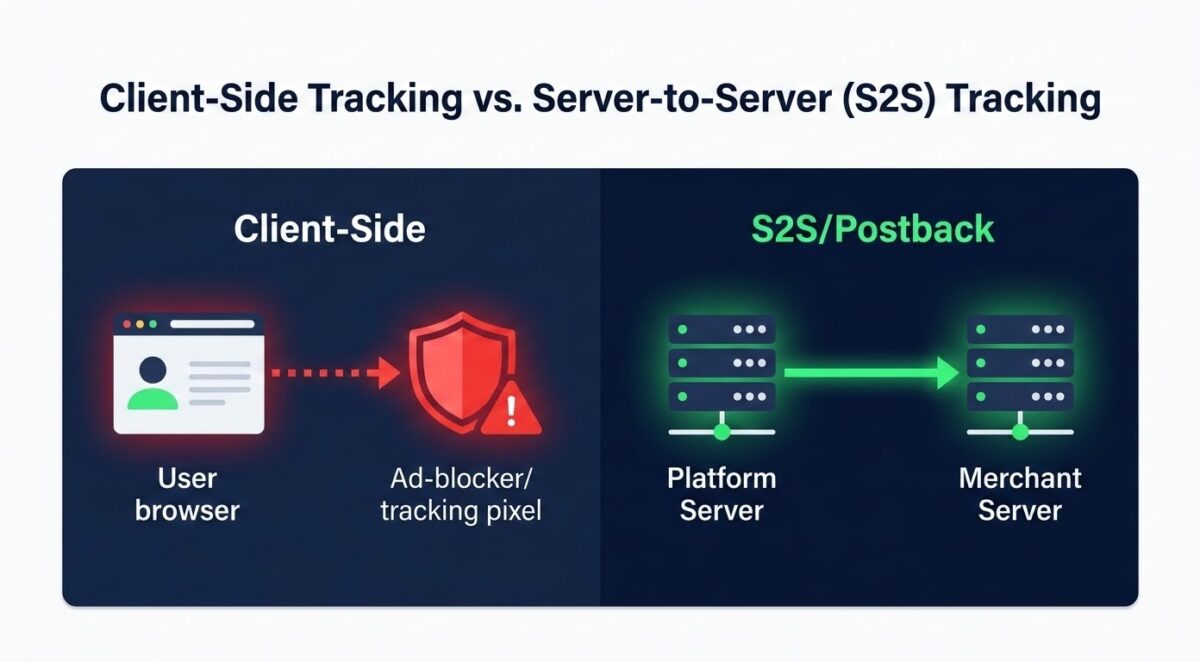
To guarantee attribution accuracy and prevent revenue leakage, rewards platforms are systemically migrating from traditional browser-based tracking to highly secure backend architectures.
Client-side tracking pixels are critically vulnerable due to the widespread adoption of ad-blocking extensions and stringent privacy protocols like Apple’s Intelligent Tracking Prevention (ITP).
The Solution: Server-to-Server (S2S) tracking (postback tracking) operates entirely independently of the consumer’s browser state.
| Tracking Feature | Client-Side Pixel Tracking | Server-to-Server (S2S) Postback Tracking |
| Accuracy & Reliability | Medium; heavily disrupted by ad-blockers and ITP | High; completely immune to browser-level restrictions |
| Data Flow Timing | Often delayed or dropped entirely during page loads | Real-time transmission directly between backend servers |
| Privacy Compliance | Weak; reliant on vulnerable third-party cookies | Strong; localized first-party data and server-side execution |
| Fraud Prevention | Susceptible to cookie stuffing and false triggering | Highly secure via API authentication and cryptographic tokens |
Furthermore, publishers utilize sophisticated SubID parameters to achieve granular analytics. By appending parameters directly to the affiliate URL string (e.g., aff_id=12345&subid=newsletter_link), publishers can track the exact origin of a click, enabling precise measurement of performance across disparate channels, email campaigns, or individual influencers.
7. Artificial Intelligence and Social Commerce Automation
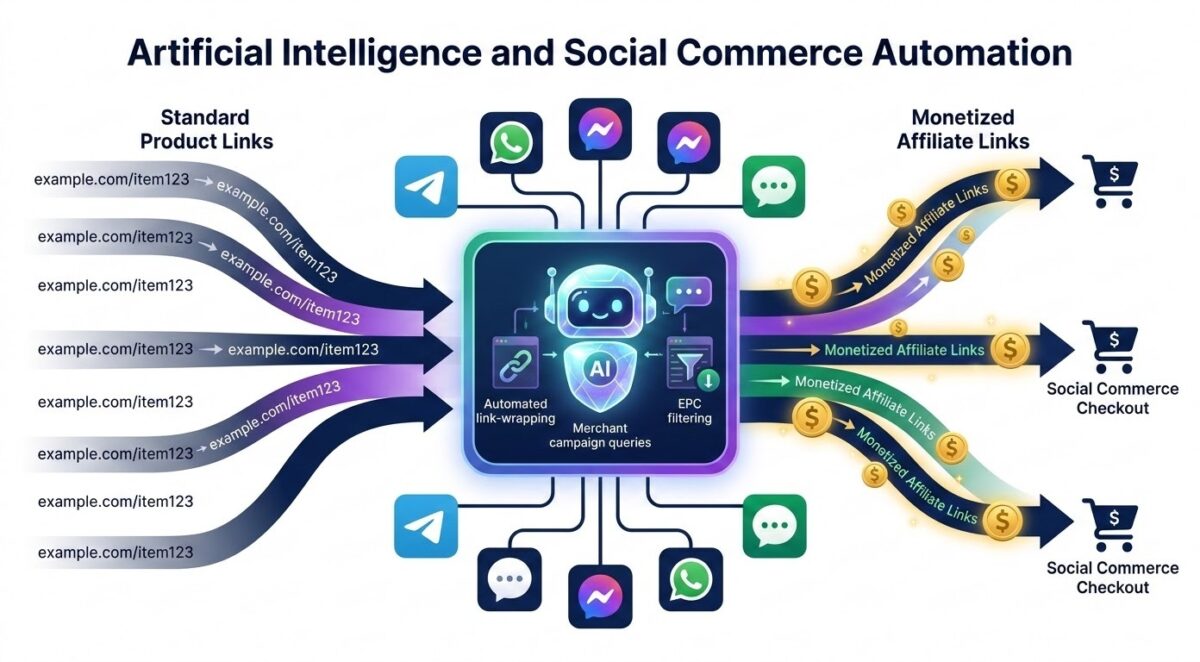
The most recent advancement in affiliate monetization involves the direct integration of artificial intelligence and chatbot automation.
- Model Context Protocol (MCP): Advanced networks have deployed servers that integrate native affiliate capabilities directly into AI agents, allowing them to independently query live merchant campaigns, filter by Earnings Per Click (EPC), and dynamically rewrite URLs.
- Messaging App Bots: Utilizing the Telegram Bot API and Python wrappers, publishers deploy custom scripts to continuously monitor chat channels. The Cuelinks Telegram Bot, for example, allows users to instantly convert more than 5 normal product links into monetized affiliate URLs in a matter of seconds directly within the chat interface, capturing high-impulse buying intent in closed communities.
8. Omnichannel Expansion and User Gamification
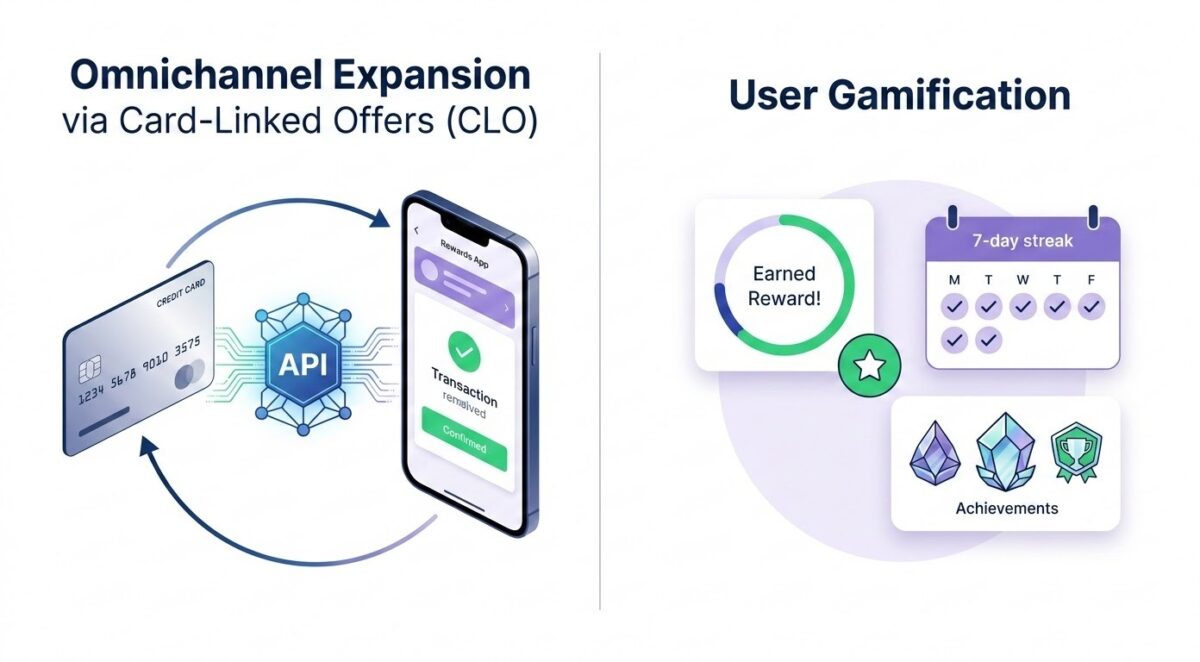
As digital acquisition costs rise, loyalty monetization has expanded into physical retail spaces through Card-Linked Offers (CLO). Using secure APIs (like Fidel API or Plaid), users link their credit cards directly to their rewards account, allowing platforms to capture offline retail expenditure without relying on browser cookies.
However, the fundamental challenge remains mitigating user churn. To counter this, elite platforms deploy sophisticated User Experience (UX) architecture infused with psychological gamification. Research indicates that adding gamification elements to software products enhances customer engagement by 48% and increases retention within loyalty programs by 22%.
- The Psychology: The underlying mechanism relies on the activation of the brain’s nucleus accumbens, which responds powerfully to the anticipation of rewards.
- The Execution: Publishers implement daily streak campaigns where users earn escalating micro-rewards for consecutive interactions. Breaking a streak triggers loss aversion, compelling continuous engagement. Furthermore, the implementation of progress bars and occasional, randomized surprise rewards generate dopamine spikes that effectively re-activate dormant users.
Conclusion
The monetization of cashback, coupon, deal, and other reward platforms represents one of the most lucrative, yet highly complex, verticals within digital performance marketing. The era of relying on simplistic script injections and exploiting last-click attribution loopholes is rapidly sunsetting.
To achieve sustainable profitability, platform operators must aggressively modernize their technological stack by adopting S2S tracking, deploying AI-driven bot architectures, and mitigating margin pressures through exclusive vanity codes and tenancy agreements.
By gamifying the user experience to maximize retention, a rewards platform can successfully evolve from a mere transactional intermediary into an indispensable pillar of the global e-commerce infrastructure.
References:
- Business Research Insights
- Grand View Research
- DesiDime
- Information Age | ACS
- Google Support
- UX matters
FAQs
How does Cuelinks charge for its affiliate network services?
Cuelinks is free to join and does not charge upfront fees for publishers. Instead, the platform operates on a revenue-share model. Cuelinks retains a portion (5-25% depending on affiliate’s performance) of the commission earned from successful sales driven by their tracked links, while passing the remaining majority (75-95%) of the commission directly to the publisher as earnings.
If my platform becomes heavy with affiliate links, is there a risk it could be categorized as spam or fraudulent?
Simply having a high volume of affiliate links does not automatically categorize a site as spam. However, search engines and security filters prioritize user value and transparency. If a platform functions purely as a “link farm” with thin, low-quality content that offers no original insight, reviews, or value-add, it risks being flagged. To avoid “spam” or “low-quality” classifications, platforms should focus on creating original, helpful content around the links (e.g., detailed product comparisons, genuine reviews) and ensure they comply with transparency requirements by disclosing affiliate relationships clearly.
How can a new rewards platform effectively negotiate tenancy agreements with merchants?
Negotiating tenancy agreements requires proving incrementality. New platforms should focus on demonstrating high-intent traffic volume, providing clear conversion data, and highlighting their unique alignment with the merchant’s target audience. By showcasing how your platform drives net-new customers rather than just capturing existing demand, you can justify guaranteed upfront capital for premium digital placements.

Sahil Ajmera is content writer with more than 7 years of work experience in field of Affiliate Marketing, Digital Marketing, etc. He loves saving money on everything. His aim is to get readers exactly what they are looking for and that too without wasting much of their time. Whatever he is writing on, you are sure to find a way to earn & save good!